
Cable Chest Workout: How to Cable Crossover and Fly
Cable chest exercises, like the cable fly and cable press, keep constant tension on the pectorals through the full range of motion. Set cables at chest or high and low height, step forward with a slight lean, bring the handles together in front of your chest with a slight elbow bend, and return slowly to feel a stretch.
Why Cables Are Uniquely Effective for Chest Isolation
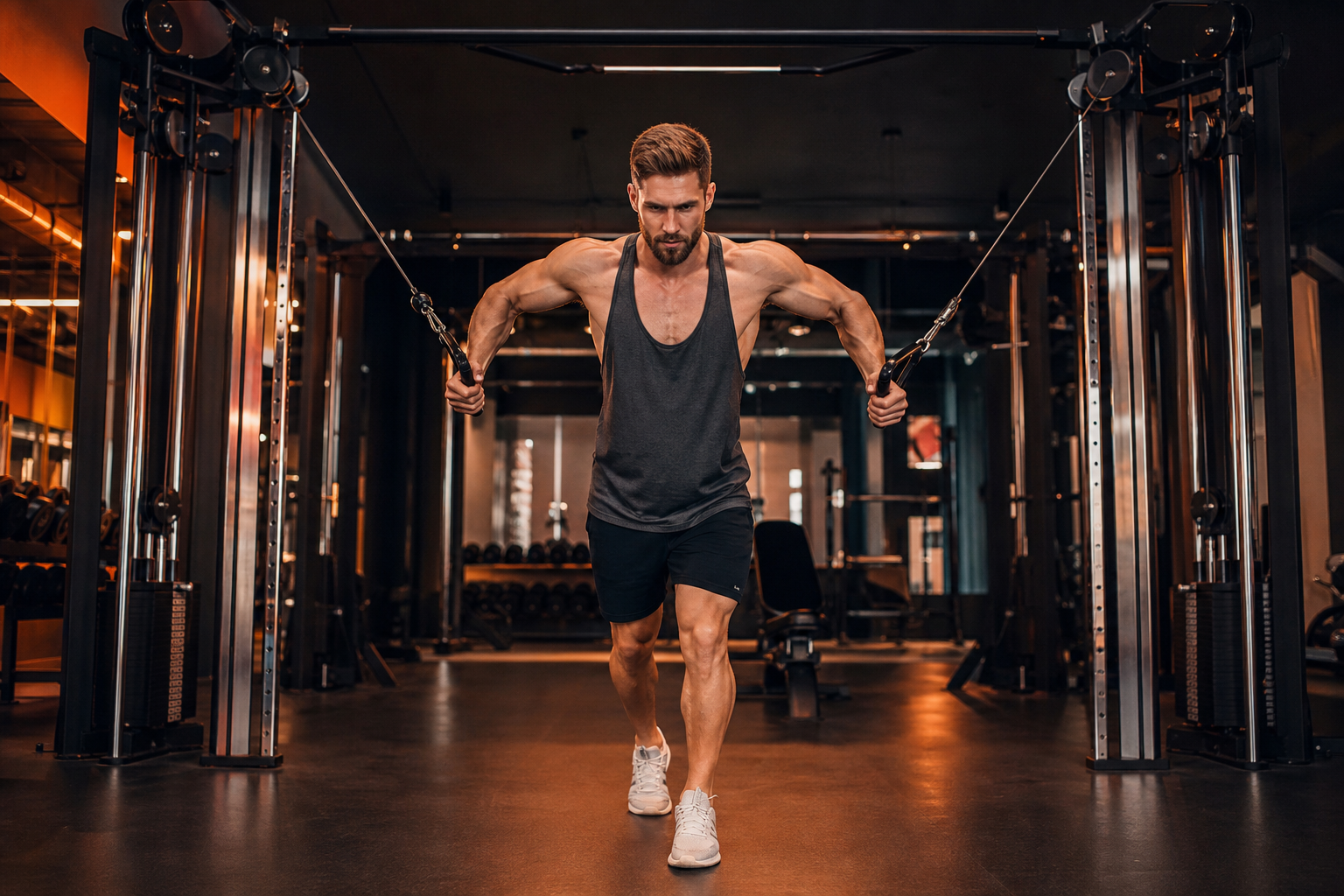
Cable machines provide something no free weight can replicate: constant tension throughout the entire range of motion. With dumbbell flyes, the resistance drops to near zero at the top when your hands meet over your chest — gravity pulls straight down, not inward. Cables solve this. The pulley system keeps the load pulling horizontally into the peak contraction zone, exactly where your chest fibers are most activated. A 2019 study in the Journal of Human Kinetics demonstrated that cable crossovers produced significantly greater pectoral activation in the shortened position compared to dumbbell flyes.
This constant tension means your chest never gets a rest — every degree of the arc is loaded. The crossover motion also allows you to cross one hand past the other at the midline, taking the pectorals into full adduction and squeezing the inner chest fibers that other exercises barely reach. For building a complete chest — especially that coveted inner chest definition — cables are not optional. They are essential.
This guide covers the cable crossover (also called cable fly), the single most effective isolation exercise for the pectoralis major.
How to Do the Cable Crossover with Proper Form
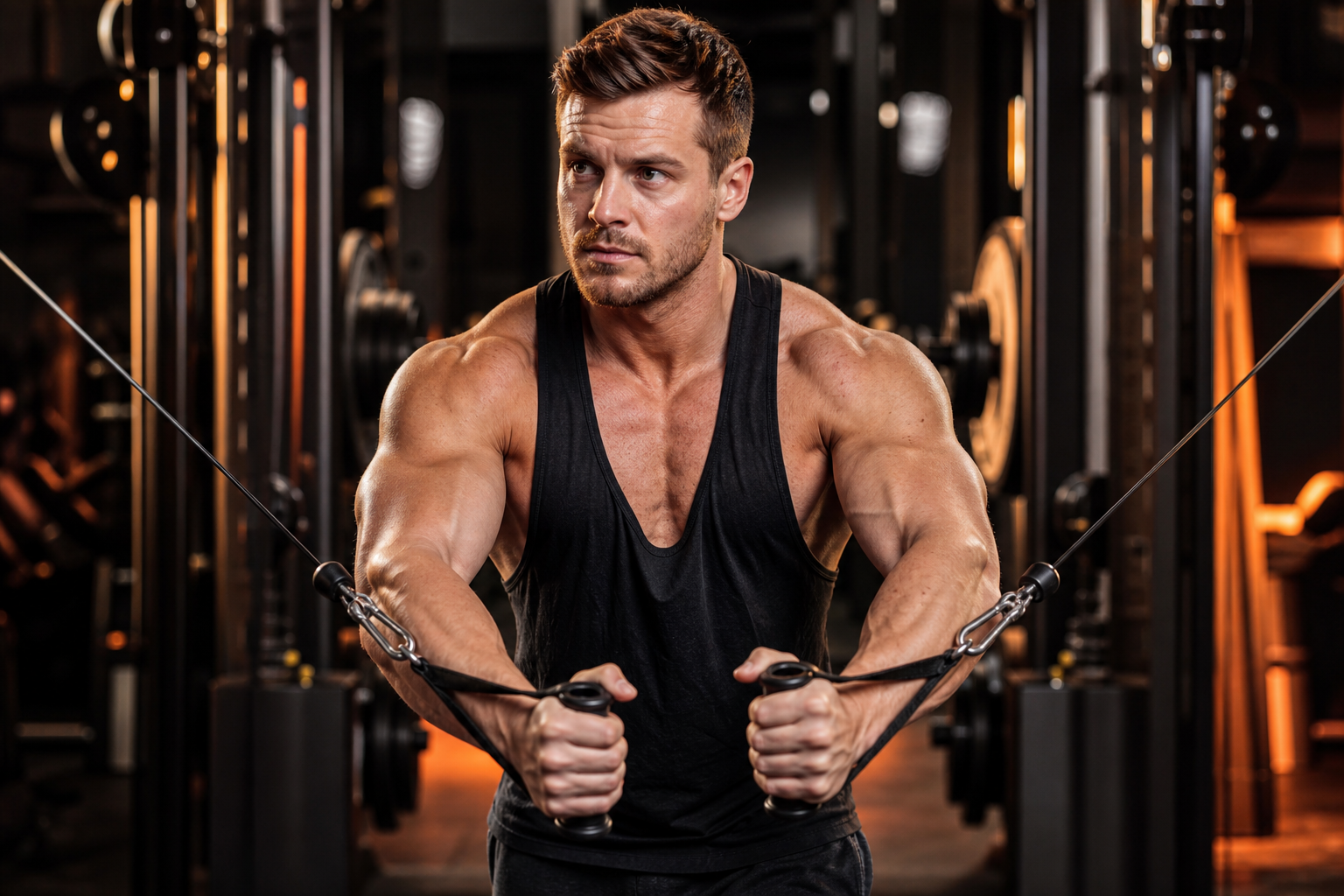
The cable crossover targets the pectoralis major — especially the inner chest — through a hugging arc that maintains resistance from stretch to squeeze.
Step 1 — Setup and Cable Height
Set both cable pulleys to the high position (above shoulder height). Attach D-handles to each side. Grab the left handle with your right hand and the right handle with your left hand — this crossing grip sets up the crossover path. Step forward into a staggered stance (one foot ahead of the other) to create stability and lean slightly forward from the hips. Your torso should be at roughly a 30° forward angle. Keep a slight bend in your elbows — this angle stays fixed throughout the movement.
Step 2 — Stretch Position / Open
With arms extended out to the sides at roughly shoulder height, feel the stretch across your chest. Your shoulders should stay down and back — do not let them creep up toward your ears. The slight elbow bend is maintained. This is the starting position for every rep. Control the weight — do not let the cables yank your arms back. The stretch should be felt deep across the pectorals, not in the shoulder joint.
Step 3 — Crossover / Squeeze
Pull the cables down and across your body in a wide hugging motion. Your hands should travel in an arc that brings them together in front of your lower chest or upper abdomen. At the bottom of the motion, cross one hand past the other at the midline — alternating which hand crosses over on each rep ensures balanced development. Squeeze your chest hard for a full second at the point of maximum contraction. The squeeze is the entire point of this exercise — do not rush through it.
Step 4 — Breathing and Return
Inhale as you open your arms back to the stretch position, exhale as you pull the cables across and squeeze. Control the return — the eccentric phase is just as important as the squeeze. Resist the urge to let the weights stack slam back. A controlled 2–3 second return keeps tension on the chest and protects your shoulder joints from sudden loading.
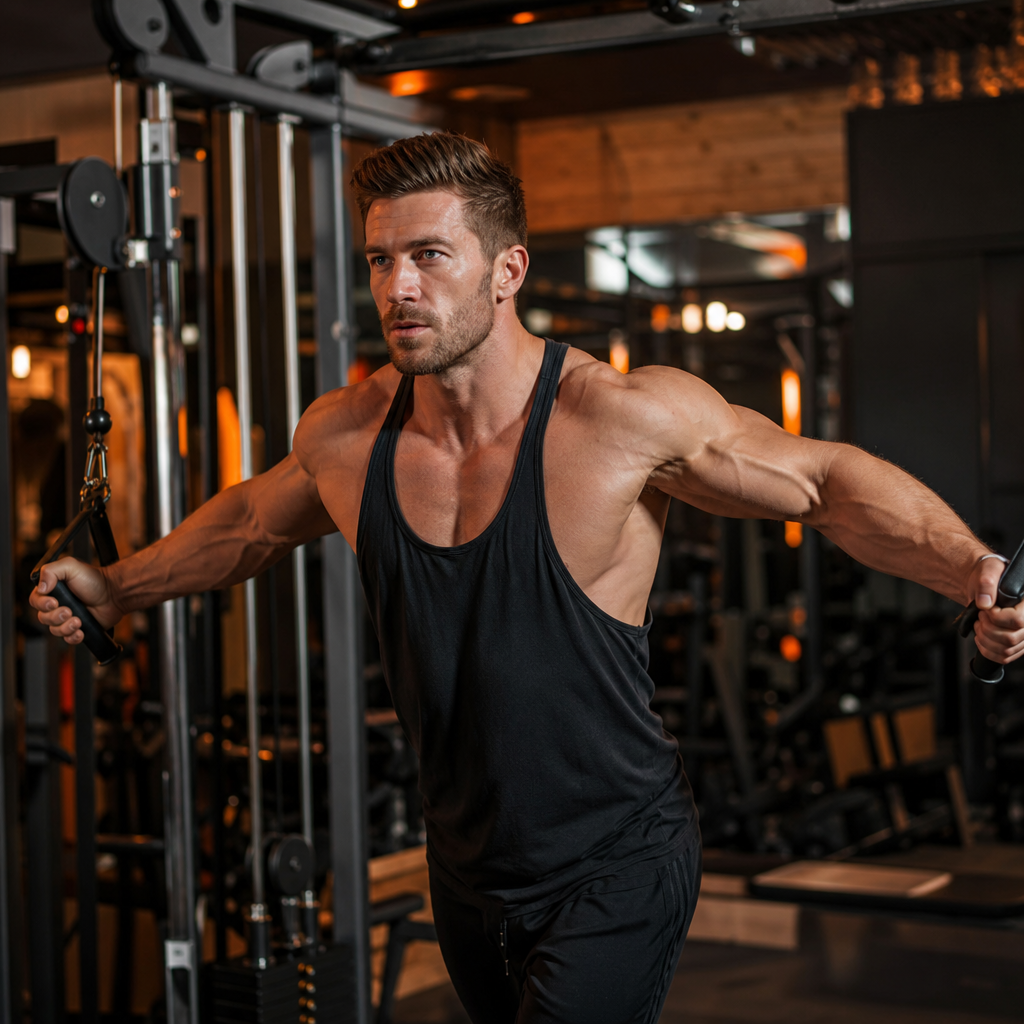
Cable crossover at the stretch position with arms open

Cable crossover at the squeeze position with hands crossed
What Are the Best Cable Chest Exercise Variations for Every Level
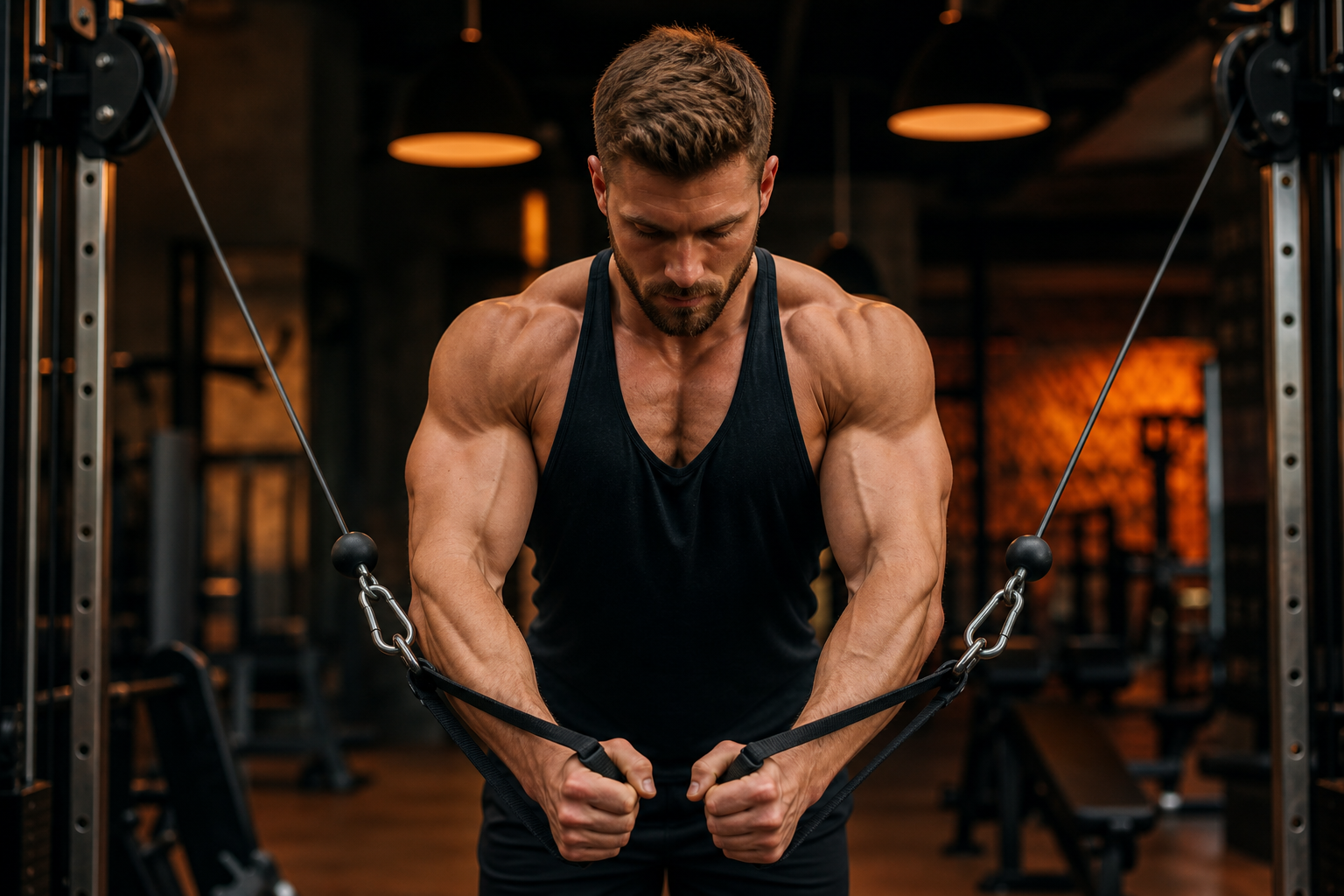
Simple changes to cable height and stance shift the emphasis across different regions of the chest.
High-to-Low Crossover: The standard setup — cables set high, pulling downward across the body. This emphasizes the lower and mid pectoralis major. It is the most common variation and the one described in the step-by-step above.
Low-to-High Crossover: Set the cables at the low position (near the floor). Pull upward and across in an upward hugging motion. This shifts the emphasis to the upper pectoralis major and clavicular head — an excellent companion to incline pressing movements.
Single-Arm Crossover: Use one cable at a time, crossing your hand past the midline of your body. This allows an even greater range of motion and peak contraction, and it exposes and corrects any side-to-side strength imbalance. Perform all reps on one side, then switch.
What Are the Most Common Cable Chest Mistakes
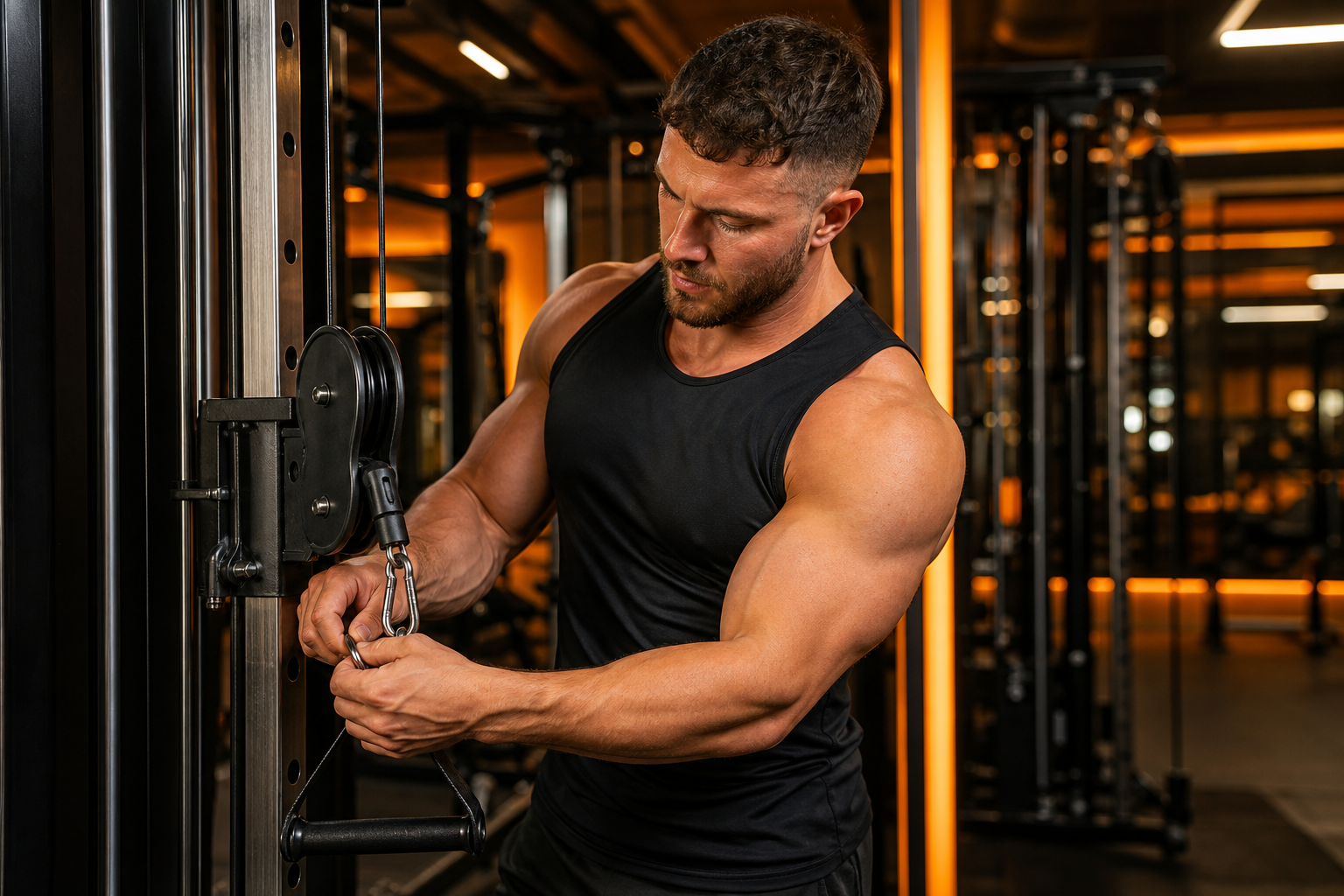
These errors reduce the isolation benefit of cables and can cause shoulder discomfort. Fix them to maximize your results.
Using too much weight: The cable crossover is an isolation exercise, not a strength movement. If you are leaning back dramatically, using your body weight to pull the cables, or unable to hold the squeeze for a full second, the weight is too heavy. Reduce the stack and focus on the contraction.
Not crossing hands at the midline: If your hands stop in front of your chest without crossing, you are missing the peak contraction — the very reason cables are superior to dumbbells for chest isolation. Cross one hand past the other to achieve full pectoral adduction.
Using triceps and shoulders instead of chest: If your elbows bend more as you pull, your triceps are taking over. If your shoulders roll forward, your deltoids are dominating. Keep the elbow angle fixed and drive the motion from your chest — imagine hugging a barrel, not pressing a weight.
Standing too far from the machine: If you stand too close, the cable angle becomes too steep and you lose the horizontal pull that makes cables effective. If you stand too far, the weight stack may bottom out between reps. Find the sweet spot — typically one full step forward from the machine — where the cables pull at a consistent angle through the full arc.
Rushing the eccentric: Letting the cables snap back eliminates the time under tension that drives hypertrophy. The return phase should take 2–3 seconds. Control the stretch — the constant tension on cables means the eccentric is just as valuable as the squeeze.
What Are the Key Takeaways
| Point | Recommendation |
|---|---|
| Why cables for chest | Constant tension + peak contraction at top + inner chest focus |
| Cable height (standard) | High position (above shoulders) for mid/lower chest emphasis |
| Stance | Staggered stance, lean 30° forward, slight elbow bend fixed |
| Crossover action | Cross one hand past the other at midline, squeeze 1 second |
| Eccentric control | 2–3 second return, never let the stack slam back |
Quick mistake checklist:
- Weight too heavy — reduce and focus on the squeeze, not the load
- Not crossing hands — cross past midline for full inner chest contraction
- Triceps/shoulders taking over — fix elbow angle, drive from chest
- Wrong distance from machine — one step forward for optimal cable angle
- Rushing the return — 2–3 seconds eccentric, control the stretch
Recommended chest day combination: Barbell flat bench press 4×8 + Dumbbell incline press 3×10 + Cable crossover 3×15 + Push-ups to failure. Compound strength + constant-tension isolation = complete chest development.
References & Sources
1RM Calculator (One-Rep Max)
Estimate your one-rep max (1RM) - the maximum weight you can lift for a single repetition - from a weight you can lift for multiple reps. The calculator uses the Epley and Brzycki equations and averages them.
Strength Standards Calculator
How strong are you compared to other lifters? Enter your bodyweight and best lift to see where you rank - from Beginner to Elite - on the bench press, squat, deadlift, and overhead press. Standards are scaled to your bodyweight, so a 60 kg lifter and a 100 kg lifter are judged fairly.
Protein Intake Calculator
Calculate how much protein you need each day based on your body weight and training goal. This calculator uses the research-backed range of 1.6 to 2.2 grams of protein per kilogram of body weight for building muscle.