
Barbell Leg Workout: How to Barbell Back Squat
Barbell leg training is led by the barbell squat, the king of leg builders. Rest the bar on your upper back, brace your core, and squat until your thighs are parallel or deeper, keeping your chest up and knees over your toes. The Romanian deadlift targets the hamstrings and glutes with a flat back.
Why the Barbell Squat Is the King of Leg Training
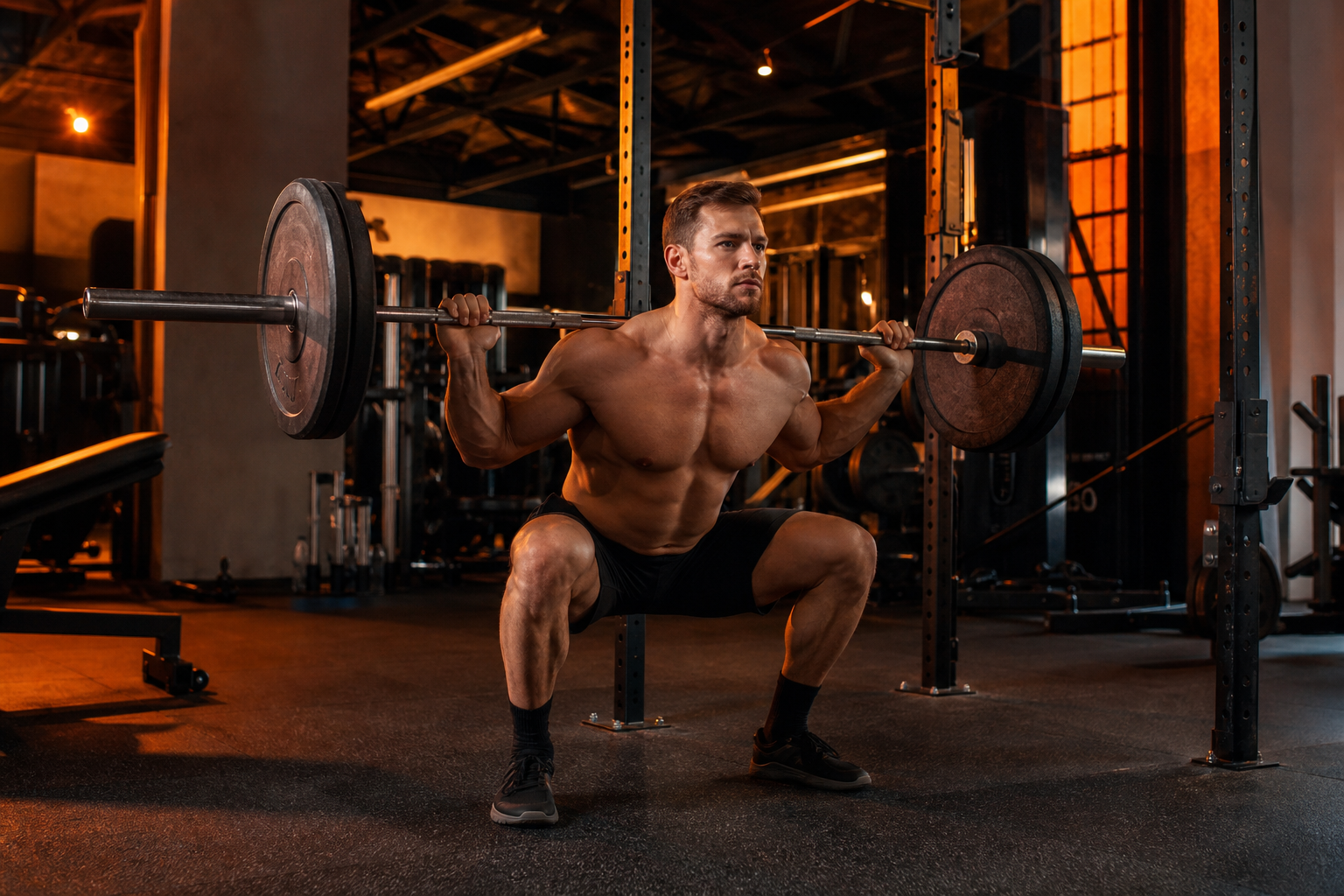
The barbell back squat is widely regarded as the single most effective exercise for lower-body development. It simultaneously targets the quadriceps, glutes, hamstrings, and core — no other single movement recruits as much leg musculature under heavy load. A 2019 study in the Journal of Strength and Conditioning Research demonstrated that the back squat produced greater activation in the vastus medialis and gluteus maximus than the leg press at equivalent loads, while also engaging the erector spinae and abdominals for trunk stability.
Beyond muscle activation, the squat is a functional movement pattern — you sit down and stand up countless times every day. Training this pattern under load builds real-world strength that transfers to athletics, daily activities, and longevity. The barbell allows you to progressively overload the movement with far more weight than dumbbells or bodyweight variations, making it the superior tool for building leg strength and size.
This guide covers the barbell back squat: proper form, stance variations, common mistakes, and how to program it for maximum leg development.
How to Do the Barbell Back Squat with Proper Form
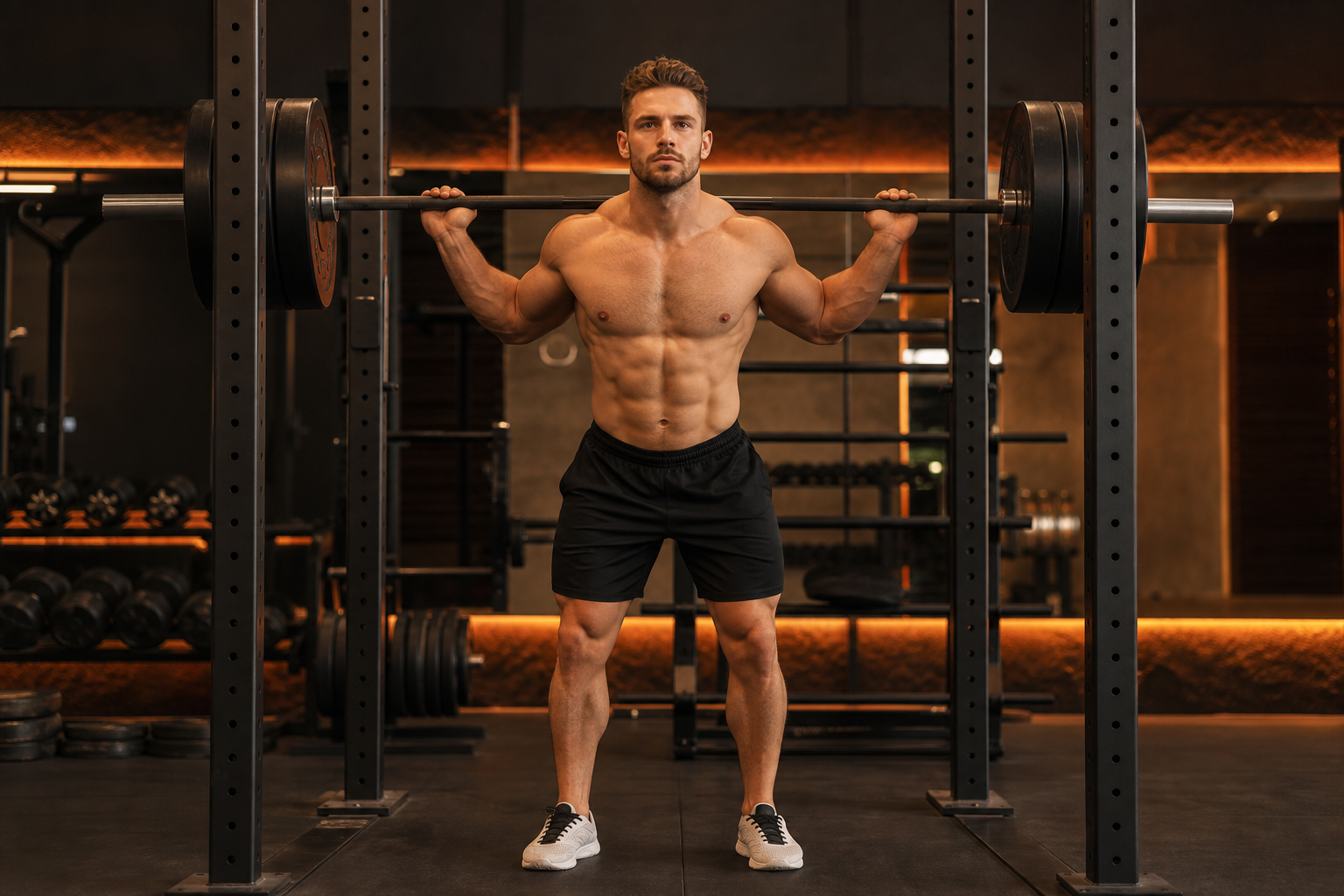
The barbell back squat targets the quadriceps, glutes, hamstrings, and core. It is the foundation of any serious leg training program.
Step 1 — Bar Position and Setup
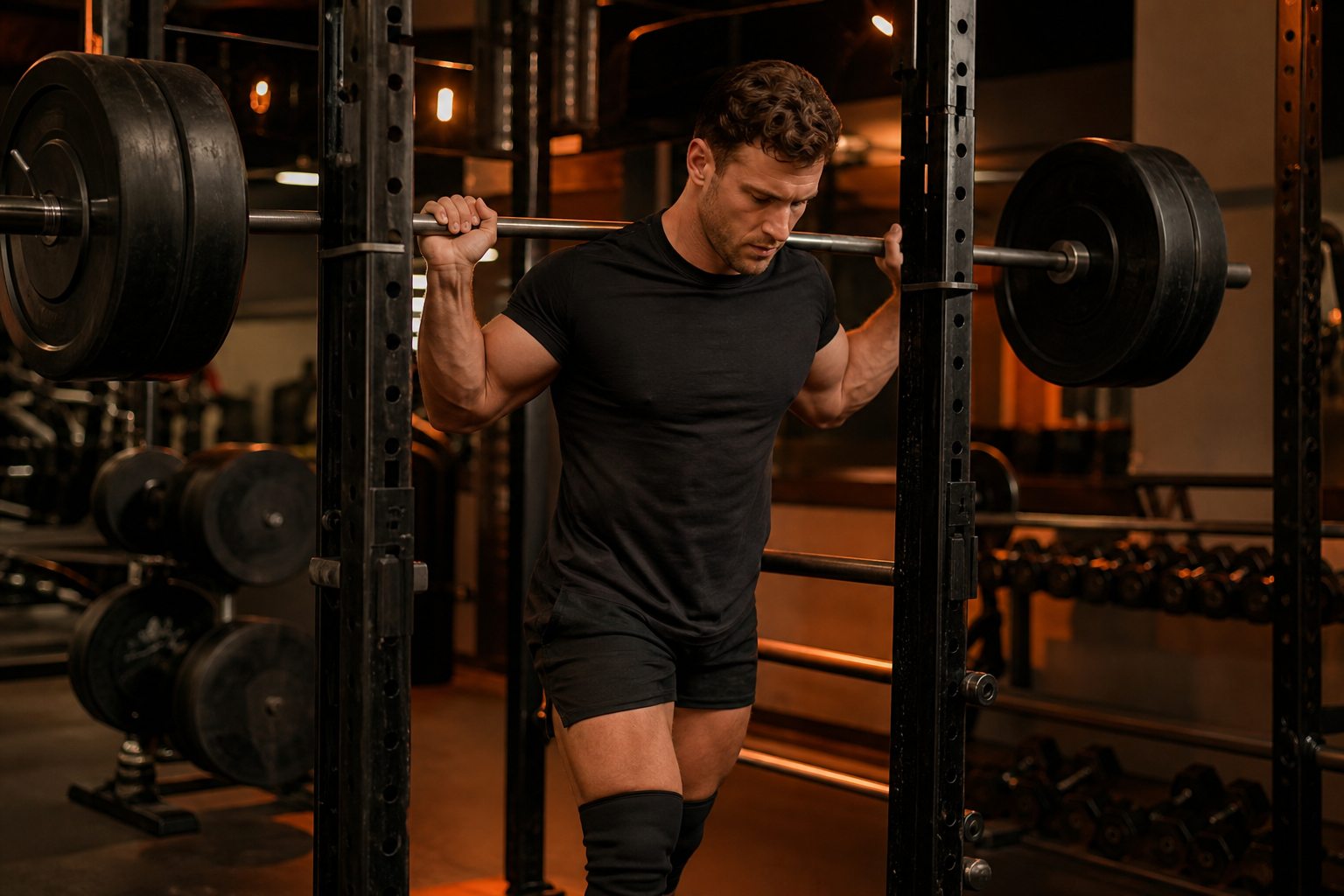
Set the bar on the squat rack at approximately mid-chest height. Duck under the bar and position it across your upper traps — the "high-bar" position. Grip the bar with your hands just outside shoulder width, pulling the bar down into your traps to create a stable shelf. Pull your shoulder blades together and lift your chest. Unrack the bar by standing up straight, then take one step back with each foot. Set your feet at shoulder width with toes pointed slightly outward (about 15–30°). Brace your core by taking a deep breath into your belly and pushing your abs outward.
Step 2 — Descent (Eccentric)
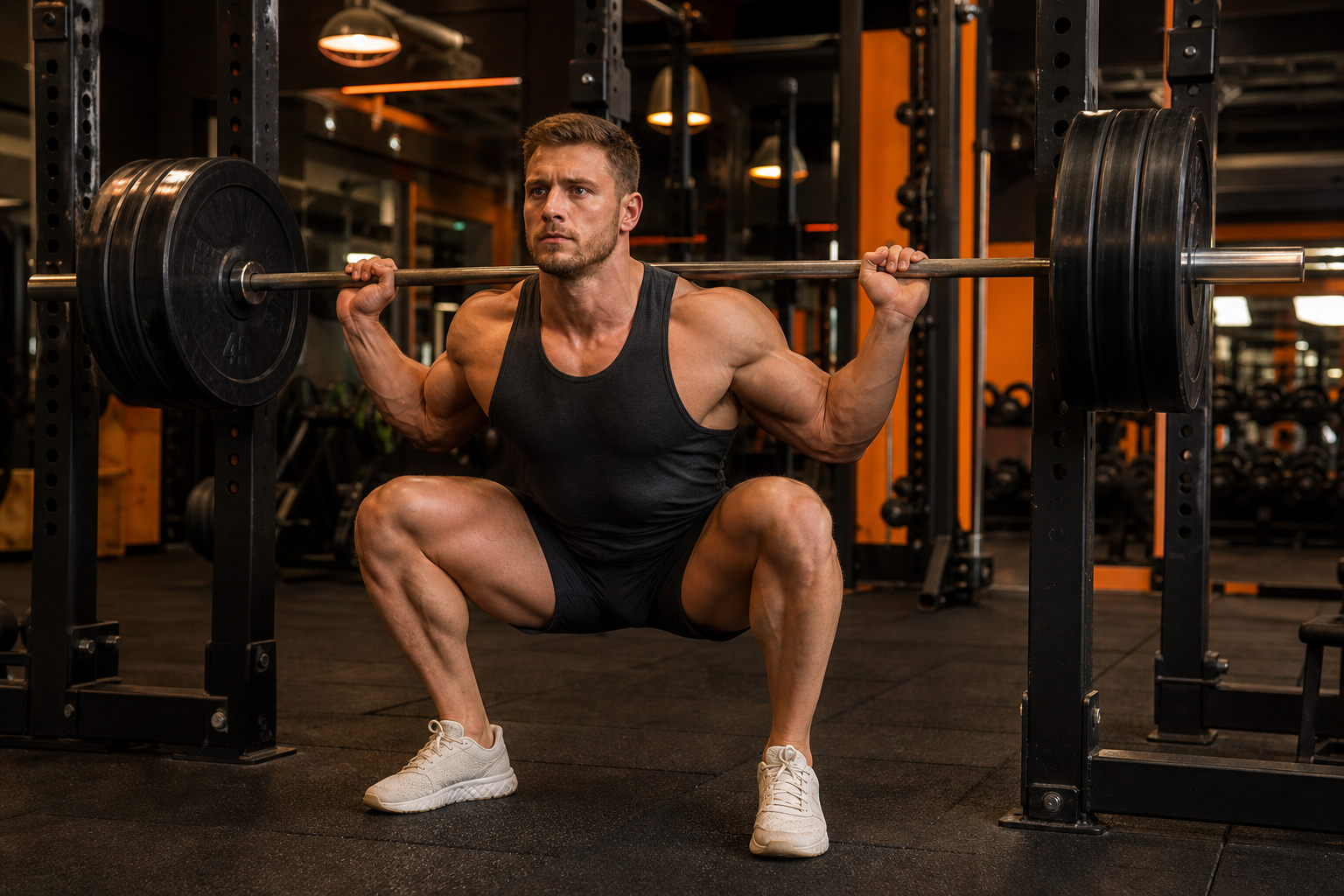
Initiate the squat by pushing your hips back and bending your knees simultaneously — think "sit down between your heels." Keep your chest up and your eyes focused on a point straight ahead or slightly down. Your knees should track in line with your toes; do not let them cave inward. Descend in a controlled manner, taking roughly 2 seconds to reach the bottom. Lower until your hip crease is at least parallel to the top of your knee — this is the minimum depth for a full squat. Going slightly below parallel (ATG — ass to grass) is even better if your mobility allows it.
Step 3 — Ascent (Concentric)
Drive up out of the bottom by pushing through the middle of your feet — not your heels alone, and not your toes. Your hips and chest should rise together at the same rate. If your hips shoot up first, you will end up in a dangerous good-morning position. Think about driving your knees out laterally as you stand up, and squeeze your glutes hard at the top. Lock out to a full standing position with your hips fully extended before taking your next breath.
Step 4 — Breathing and Bracing
Use the Valsalva maneuver for each rep: take a big breath into your belly before descending, brace your core by pushing your abs out against your belt (or imaginary belt), hold that breath throughout the entire rep, and exhale at the top. This intra-abdominal pressure is your spine's primary support mechanism under heavy load. Never breathe in or out during the descent or ascent — that is when your spine is most vulnerable. Reset your brace before every single rep.
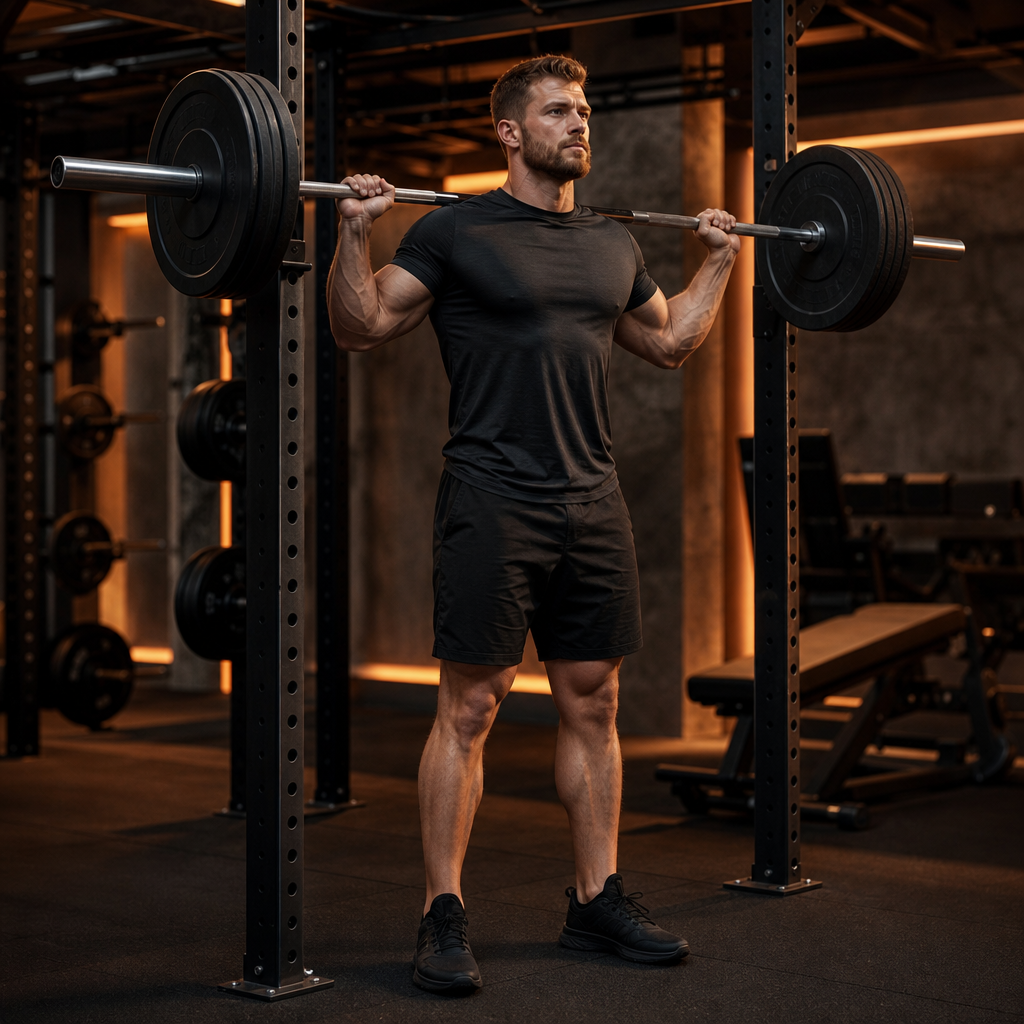
Barbell back squat setup and starting position
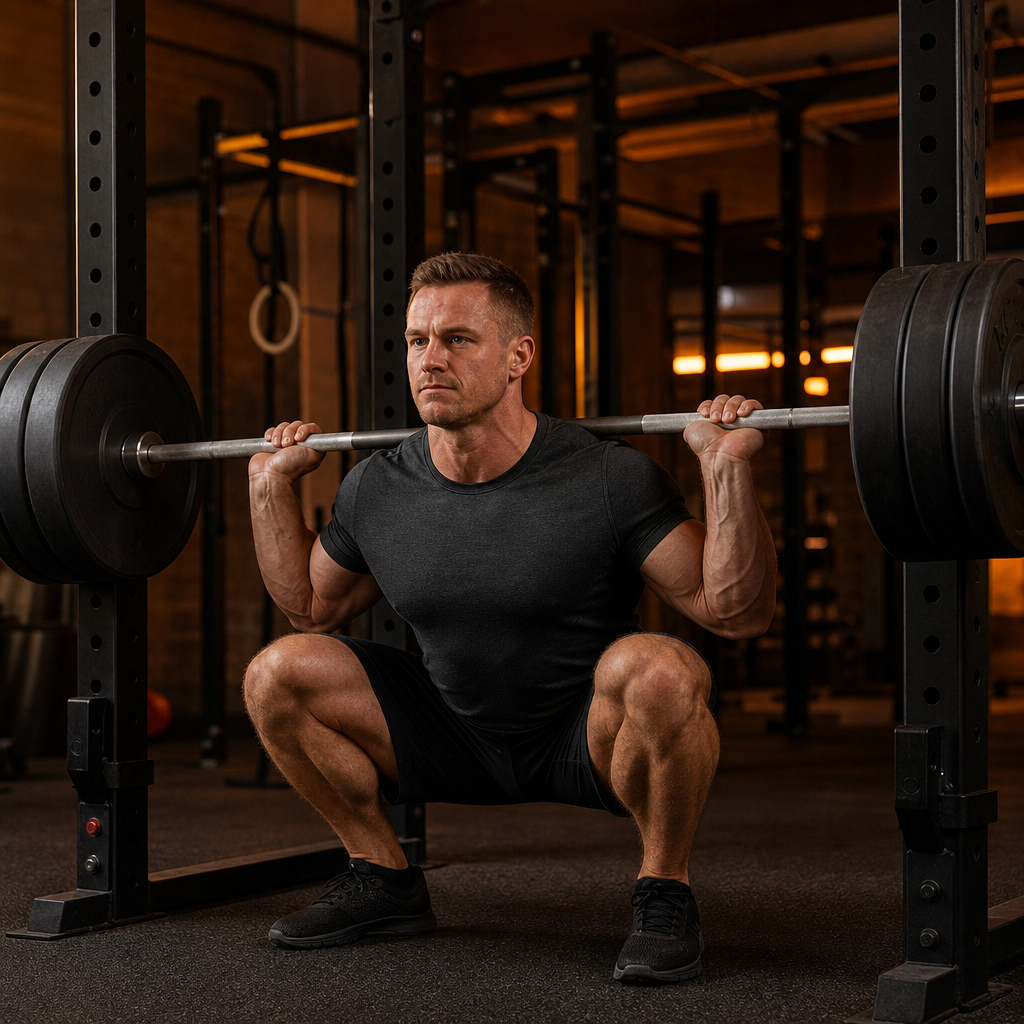
Barbell back squat at bottom position
What Are the Best Squat Variations for Every Level
The barbell back squat is not a one-size-fits-all movement. Small changes in bar position and stance alter which muscles are emphasized.
High-Bar vs. Low-Bar Squat
In the high-bar squat, the bar rests on the upper traps with a more upright torso. This emphasizes the quadriceps and is the default style for most lifters and Olympic weightlifters. In the low-bar squat, the bar sits 2–3 inches lower on the rear deltoids, requiring a more forward-leaning torso. This shifts emphasis toward the posterior chain (glutes and hamstrings) and typically allows you to lift 10–15% more weight. Powerlifters almost always use the low-bar position in competition.
Wide vs. Narrow Stance
A wider stance (1.5× shoulder width) with toes pointed further out emphasizes the inner quads (vastus medialis), adductors, and glutes. A narrower stance (hip width or slightly narrower) with toes pointed more forward shifts emphasis to the outer quads (vastus lateralis). Most lifters find their strongest position somewhere between shoulder and 1.5× shoulder width.
Depth Considerations
Parallel depth (hip crease level with the top of the knee) is the minimum for a legitimate squat. Below-parallel squats produce significantly greater glute and hamstring activation and are associated with better knee health long-term, according to a 2020 systematic review in Sports Medicine. If you lack the ankle or hip mobility to reach parallel, work on your mobility first rather than cutting depth short.
What Are the Most Common Squat Mistakes
These errors reduce effectiveness and increase injury risk. Fix them to get the most out of your squat.
Knees caving in (valgus collapse): This is the most common squat error and a major risk factor for ACL and meniscus injuries. Actively push your knees outward over your toes throughout the entire movement. If you cannot, the weight is too heavy or your hip external rotators are weak — add banded squats and clamshells to your warm-up.
Butt wink (lumbar flexion at the bottom): When your pelvis tucks under at the bottom of the squat, your lower back rounds under load — a recipe for disc injury. This is usually caused by limited hip flexor or ankle mobility. Reduce your depth to the point where you can maintain a neutral spine, and work on mobility drills to gradually increase your range.
Leaning too far forward: If your chest drops and your torso becomes nearly horizontal, the squat turns into a good morning. This shifts excessive load onto your lower back and removes the quads from the movement. Keep your chest up and drive your elbows under the bar. Strengthening your upper back and core will help.
Not hitting depth: Quarter and half squats reduce glute and hamstring activation and can create strength imbalances. If you cannot reach parallel, reduce the weight and work on mobility. There is no shame in squatting lighter with proper depth — there is shame in squatting heavy with garbage form.
Rising on toes during the ascent: If your heels come off the floor, you have shifted your weight too far forward. This removes the posterior chain from the lift and stresses your knees. Push through the mid-foot and think about spreading the floor apart with your feet. Weightlifting shoes with a raised heel can help if ankle mobility is the limiting factor.
What Are the Key Takeaways
| Point | Recommendation |
|---|---|
| Why barbell squat for legs | Most effective single exercise — targets quads, glutes, hamstrings, core |
| Bar position | High-bar on upper traps (default) or low-bar on rear delts (powerlifting) |
| Feet position | Shoulder width, toes 15–30° out, knees track over toes |
| Squat depth | At least parallel; below parallel is better for glute/ham activation |
| Breathing | Valsalva maneuver — big breath, brace, hold through rep, exhale at top |
Quick mistake checklist:
- Knees caving in — push knees out over toes, reduce weight if needed
- Butt wink at bottom — reduce depth, work on hip/ankle mobility
- Leaning too far forward — keep chest up, strengthen upper back and core
- Not hitting depth — reduce weight, aim for at least parallel
- Rising on toes — push through mid-foot, consider weightlifting shoes
Recommended leg day combination: Barbell back squat 4×6 + Romanian deadlift 3×8 + Leg press 3×12 + Walking lunges 3×10/leg + Calf raises 4×15. Compound strength + posterior chain + isolation = complete leg development.
Frequently Asked Questions
How deep should I squat for the best results?
At minimum, squat until your hip crease is level with the top of your knee (parallel). Below-parallel squats produce significantly greater glute and hamstring activation and are associated with better knee health long-term. If you lack mobility to reach parallel, work on that before adding weight.
Where should the barbell sit on my back for squats?
For the high-bar position, rest the bar on your upper traps with a more upright torso — this emphasizes the quadriceps. For low-bar, place it 2-3 inches lower on your rear deltoids with a more forward lean — this shifts emphasis to the posterior chain and typically allows 10-15% more weight.
Are barbell squats bad for your knees?
When done with proper form, squats are not harmful to healthy knees. Full-depth squats through a controlled range of motion actually strengthen the knee joint. The real danger comes from knees caving inward (valgus collapse) and cutting depth short with excessive weight, which creates strength imbalances.
Barbell squat vs leg press — which is better?
The barbell squat is more effective overall because it recruits more muscle groups (including core and stabilizers) and allows functional strength development. A 2019 study showed the back squat produced greater vastus medialis and gluteus maximus activation than the leg press. Use the leg press as an accessory, not a replacement.
References & Sources
1RM Calculator (One-Rep Max)
Estimate your one-rep max (1RM) - the maximum weight you can lift for a single repetition - from a weight you can lift for multiple reps. The calculator uses the Epley and Brzycki equations and averages them.
Strength Standards Calculator
How strong are you compared to other lifters? Enter your bodyweight and best lift to see where you rank - from Beginner to Elite - on the bench press, squat, deadlift, and overhead press. Standards are scaled to your bodyweight, so a 60 kg lifter and a 100 kg lifter are judged fairly.
Protein Intake Calculator
Calculate how much protein you need each day based on your body weight and training goal. This calculator uses the research-backed range of 1.6 to 2.2 grams of protein per kilogram of body weight for building muscle.