
Cable Leg Curl: How to Isolate and Strengthen Your Hamstrings
Cable leg training, like the cable leg curl and cable kickback, isolates the hamstrings and glutes with constant tension. For leg curls, attach an ankle strap to a low cable and curl your heel toward your glute. For kickbacks, drive your leg straight back, squeezing your glute. Cables are ideal for controlled isolation work.
Why Cables Are Effective for Hamstring Isolation
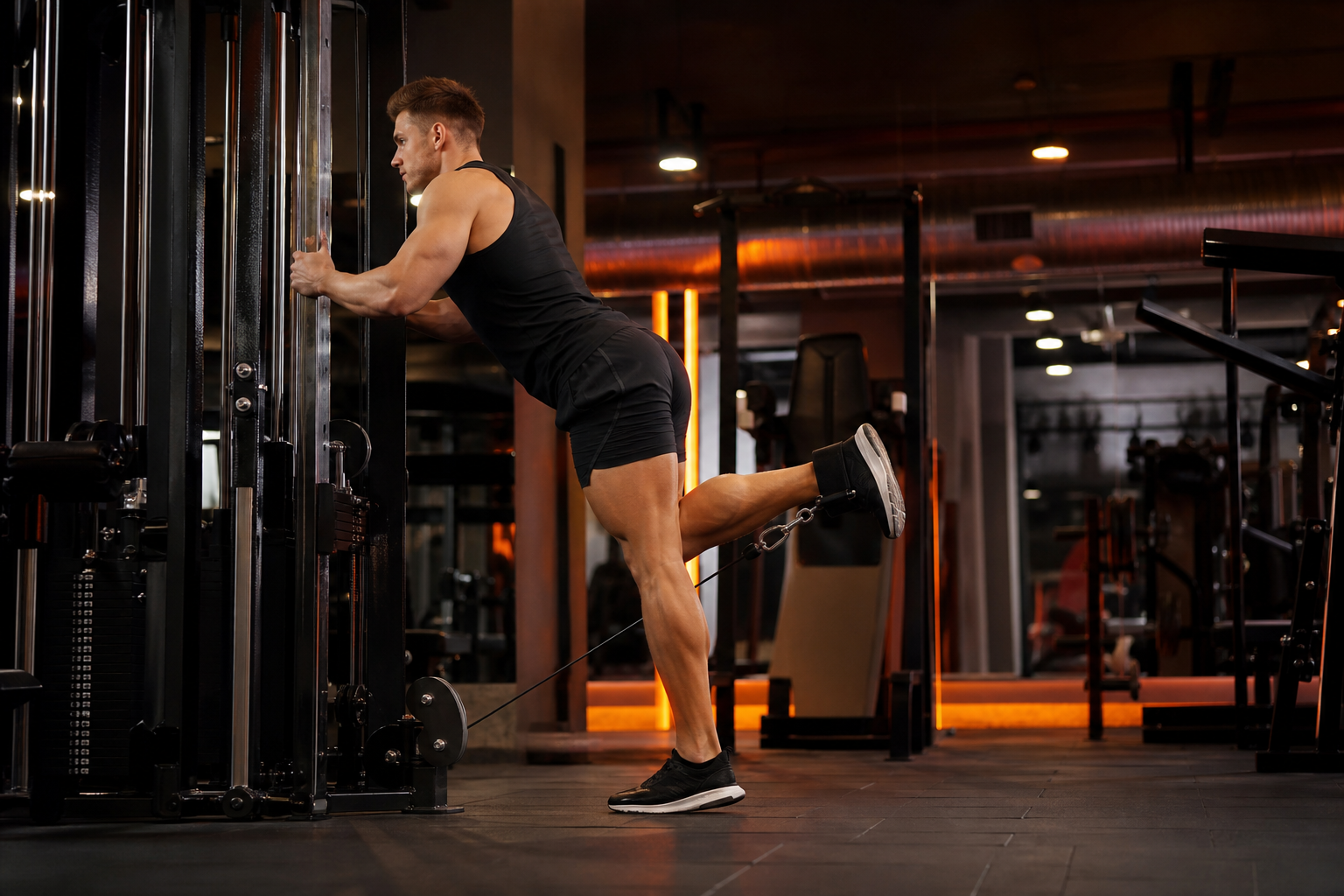
The cable leg curl is one of the most effective isolation exercises for the hamstrings — the biceps femoris, semitendinosus, and semimembranosus. Unlike machine leg curls, the cable provides constant tension throughout the entire range of motion. There is no dead spot at the top or bottom where the resistance drops off, because the weight stack pulls the cable taut at every angle.
This constant tension is a significant advantage for muscle hypertrophy. A 2019 study published in the Journal of Strength and Conditioning Research demonstrated that exercises with consistent tension throughout the movement produced greater time under tension (TUT) and muscle activation compared to those with a strength curve that drops off at endpoints. The cable leg curl delivers exactly this benefit.
Cables are also gentler on the lower back than stiff-legged deadlifts or Romanian deadlifts, because the movement occurs at the knee joint, not the hip. This makes the cable leg curl an ideal choice for lifters who want to isolate their hamstrings without loading the posterior chain compressively. It is a staple in rehabilitation protocols and bodybuilding programs alike.
This guide covers the cable leg curl in detail: setup, execution, variations, and the mistakes that hold you back.
How to Do the Cable Leg Curl with Proper Form
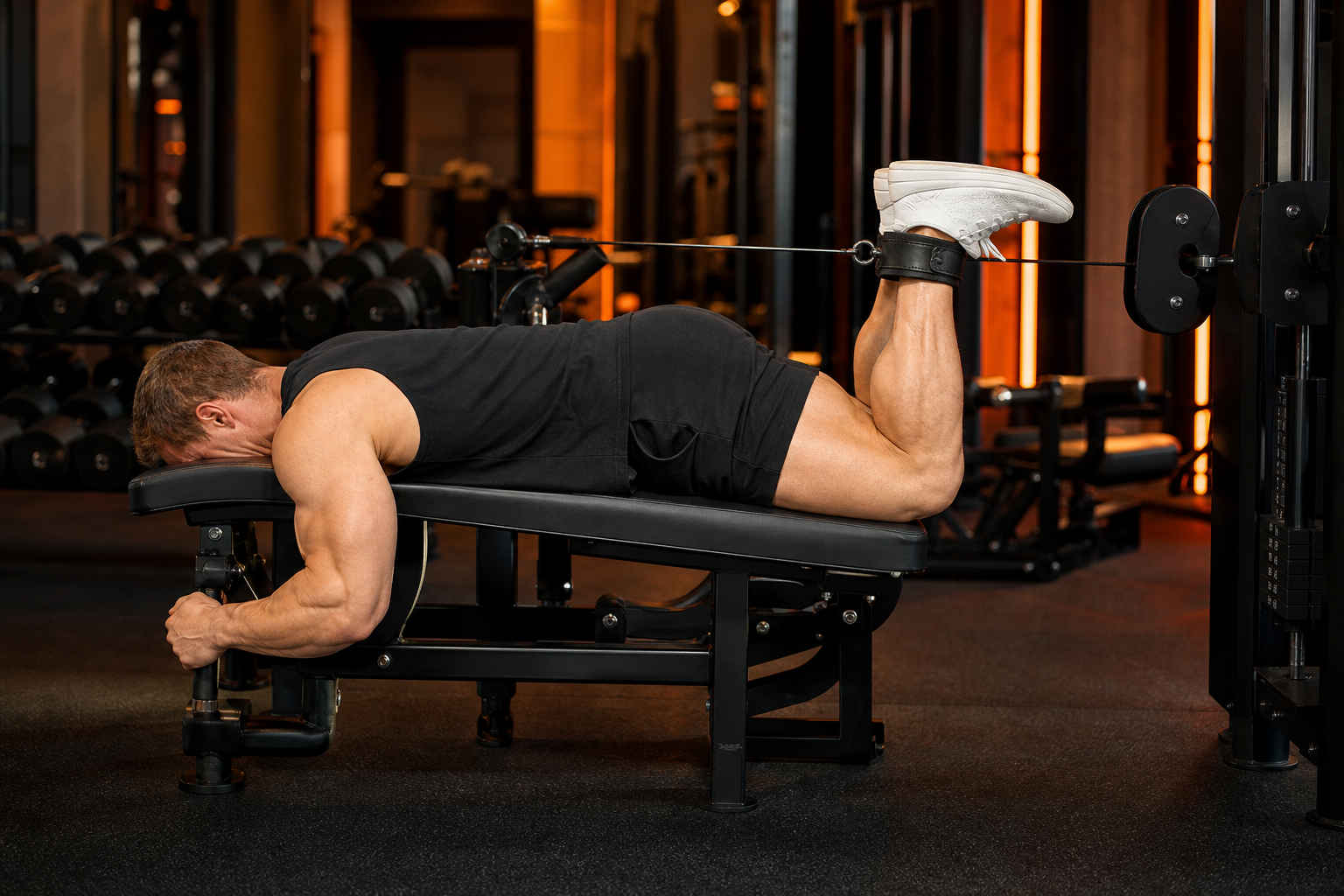
The cable leg curl isolates the hamstrings by flexing the knee against cable resistance. It targets all three hamstring muscles, with emphasis on the biceps femoris when the toes point straight or slightly outward.
Step 1 — Setup and Ankle Strap Attachment
Attach an ankle strap to the low cable pulley. Secure the strap around the ankle of your working leg — snug but not cutting off circulation. Stand facing the cable machine, about 2–3 feet back so the cable is taut at the start. Hold the machine frame or a support for balance. Keep a slight bend in the knee of your working leg — your leg should not be completely locked out. Your non-working leg should be firmly planted with a soft knee, and your torso should be upright with a neutral spine.
Step 2 — Extended / Start Position
With the ankle strap attached and the cable taut, your working leg should be extended in front of you with a very slight bend in the knee. This is your start position. Your weight should be balanced over your planted foot. Brace your core, grip the support firmly, and prepare to curl. The cable should already be providing light resistance in this position — that is the constant tension advantage.
Step 3 — Curl (Concentric)
Drive your heel toward your glute by flexing the knee. Keep your upper leg and hip stationary — do not let your hip flex forward or your torso lean. The movement comes entirely from the knee joint. Squeeze your hamstring hard at the peak contraction, when your heel is as close to your glute as your flexibility allows. Hold this peak contraction for a full second. The cable ensures the tension does not let up even at the top — this is where the cable leg curl outperforms the machine.
Step 4 — Breathing and Return
Exhale as you curl the weight up, inhale as you slowly return to the start position. Control the eccentric: do not let the weight stack slam back down. A 2–3 second return keeps the hamstring under tension and maximizes muscle damage for growth. The cable provides resistance on the way back too — another advantage over free-weight alternatives.
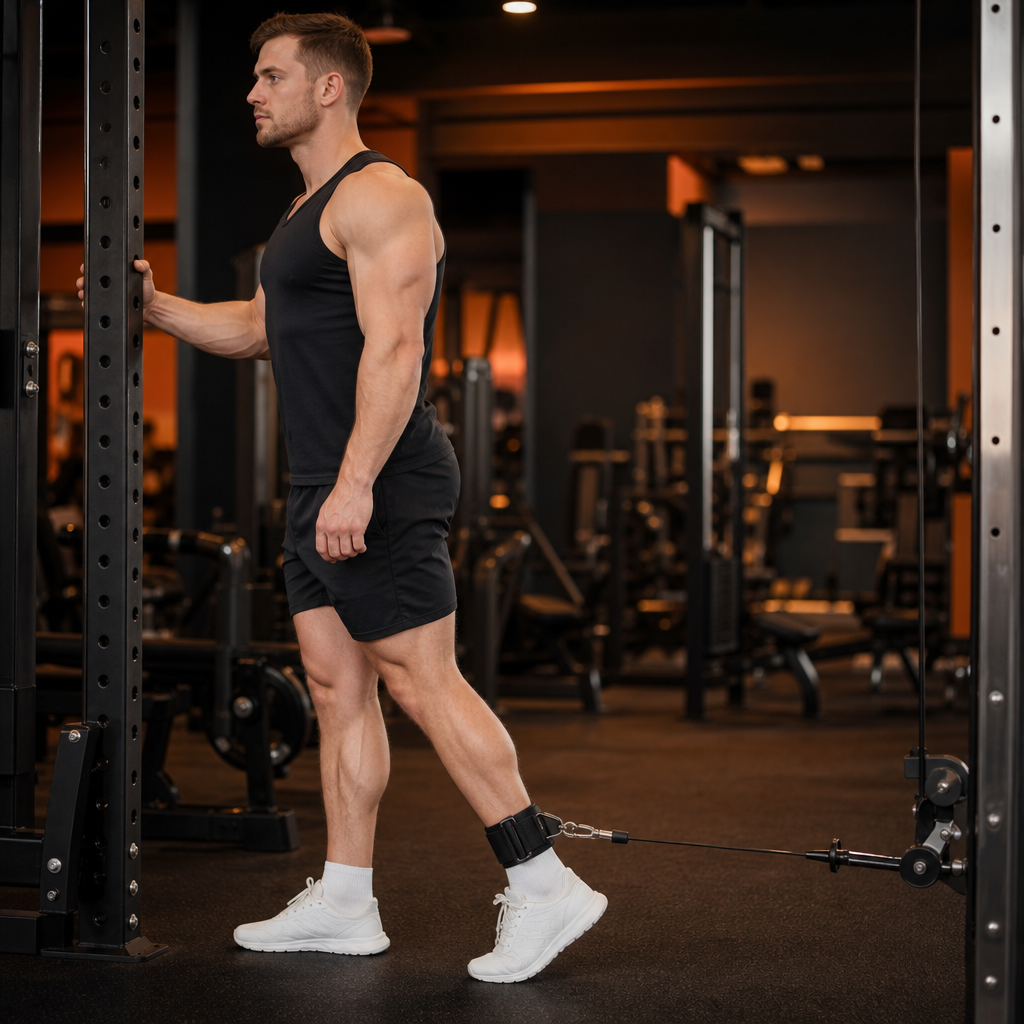
Cable leg curl extended start position
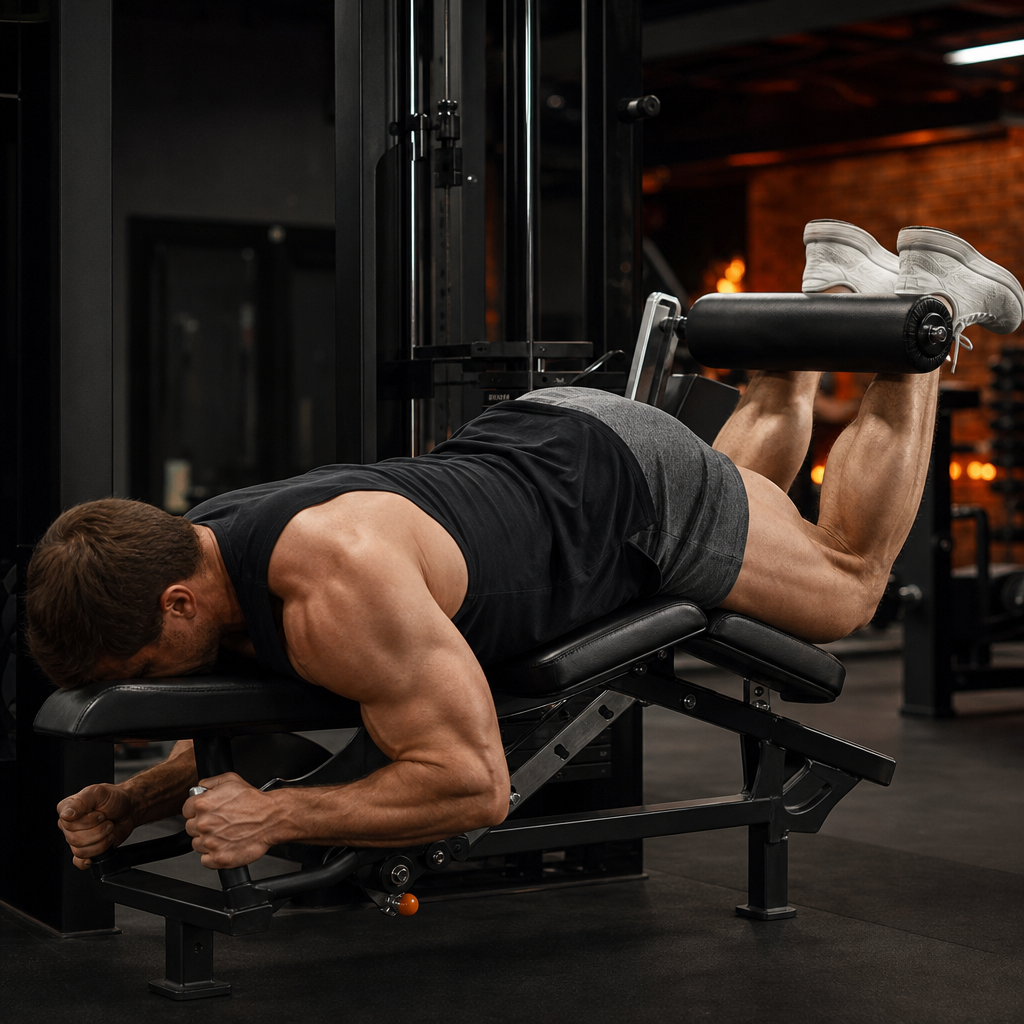
Cable leg curl peak contraction position
What Are the Best Cable Leg Curl Variations for Every Level
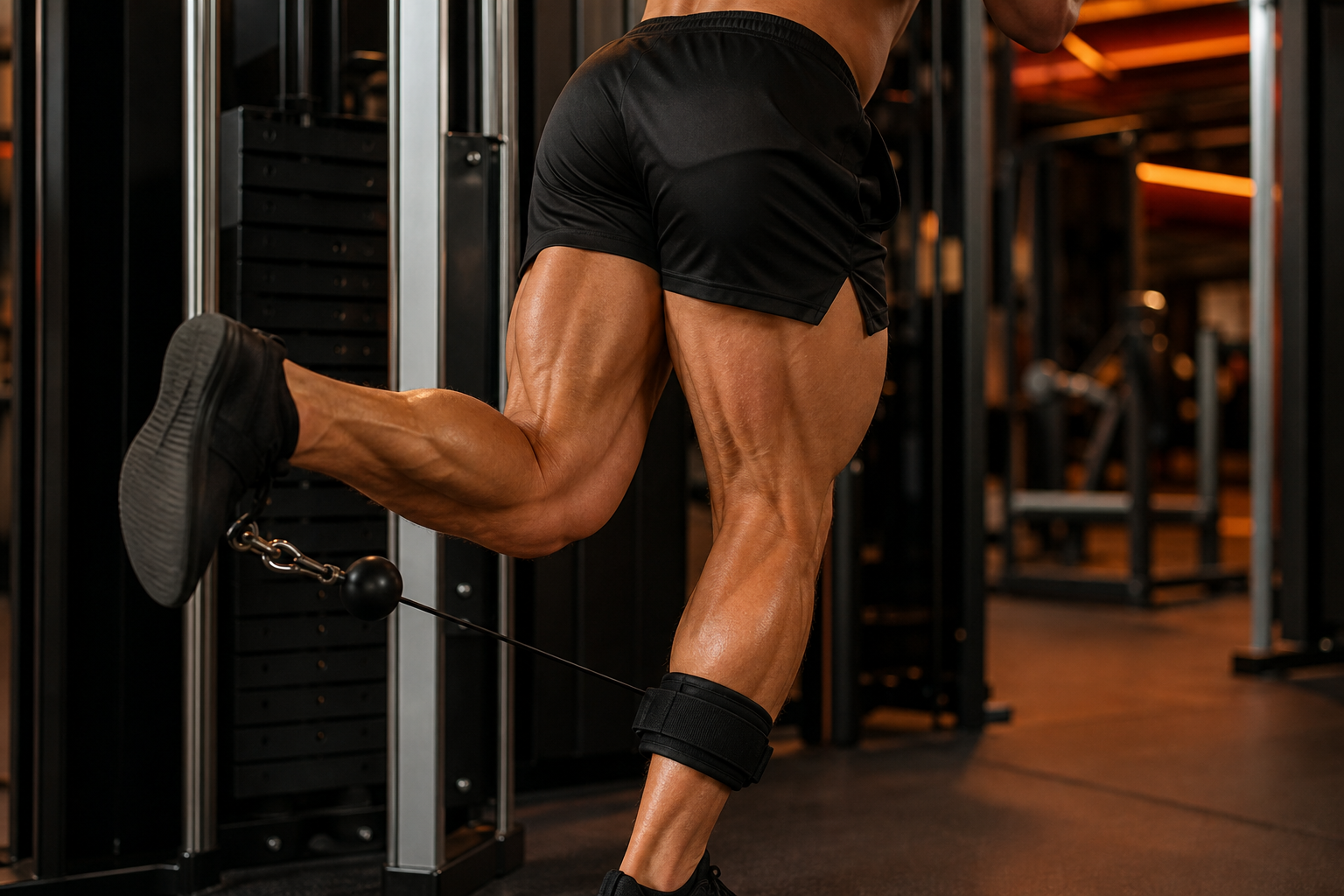
The cable leg curl can be modified to target different aspects of the hamstrings or accommodate different equipment setups.
Standing Single-Leg Curl: This is the standard version described above. Working one leg at a time eliminates imbalances between sides and allows you to focus all your attention on the working hamstring. It is the best choice for most lifters.
Kneeling Cable Curl: Kneel on a pad facing away from the cable machine with the ankle strap on one leg. Curl your heel toward your glute from this position. The kneeling variation removes balance as a factor and can feel more stable for some lifters. It also slightly shifts the emphasis to the medial hamstrings (semitendinosus and semimembranosus) due to the hip angle.
Lying Cable Curl: Lie face down on a bench with the ankle strap attached to the low cable. This mimics the lying machine leg curl but with the constant tension advantage of the cable. It is an excellent option if your gym does not have a lying leg curl machine or if you want to add variety to your hamstring training.
What Are the Most Common Cable Leg Curl Mistakes
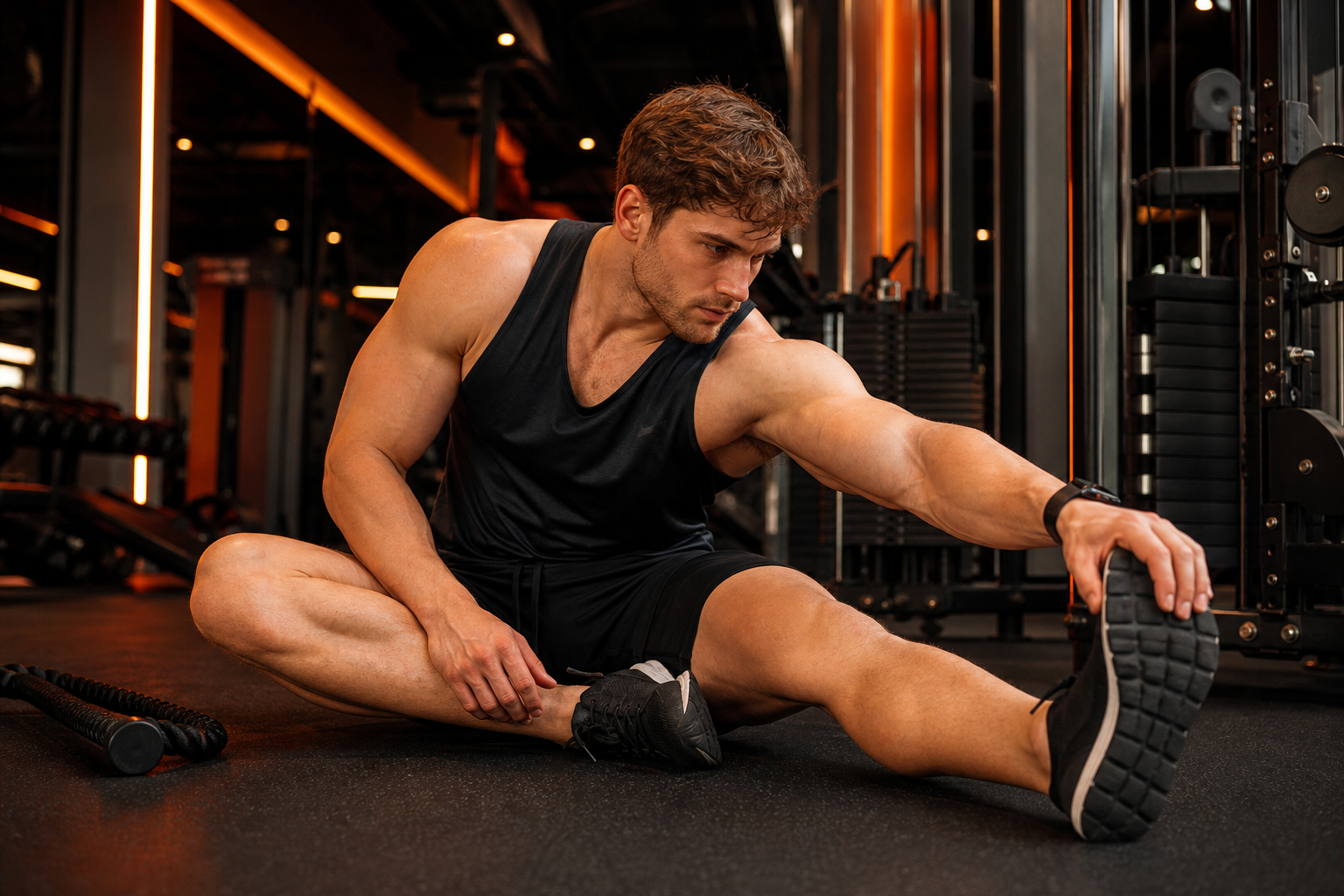
These errors reduce the effectiveness of the cable leg curl and can lead to strain or poor results. Fix them to get the most out of every rep.
Using momentum and swinging: The most common mistake. If you are rocking your torso or using hip flexion to kick the weight up, your hamstrings are not doing the work. Keep your upper body still and make the knee do all the bending. Reduce the weight if you cannot curl without swinging.
Not using full range of motion: Half-reps on the cable leg curl are a waste of the cable's biggest advantage — constant tension through the full arc. Curl your heel all the way to your glute and extend back to the start. If you cannot achieve full ROM, the weight is too heavy.
Going too heavy: The cable leg curl is an isolation exercise, not a strength movement. Using excessive weight forces you to use momentum, shortens the range of motion, and shifts stress to the lower back and hip flexors. Pick a weight you can control for 10–15 strict reps.
Pointing toes vs. flexing: Pointing your toes (plantar flexion) during the curl shifts more emphasis to the biceps femoris, while flexing your toes (dorsiflexion) recruits the gastrocnemius to assist. For maximum hamstring isolation, point your toes slightly — but be aware that this is a subtle adjustment, not a dramatic difference.
Not squeezing at peak contraction: The top of the curl is where the hamstring is in its strongest shortened position. If you rush through this point, you miss the most valuable part of the rep. Hold the peak contraction for at least one second on every rep.
What Are the Key Takeaways
| Point | Recommendation |
|---|---|
| Why cables for hamstrings | Constant tension through full ROM + lower back friendly + knee-joint isolation |
| Muscles targeted | Biceps femoris, semitendinosus, semimembranosus |
| Setup | Ankle strap on low cable, stand facing machine, slight knee bend |
| Peak contraction | Hold 1 second at top, squeeze hamstring hard |
| Eccentric control | 2–3 second return, never let weight stack slam |
Quick mistake checklist:
- Swinging or using momentum — reduce weight, keep torso still
- Not using full ROM — curl heel to glute, extend fully
- Going too heavy — use a weight for 10–15 strict reps
- Wrong foot position — point toes slightly for biceps femoris emphasis
- No squeeze at top — hold peak contraction 1 second every rep
Recommended leg day combination: Barbell back squat 4×6 + Romanian deadlift 3×8 + Cable leg curl 3×12 + Walking lunges 3×10/leg. Compound strength + hamstring isolation + unilateral work = complete leg development.
Frequently Asked Questions
How do I do cable leg curls with proper form?
Attach an ankle strap to the low cable, stand facing the machine with your working leg slightly bent, and curl your heel toward your glute using only knee flexion. Keep your upper body still, squeeze hard at the peak contraction for a full second, and control the 2-3 second return.
What is the best way to do cable kickbacks for glutes?
Set the cable to the lowest position with an ankle strap, lean forward slightly with a braced core, and drive your working leg straight back while squeezing the glute at full extension. Avoid arching your lower back or using momentum — the movement should be slow and controlled.
Are cable leg exercises better than machine exercises?
Cables provide constant tension throughout the entire range of motion, unlike many machines where resistance drops at certain points. This gives cables an advantage for muscle hypertrophy. However, machines can be more stable and allow heavier loads for compound movements — both have a place in your training.
Should I focus on isolation or compound exercises for legs?
Start with compound movements like squats and deadlifts for overall strength and mass, then follow with cable isolation work like leg curls to target specific muscles. Compound exercises build the foundation, while isolation exercises fill in gaps and correct imbalances.
References & Sources
1RM Calculator (One-Rep Max)
Estimate your one-rep max (1RM) - the maximum weight you can lift for a single repetition - from a weight you can lift for multiple reps. The calculator uses the Epley and Brzycki equations and averages them.
Strength Standards Calculator
How strong are you compared to other lifters? Enter your bodyweight and best lift to see where you rank - from Beginner to Elite - on the bench press, squat, deadlift, and overhead press. Standards are scaled to your bodyweight, so a 60 kg lifter and a 100 kg lifter are judged fairly.
Protein Intake Calculator
Calculate how much protein you need each day based on your body weight and training goal. This calculator uses the research-backed range of 1.6 to 2.2 grams of protein per kilogram of body weight for building muscle.