
Nutrición Deportiva para Principiantes: Qué Comer Antes, Durante y Después del Ejercicio
La nutrición deportiva se centra en proporcionar energía para entrenar y recuperarte. Come una comida balanceada de proteínas y carbohidratos 2-3 horas antes del ejercicio, mantente hidratado y consume 20-40g de proteína dentro de las horas posteriores al entrenamiento para reparar el músculo. La ingesta diaria total de proteínas y calorías es más importante que el timing exacto.
Por qué importa la nutrición deportiva

No puedes compensar una mala dieta con entrenamiento. Lo que comes afecta directamente tus niveles de energía, velocidad de recuperación y los resultados de cada sesión. La Academia de Nutrición y Dietética señala que una nutrición adecuada puede mejorar el rendimiento hasta un 25% comparado con entrenar con una dieta desequilibrada.
Para principiantes, el mayor cambio es pensar en la comida como combustible — no solo calorías. Diferentes nutrientes tienen distintos propósitos: los carbohidratos alimentan tus entrenamientos, la proteína reconstruye tus músculos y las grasas apoyan la función hormonal y la salud articular. El equilibrio correcto es lo que convierte el esfuerzo en progreso visible.
¿Cómo son los conceptos básicos de macronutrientes para principiantes?

Cada comida que consumes está compuesta por tres macronutrientes — proteína, carbohidratos y grasa. Esto es lo que cada uno hace por tu fitness:
Proteína (1.6–2.2g por kg de peso corporal al día) — El componente fundamental del músculo. Después del ejercicio, tu cuerpo usa la proteína dietética para reparar las microdesgarros en las fibras musculares, haciéndolas más fuertes y ligeramente más grandes. La Sociedad Internacional de Nutrición Deportiva recomienda este rango para personas activas. Buenas fuentes: pechuga de pollo, huevos, yogur griego, pescado, legumbres.
Carbohidratos (3–5g por kg al día) — Tu fuente principal de energía para el ejercicio de intensidad moderada a alta. Los carbohidratos se almacenan en tus músculos e hígado como glucógeno, que alimenta cada repetición y cada sprint. Las dietas bajas en carbohidratos y el entrenamiento intenso no combinan bien — te sentirás lento y débil. Buenas fuentes: arroz, avena, batata, frutas, pan integral.
Grasa (0.8–1g por kg al día) — Esencial para la producción hormonal (incluyendo testosterona), salud articular y absorción de vitaminas liposolubles (A, D, E, K). Evita reducir demasiado la grasa — perjudicará tu recuperación y energía. Buenas fuentes: aceite de oliva, aguacate, nueces, pescado graso.
Una proporción inicial sencilla para principiantes: 30% proteína, 40% carbohidratos, 30% grasa. Ajusta según cómo te sientas y rindas.
Qué comer antes del entrenamiento
Tu comida pre-entrenamiento determina si entrenas con energía o te arrastras por la sesión. Las reglas generales:
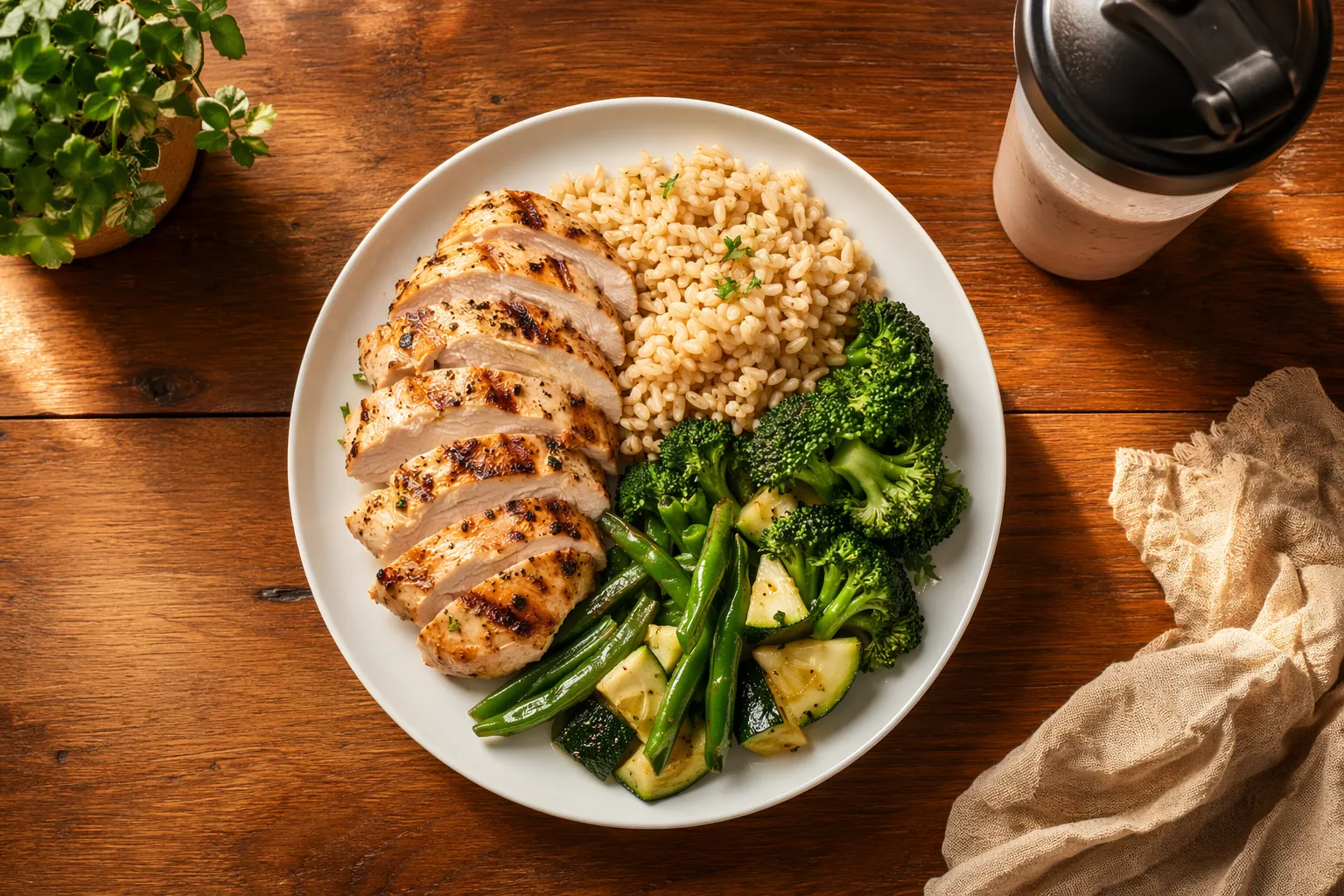
2–3 horas antes: Come una comida equilibrada con carbohidratos, proteína y una pequeña cantidad de grasa. Ejemplo: pollo con arroz y verduras, o avena con proteína y plátano. Esto le da a tu cuerpo tiempo para digerir y almacenar glucógeno.
30–60 minutos antes: Si tienes hambre y necesitas un impulso rápido, elige carbohidratos de fácil digestión con mínima grasa y fibra (que ralentizan la digestión). Ejemplo: un plátano, una tostada con miel o un batido pequeño. El objetivo es energía rápida sin molestias estomacales.
Evita alimentos altos en grasa o fibra justo antes de entrenar — se quedan en el estómago y pueden causar hinchazón o náuseas durante el movimiento intenso.
¿Cuáles son las mejores opciones de nutrición post-entrenamiento para la recuperación?
Después del ejercicio, tus músculos están listos para absorber nutrientes y comenzar el proceso de reparación. La "ventana anabólica" — el período en que tu cuerpo es más eficiente usando proteína para reparar músculo — dura aproximadamente 2 horas post-entrenamiento, aunque investigaciones recientes sugieren que la ventana es más amplia de lo que se pensaba.
Qué comer: Una combinación de proteína y carbohidratos. La proteína activa la síntesis de proteína muscular; los carbohidratos reponen las reservas de glucógeno agotadas. Guía práctica: apunta a 20–40g de proteína y una cantidad similar de carbohidratos dentro de las 2 horas después del entrenamiento.
Ejemplos: Batido de proteína con plátano, pollo a la parrilla con batata, yogur griego con frutos rojos y granola, o incluso una cena equilibrada si tu entrenamiento termina cerca de la hora de comer.
La clave es la constancia, no la perfección. Perder una comida post-entrenamiento no arruinará tu progreso — pero comer bien consistentemente después de entrenar se acumulará en resultados reales durante semanas y meses.
¿Cuáles son los beneficios de la hidratación durante el ejercicio?
La deshidratación de tan solo el 2% de tu peso corporal puede reducir el rendimiento hasta un 20%, según el Colegio Americano de Medicina Deportiva. Para una persona de 70kg, eso es solo 1.4 litros de pérdida de líquido — fácil de alcanzar en una sesión de 45 minutos.
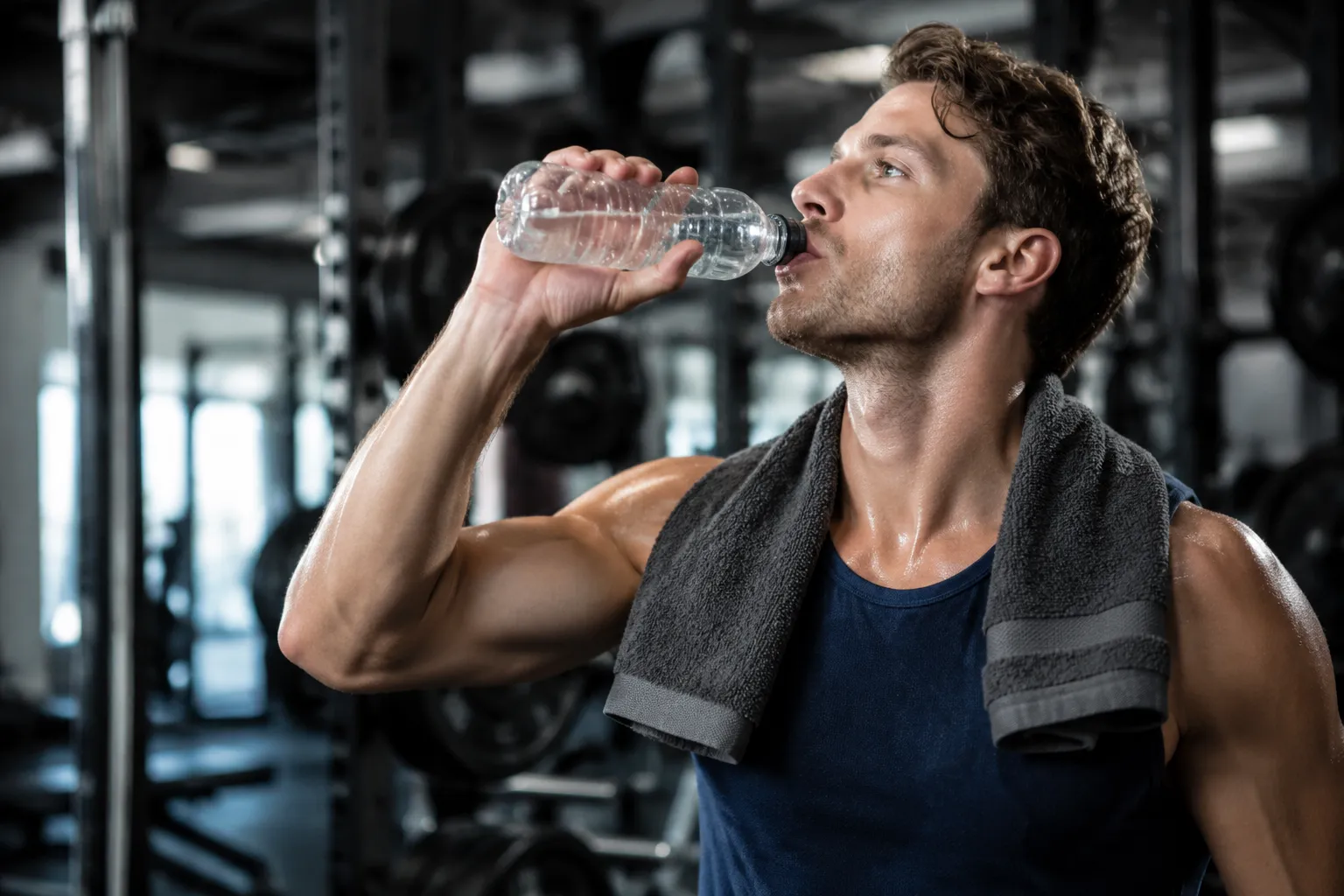
Antes del ejercicio: Bebe 400–600ml de agua 2–3 horas antes, y otros 200–300ml en los 30 minutos antes de empezar.
Durante el ejercicio: Sorbe 150–250ml cada 15–20 minutos. Para sesiones de menos de 60 minutos, el agua es suficiente. Para sesiones más largas o intensas, considera una bebida con electrolitos (sodio, potasio) para reemplazar lo que pierdes por el sudor.
Después del ejercicio: Bebe 500–750ml por cada 0.5kg de peso corporal perdido durante el entrenamiento. Una comprobación simple: tu orina debe ser amarilla clara, no oscura.
¿Cuáles son los puntos clave?
| Punto | Recomendación |
|---|---|
| Proporción inicial de macros | 30% proteína, 40% carbohidratos, 30% grasa |
| Pre-entrenamiento (2-3h antes) | Comida equilibrada con carbohidratos + proteína |
| Pre-entrenamiento (30-60min) | Carbohidratos de rápida digestión (plátano, tostada) |
| Post-entrenamiento | 20-40g proteína + carbohidratos en 2 horas |
| Hidratación | 400-600ml antes, sorber durante, rehidratar después |
Errores nutricionales comunes de principiantes:
- Entrenar con el estómago vacío sin razón (el ayuno intermitente está bien si está planificado)
- Ignorar completamente la nutrición post-entrenamiento
- Beber solo cuando tienes sed (ya estás deshidratado en ese punto)
- Depender demasiado de suplementos en lugar de comida real
Próximo paso: Esta semana, planifica una comida pre-entrenamiento y una post-entrenamiento. Empieza pequeño — incluso un plátano antes de entrenar y un snack rico en proteína después marcarán una diferencia notable.
Preguntas Frecuentes
¿Qué comer 1-2 horas antes de entrenar?
Una mezcla de carbohidratos y un poco de proteína funciona mejor — plátano con mantequilla de maní o avena con proteína. Evita grasas pesadas y fibra justo antes, ya que ralentizan la digestión y pueden causar molestias.
¿Cuánto después de entrenar debo comer?
Dentro de 1-2 horas está bien — no hay ventana mágica de 30 minutos. Lo que más importa es tu proteína y calorías diarias totales. Pero si entrenaste en ayunas o llevas 4+ horas sin comer, come antes para mejorar la recuperación.
¿Necesito batidos de proteína para ganar músculo?
No. Los batidos son convenientes pero no necesarios. Pollo, huevos, pescado, tofu y yogur griego funcionan igual. La clave es alcanzar tu objetivo de proteína diaria — 1.6-2.2 g por kg de peso — sea de comida o suplementos.
Referencias y fuentes
- Schoenfeld BJ, et al. The effect of protein timing on muscle strength and hypertrophy: a meta-analysis. J Int Soc Sports Nutr (2013).
- Morton RW, et al. A systematic review, meta-analysis and meta-regression of the effect of protein supplementation on resistance training gains. Br J Sports Med (2018).
Calculadora de Ingesta de Proteína
Calcula cuánta proteína necesitas cada día según tu peso corporal y objetivo de entrenamiento. Esta calculadora usa el rango respaldado por la ciencia de 1.6 a 2.2 gramos de proteína por kilogramo de peso corporal para ganar músculo.
Calculadora TDEE (Calorías Diarias)
Calcula tu Gasto Energético Diario Total (TDEE): la cantidad de calorías que quemas cada día. La calculadora usa la ecuación Mifflin-St Jeor para tu tasa metabólica basal, multiplicada por tu nivel de actividad.