
Stretching for Beginners: The Complete Guide to Getting Flexible
Stretching improves flexibility and joint range of motion. Static stretches, held 15-60 seconds after exercise when muscles are warm, lengthen tight muscles and aid recovery. Dynamic stretches, done before exercise, move joints through their range. Regular stretching reduces stiffness and injury risk, but avoid bouncing in static stretches and never stretch cold muscles aggressively.
What Is Stretching and Why Does It Matter?
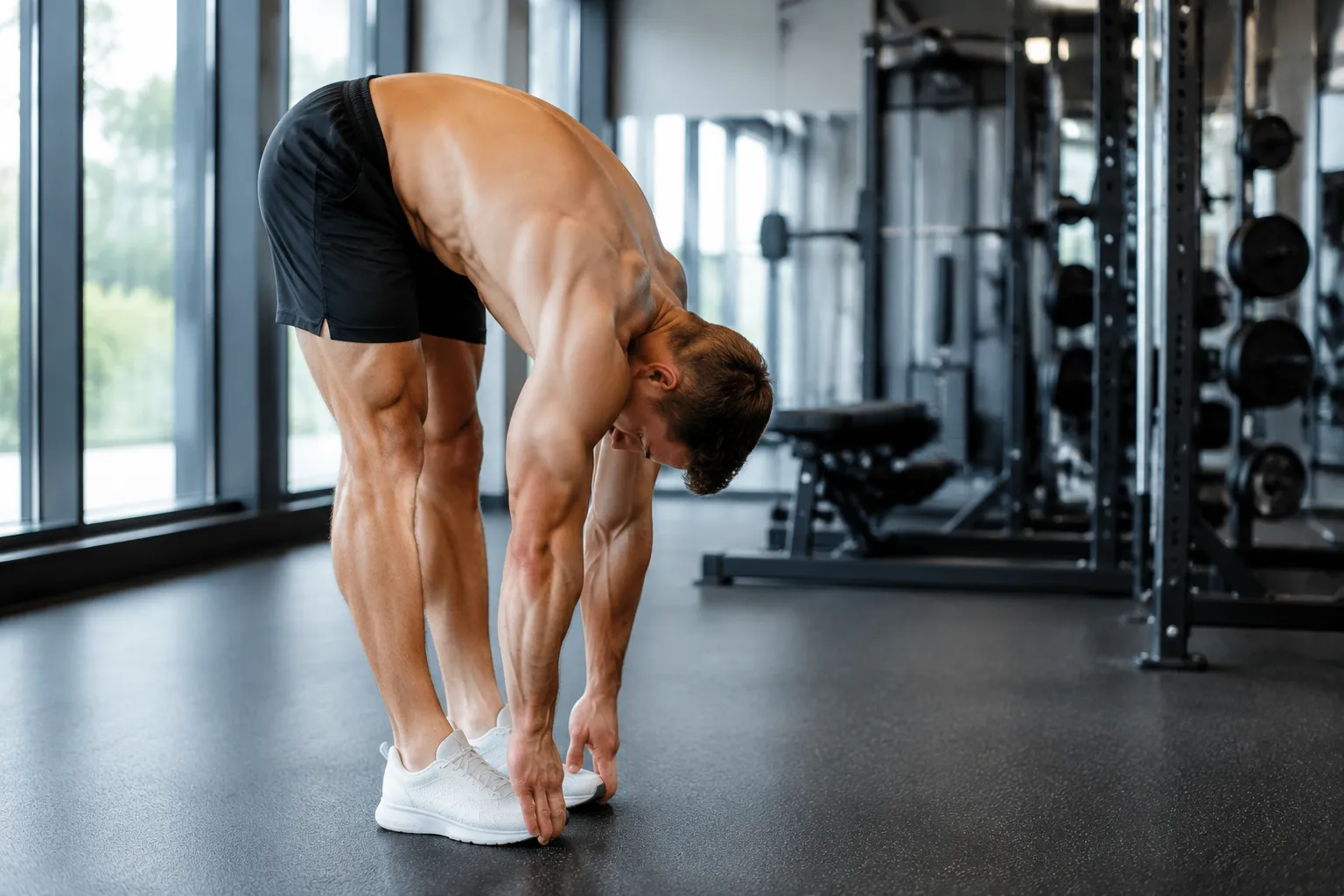
Stretching is the deliberate act of lengthening your muscles and tendons to improve their range of motion. It comes in two main flavors: static stretching (holding a position for 20-30 seconds) and dynamic stretching (moving through a controlled range of motion repeatedly). Both serve different purposes, and understanding when to use each is the single most important thing a beginner can learn.
According to the American College of Sports Medicine (ACSM), adults should stretch each major muscle group at least 2-3 times per week. Regular stretching improves joint mobility, reduces muscle stiffness, and makes everyday movements — bending to tie your shoes, reaching a high shelf — feel easier. A 2023 meta-analysis in the Scandinavian Journal of Medicine & Science in Sports found that consistent stretching programs improved joint range of motion by an average of 8 degrees across multiple joints.
From my experience working with beginners, the most common mistake is treating stretching as an afterthought — something you squeeze in for 30 seconds before hitting the weights. But flexibility is a trainable quality, just like strength or endurance, and it responds best to consistent, focused practice.
What Are the Best Stretches for Beginners
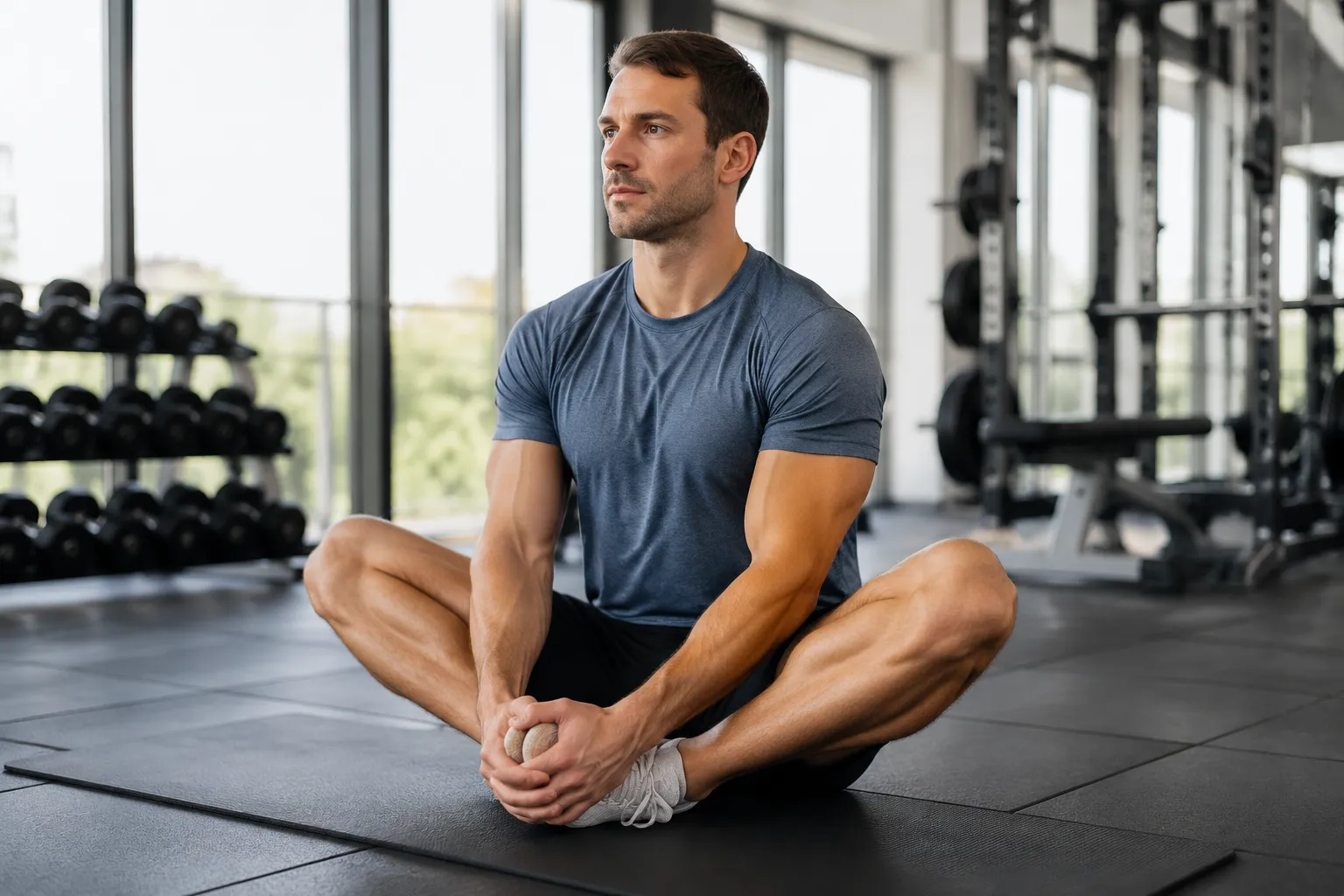
You do not need to be a yogi to benefit from stretching. Here are six beginner-friendly stretches that cover all the major muscle groups:
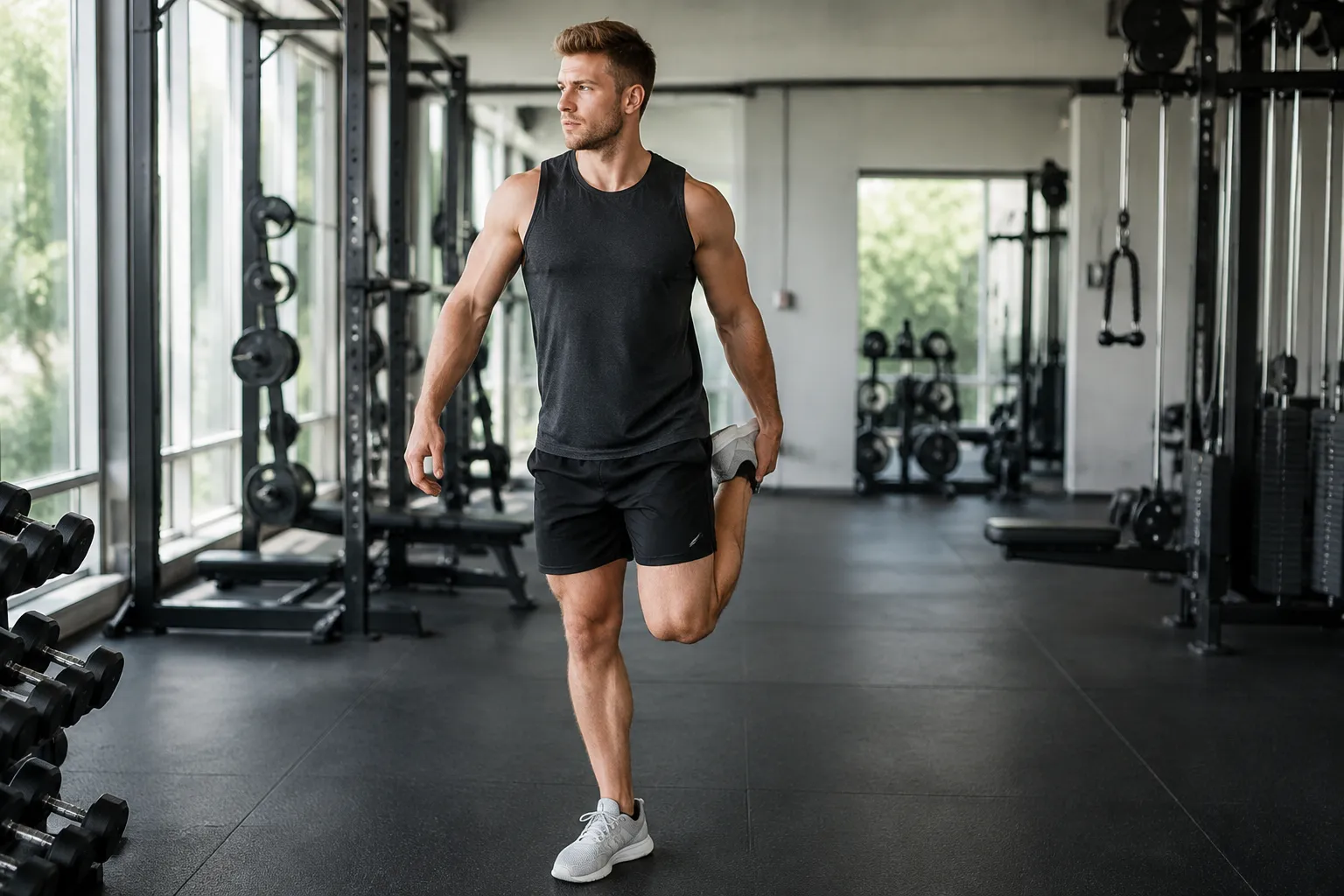
Standing quad stretch — Stand on one leg, pull the opposite foot toward your glute. Keep your knees together and your standing leg slightly bent. Hold 20-30 seconds per side. This targets the front of your thighs.
Seated hamstring stretch — Sit on the floor with one leg extended, the other foot against your inner thigh. Reach toward your extended foot without rounding your lower back. Hold 20-30 seconds per side. This targets the back of your thighs.
Cat-cow — On all fours, alternate between arching your back upward (cat) and letting it sag downward (cow). Do 10-15 slow repetitions. This mobilizes your entire spine and is especially useful if you sit at a desk all day.
Standing calf stretch — Place your hands on a wall, step one foot back, and press the rear heel into the floor. Hold 20-30 seconds per side. Essential if you run or do any jumping exercises.
Chest doorway stretch — Place your forearms on a door frame with elbows at shoulder height, then lean forward until you feel a stretch across your chest. Hold 20-30 seconds. Counteracts the hunched posture from sitting and phone use.
Figure-four stretch — Lie on your back, cross one ankle over the opposite knee, and pull the bottom leg toward your chest. Hold 20-30 seconds per side. Targets your glutes and piriformis — a common source of lower back and hip tightness.
Should You Stretch Before or After a Workout
This is one of the most debated questions in fitness, and the answer depends on the type of stretching:
Before your workout: Use dynamic stretching. Leg swings, arm circles, hip circles, and walking lunges gradually increase your heart rate, lubricate your joints, and activate the muscles you are about to use. A 2022 study in the Journal of Sports Sciences found that dynamic warm-ups improved subsequent performance by 3-5% compared to no warm-up, while static stretching before exercise showed no performance benefit and sometimes reduced power output by 2-5%.
After your workout: Use static stretching. Your muscles are warm and more pliable, making this the safest and most effective time to hold stretches. Post-workout static stretching helps transition your nervous system from a sympathetic (fight-or-flight) state to a parasympathetic (rest-and-digest) state, which supports recovery.
The simple rule: dynamic before, static after. If you only have time for one, do dynamic stretching before your session — it gives you more immediate benefit for the workout itself.
How to Start a Stretching Routine

Building a stretching habit is easier than you think. Here is a realistic plan for beginners:
| Week | Frequency | Duration | Focus |
|---|---|---|---|
| 1-2 | 3 days/week | 5-10 min | Learn 6 basic stretches, focus on form |
| 3-4 | 4 days/week | 10-15 min | Add hold time (up to 30 sec), try cat-cow flow |
| 5-8 | 5 days/week | 15-20 min | Combine dynamic + static, target tight areas |
Key principles:
- Never stretch cold muscles. Always do 2-3 minutes of light movement first — marching in place, arm swings, or a short walk.
- Breathe steadily. Exhale as you move deeper into a stretch. Holding your breath increases muscle tension and works against what you are trying to achieve.
- Stop at mild tension, not pain. A stretch should feel like a gentle pull, never sharp or burning. Pain means you are overdoing it and risking a strain.
- Be consistent, not intense. Five minutes of stretching every day beats one 30-minute session per week. Your flexibility adapts to frequent, moderate loading — just like strength training.
If you want a structured approach, pair your stretching with an existing habit. Do your dynamic stretches as part of your warm-up routine, and add 5-10 minutes of static stretching at the end of your session. On rest days, a gentle stretching routine also supports active recovery.
What Are the Key Takeaways
| Point | Recommendation |
|---|---|
| Static vs. dynamic | Dynamic before workout, static after workout |
| How long to hold | 20-30 seconds per stretch, 2-3 times per muscle group |
| How often | At least 2-3 times per week (ACSM guideline) |
| Best beginner stretches | Quad stretch, hamstring stretch, cat-cow, calf stretch, doorway chest stretch, figure-four |
| Most common mistake | Stretching cold muscles — always warm up first |
Quick checklist — avoid these beginner mistakes:
- Bouncing while stretching (use controlled, steady holds)
- Forcing a stretch past mild tension
- Holding your breath during stretches
- Skipping stretching entirely and hoping for the best
Next steps: Pick three stretches from the list above and do them after your next workout. Hold each for 20-30 seconds. That is it — you have started your flexibility journey.
Frequently Asked Questions
Should I stretch before or after a workout?
Do dynamic stretching before your workout to warm up your muscles and joints — think leg swings, arm circles, and hip openers. Save static stretching (holding a stretch for 20-30 seconds) for after your workout, when your muscles are already warm and more pliable. Static stretching before training can temporarily reduce strength and power output.
How long should I hold a stretch?
For static stretches, hold each position for 20-30 seconds and repeat 2-3 times per muscle group. Research published in the Journal of Strength and Conditioning Research suggests that 30-second holds are as effective as longer durations for improving flexibility in beginners. For dynamic stretches, perform 10-15 controlled repetitions per movement.
Does stretching prevent injury?
The evidence is mixed. A 2023 systematic review in the British Journal of Sports Medicine found that stretching alone does not significantly reduce overall injury risk. However, stretching as part of a complete warm-up routine (with dynamic movements and gradual intensity increase) does help prepare your muscles and joints for the demands of exercise. Think of it as one piece of the puzzle, not a magic shield.
Can stretching help with muscle soreness?
Light static stretching after a workout can provide temporary relief from muscle soreness by improving blood flow to the area. However, stretching does not significantly reduce delayed-onset muscle soreness (DOMS). For soreness management, combine gentle stretching with active recovery walks, proper hydration, and adequate sleep.
References & Sources
Calories Burned Calculator
Estimate how many calories you burn in any activity - from walking and running to burpees, planks, and weight training. This calculator uses MET values from the 2011 Compendium of Physical Activities, the standard reference for exercise energy expenditure.
TDEE Calculator (Daily Calories)
Calculate your Total Daily Energy Expenditure (TDEE) - the number of calories you burn each day. The calculator uses the Mifflin-St Jeor equation for your basal metabolic rate, multiplied by your activity level.