No-Equipment Workouts: The Complete Bodyweight Training Guide
You do not need a gym membership or expensive equipment to build strength, burn fat, and improve your fitness. Bodyweight training uses the weight of your own body as resistance, and research shows it can be just as effective as weight training for building muscle — especially for beginners. This guide covers everything you need to start training at home today: the best exercises, a structured workout plan, and how to progress over time.
What Are the Benefits of No-Equipment Workouts?
Bodyweight training offers several advantages that make it ideal for beginners and experienced trainees alike:
- Zero cost and zero barriers — No gym membership, no equipment purchase, no commute. You can train in your living room, a hotel room, or a park.
- Functional strength — Push-ups, squats, and planks train movement patterns you use every day, improving real-world strength and balance.
- Joint-friendly — Bodyweight exercises let you control the range of motion and speed, reducing injury risk compared to heavy external loads.
- Scalable difficulty — Every exercise has beginner and advanced variations. A knee push-up builds to a standard push-up, then to a diamond push-up, then to a one-arm push-up.
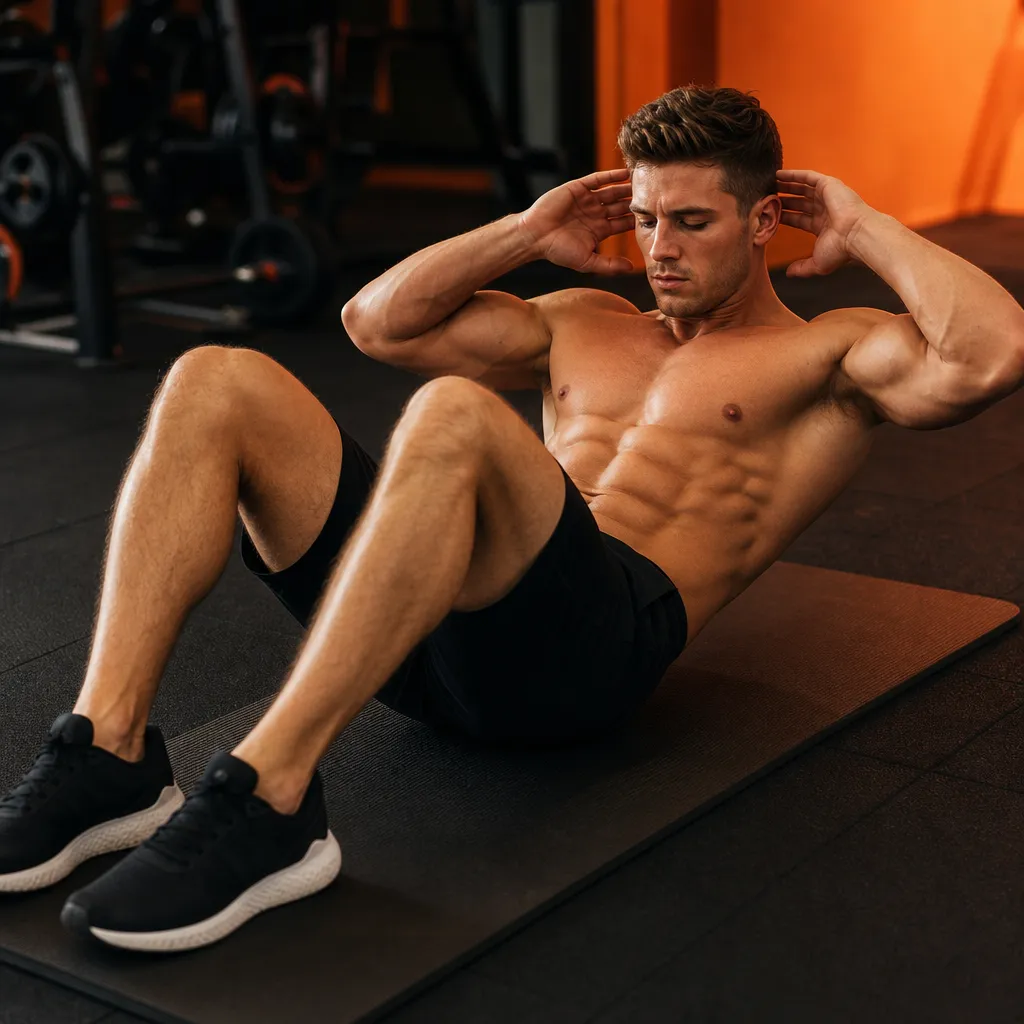
- Better core engagement — Without a bench or machine to stabilize you, your core works harder on every rep.
A 2019 meta-analysis published in the Journal of Strength and Conditioning Research found that bodyweight training produced similar strength gains to traditional resistance training in untrained individuals over the first 8-12 weeks.
What Are the Best Bodyweight Exercises for Beginners?
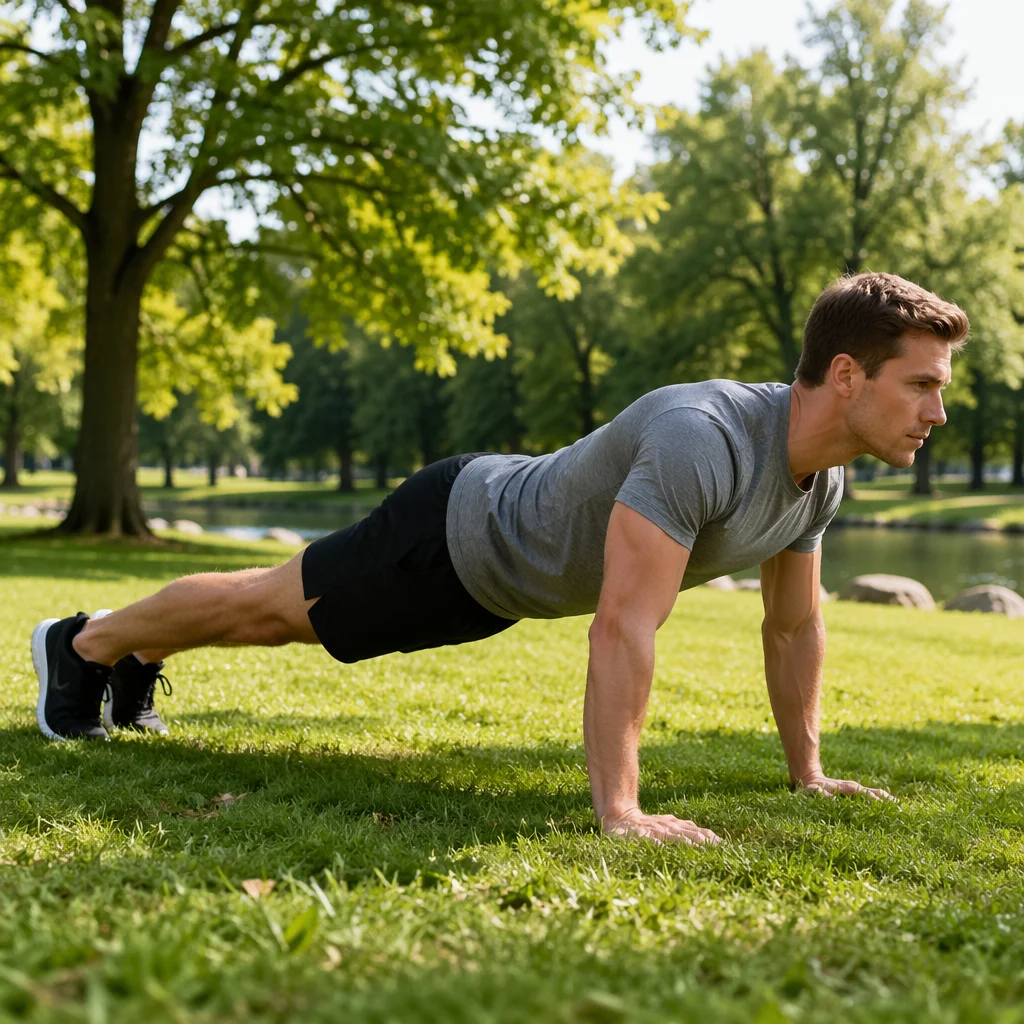
These four fundamental movements cover every major muscle group. Master them before adding variations:
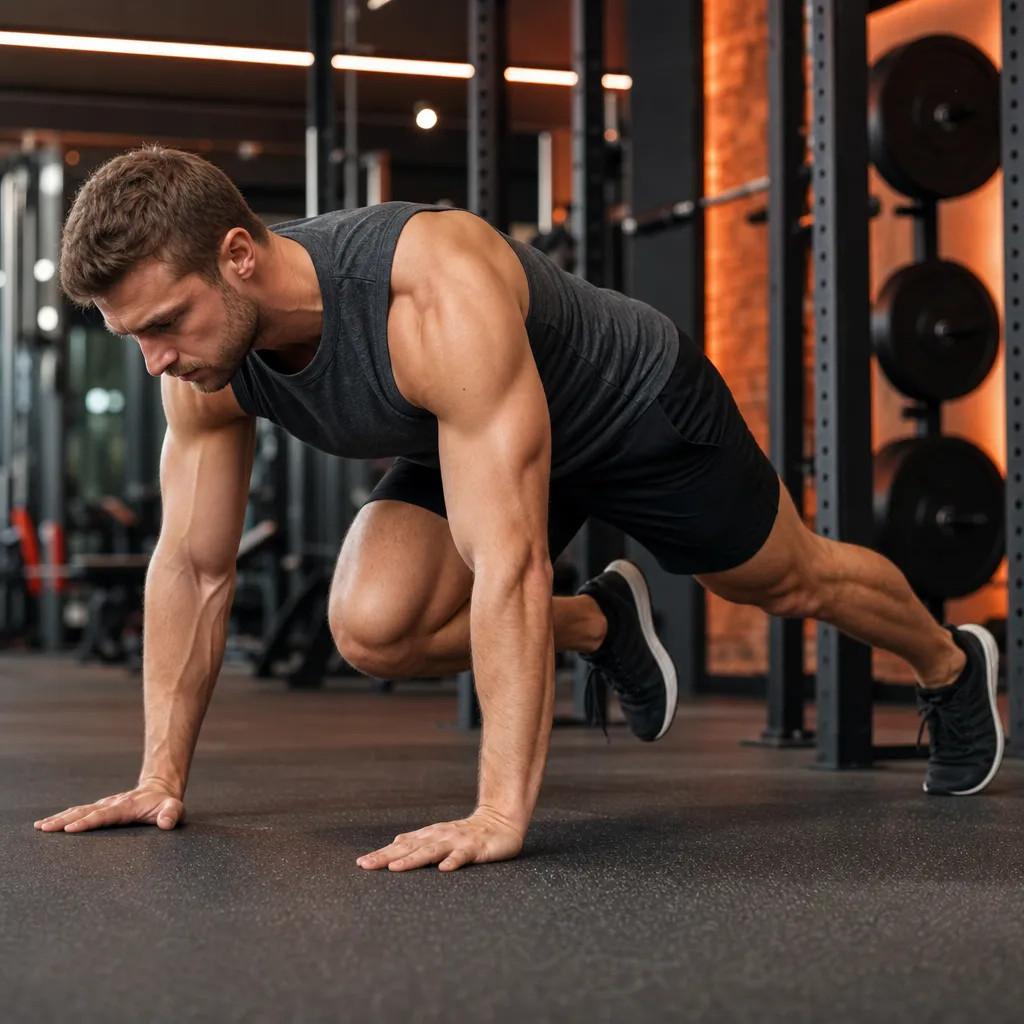
Push-Up — Chest, Shoulders, Triceps, Core
The push-up is the single most effective upper-body bodyweight exercise. It trains your chest, front shoulders, and triceps while forcing your core to stabilize your entire body. Start with knee push-ups if you cannot do a full one yet, and work toward 3 sets of 10 clean reps.
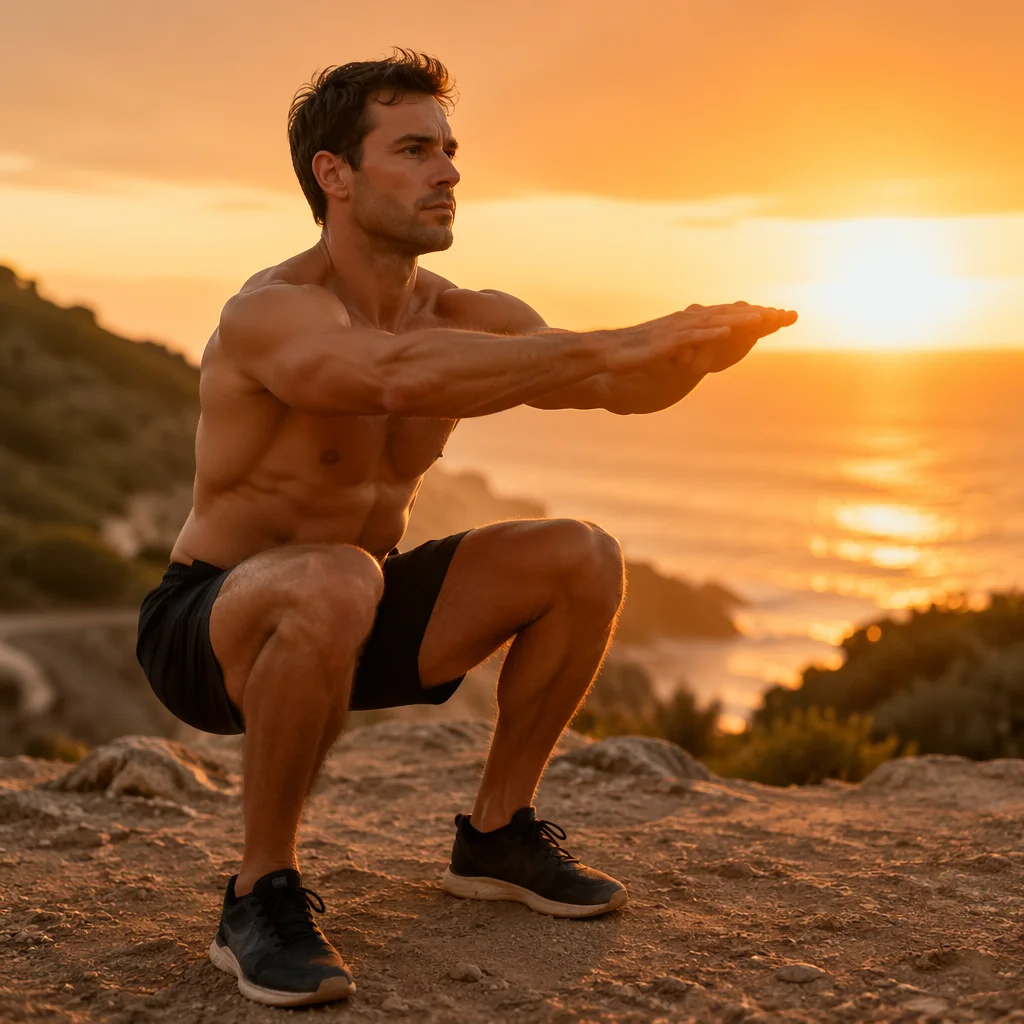
Squat — Quads, Glutes, Hamstrings, Core
The bodyweight squat builds lower-body strength and hip mobility. Keep your chest up, push your knees out, and descend until your thighs are parallel to the floor. Aim for 3 sets of 15-20 reps. Once that feels easy, try single-leg split squats.
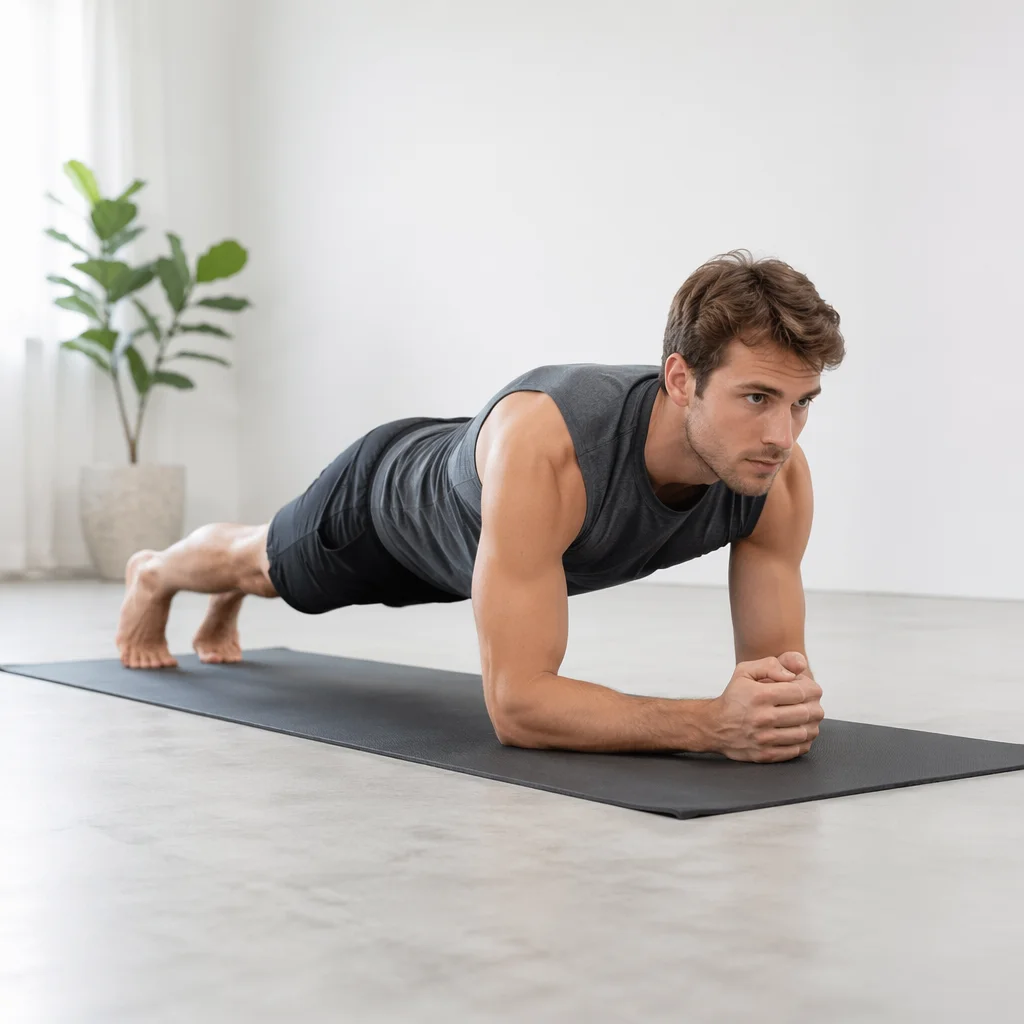
Plank — Core, Shoulders, Glutes
The plank trains isometric core strength, which protects your spine during every other exercise. Hold a straight line from head to heels, squeeze your glutes, and breathe steadily. Build up to 3 sets of 30-60 seconds.
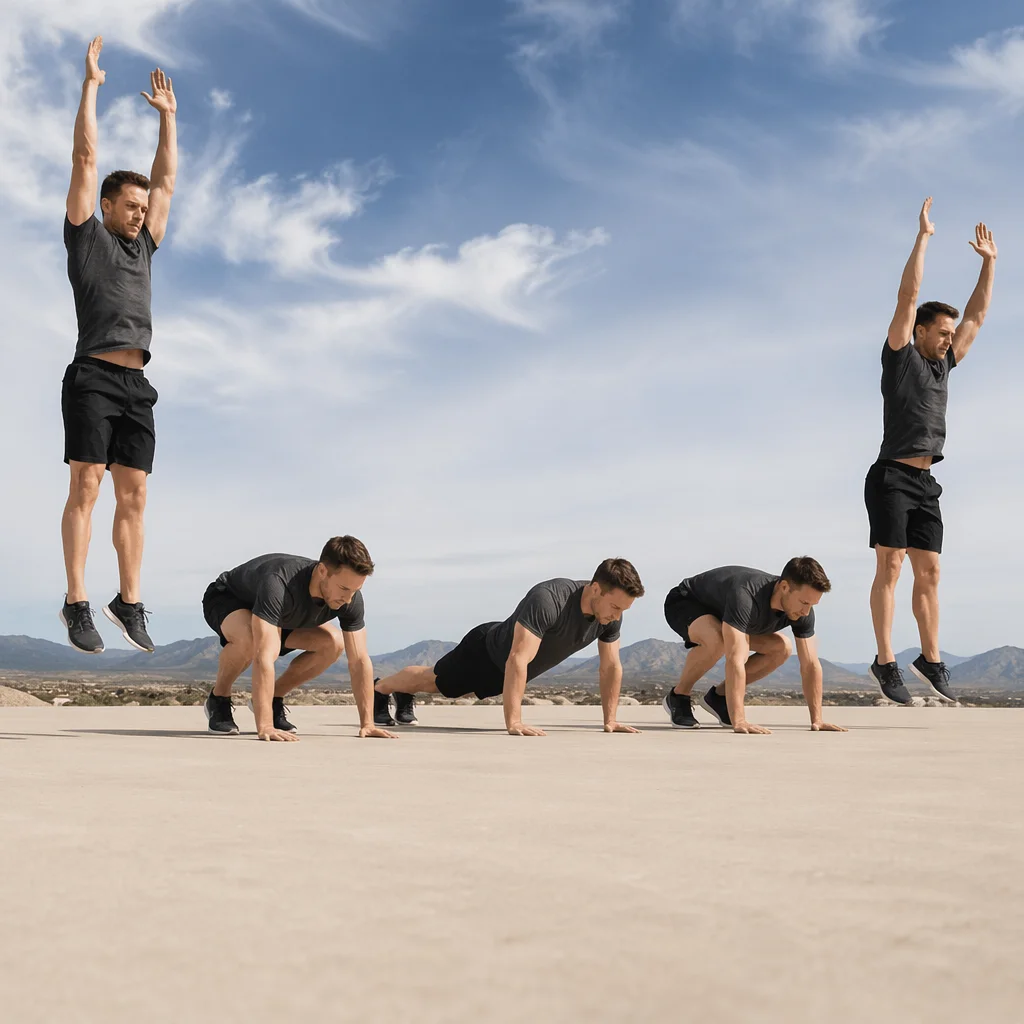
Burpee — Full Body, Cardiovascular Endurance
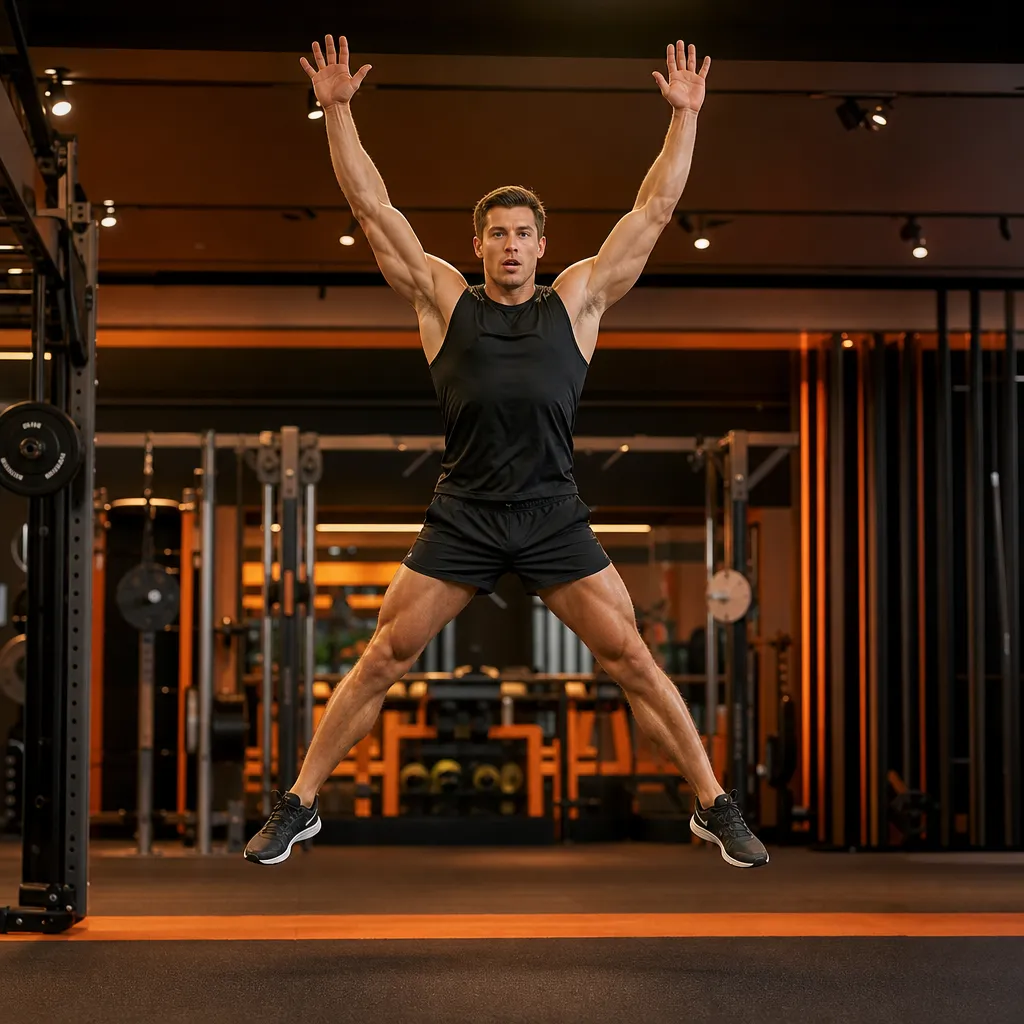
The burpee combines a squat thrust, push-up, and vertical jump into one explosive movement. It builds power, burns calories, and pushes your heart rate fast. Start with 5-8 reps per set and focus on form over speed.
What Is the Best No-Equipment Workout Plan for Beginners?
Follow this 3-day-per-week plan for your first 4 weeks. Rest at least one day between sessions (e.g., Monday, Wednesday, Friday). Each workout targets your whole body.
| Exercise | Sets | Reps | Rest |
|---|---|---|---|
| Bodyweight Squat | 3 | 15-20 | 60s |
| Push-Up (or Knee Push-Up) | 3 | 8-12 | 60s |
| Plank | 3 | 30-45s hold | 45s |
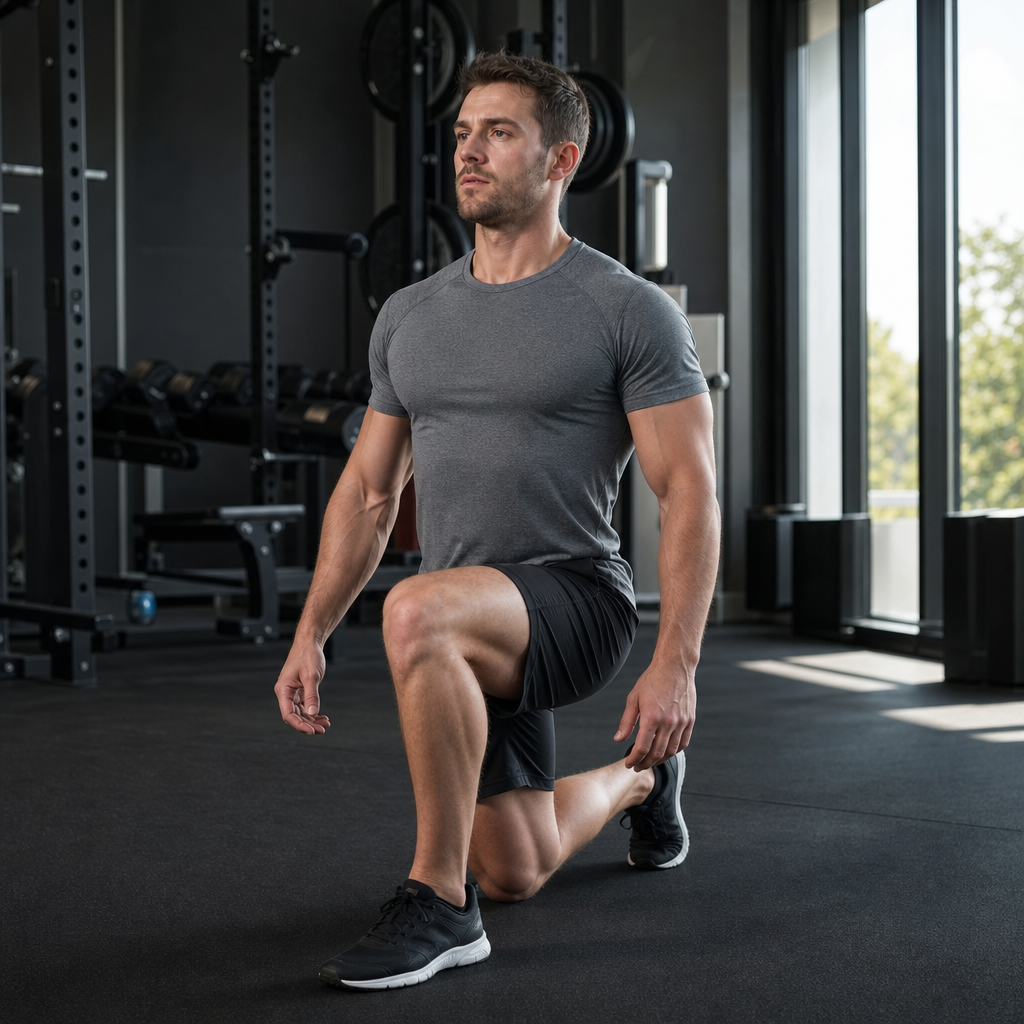
| Walking Lunge | 3 | 10 each leg | 60s |
| Burpee | 2 | 6-10 | 90s |
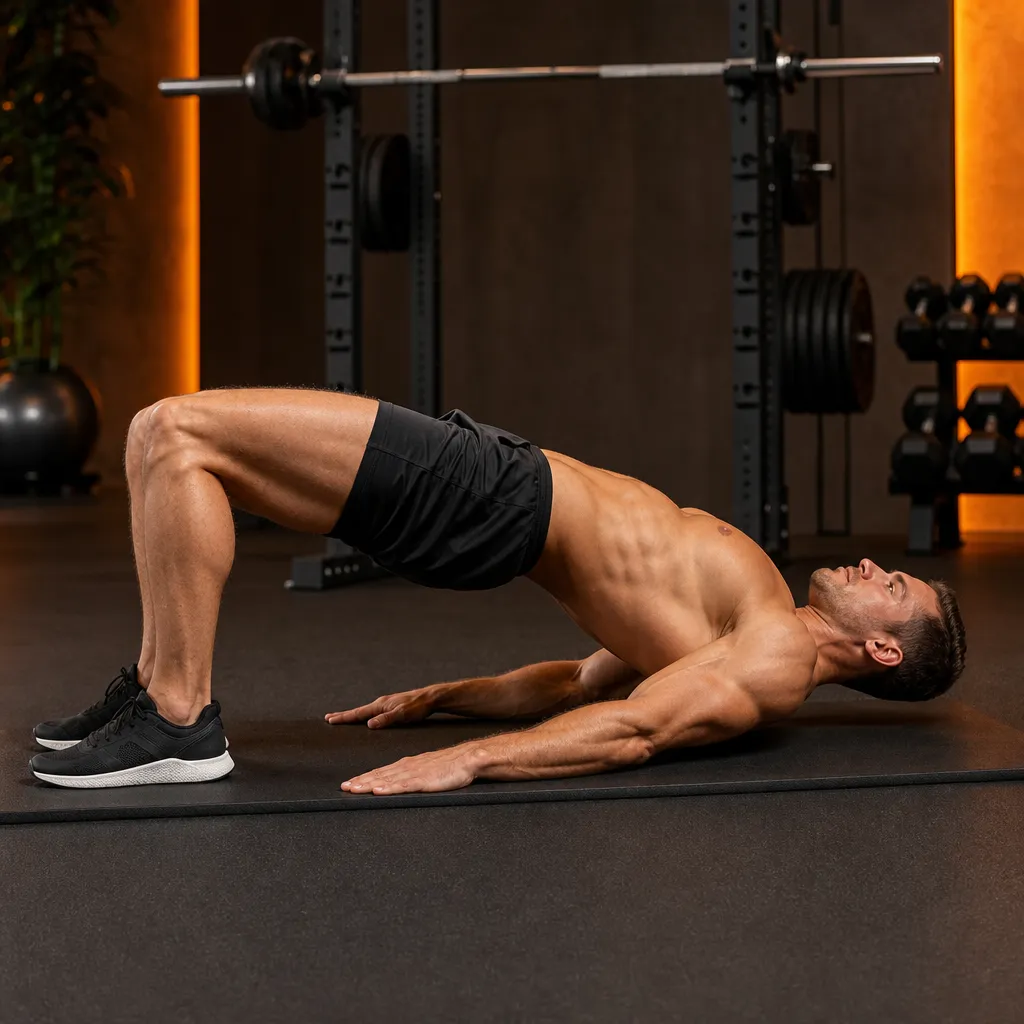
| Glute Bridge | 3 | 15 | 45s |
Week 1-2: Focus on learning proper form. Use knee push-ups if needed. Rest 60-90 seconds between sets.
Week 3-4: Increase to 4 sets per exercise. Try standard push-ups. Reduce rest to 45-60 seconds where possible.
After 4 weeks: Move to harder variations — diamond push-ups, single-leg split squats, side planks, and add a fourth training day.
How Do You Progress Without Adding Weight?
Progressive overload is the principle that drives all muscle growth. Without weights, you apply it differently:
- Increase reps — Go from 3×10 push-ups to 3×15. More total reps means more training volume.
- Decrease rest periods — Cutting rest from 90 seconds to 60 seconds increases metabolic stress, a key driver of hypertrophy.
- Move to harder variations — This is the bodyweight equivalent of adding weight. Progress from knee push-up → standard push-up → diamond push-up → archer push-up → one-arm push-up.
- Slow down the tempo — Take 3 seconds to lower and 2 seconds to push up. More time under tension means more muscle damage (the good kind) and growth stimulus.
- Add isometric holds — Pause at the bottom of a squat or push-up for 2-3 seconds. This eliminates momentum and increases difficulty.
Research from the European Journal of Sport Science confirms that when volume and effort are matched, bodyweight training produces hypertrophy comparable to traditional resistance training.
What Are the Most Common Mistakes in Bodyweight Training?
Even without external weights, poor form can lead to injuries and stalled progress:
- Sacrificing range of motion for reps — Half-reps build half the muscle. Lower fully on push-ups and squat until your thighs are parallel.
- Holding your breath — Exhale on the exertion (pushing up, standing up) and inhale on the lowering phase. Breath-holding spikes blood pressure unnecessarily.
- Sagging hips on planks and push-ups — This shifts load off your core and onto your lower back. Maintain a straight line from head to heels.
- Skipping warm-ups — Even bodyweight training stresses joints and muscles. Spend 3-5 minutes on dynamic movements (arm circles, leg swings, hip rotations) before every session.
- Not tracking progress — Write down your reps, sets, and variations each workout. Without tracking, you cannot know if you are actually progressing.
What Are the Key Takeaways?
| Principle | Action |
|---|---|
| Train 3 days/week | Monday-Wednesday-Friday with rest days between |
| Master 4 fundamentals | Push-up, squat, plank, burpee |
| Progressive overload | More reps, harder variations, slower tempo, less rest |
| Workout duration | 20-40 minutes per session |
| Warm up every time | 3-5 minutes of dynamic movement before training |
| Track your progress | Log reps, sets, and variations each workout |