
Dumbbell Leg Workout: Goblet Squat, Lunges, and Romanian Deadlift
Why Dumbbells Are Great for Leg Training
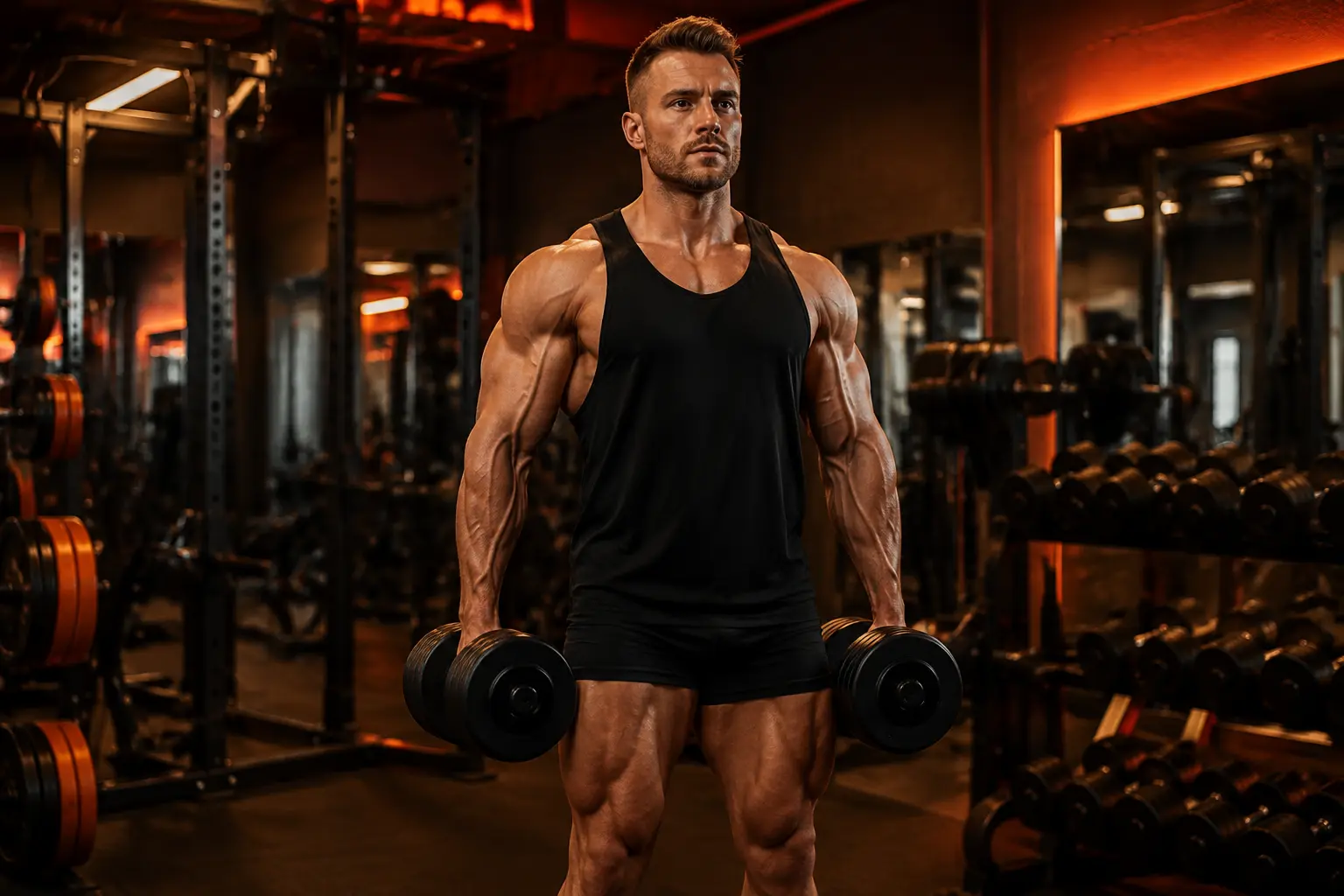
Dumbbells offer a unique set of advantages for leg training that barbells and machines cannot replicate. The most important is unilateral loading — dumbbells force each leg to work independently, exposing and correcting strength imbalances that barbell exercises can hide. If your left leg is 10% weaker than your right, a barbell back squat lets your dominant side compensate. A dumbbell lunge does not.
This matters more than most people realize. A 2020 study published in the Journal of Biomechanics found that strength asymmetries between limbs were associated with a 2-3x higher risk of lower-body injuries in recreational athletes. Training each leg independently with dumbbells directly addresses this risk.
Dumbbells also allow a more natural range of motion. In a barbell squat, the bar path and your torso angle are constrained by the bar position on your back. With a goblet squat or dumbbell lunge, your arms and torso move freely, letting you find the strongest, most comfortable position for your individual limb proportions. This is especially valuable for lifters with limited shoulder mobility who struggle with the barbell back squat position.
This guide covers the three most effective dumbbell leg exercises: the goblet squat for quads, the Romanian deadlift for hamstrings and glutes, and lunges for overall leg development and balance.
How to Do the Dumbbell Goblet Squat with Proper Form
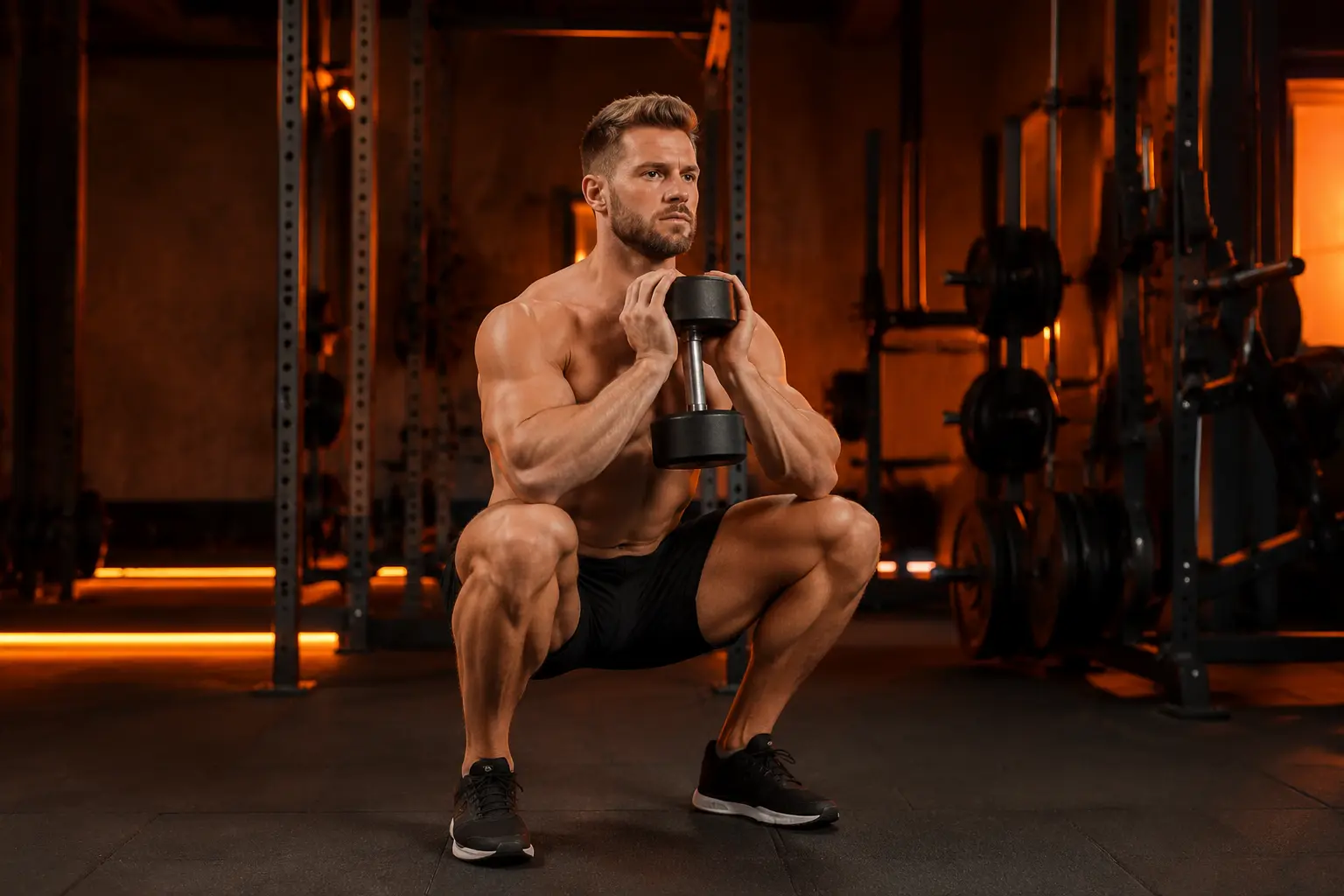
The goblet squat is the most accessible dumbbell leg exercise and arguably the best for developing proper squat mechanics before moving to heavy barbell work.
Step 1 — Setup and Grip
Grab one dumbbell vertically by cupping one end with both hands, fingers cradling the top head of the dumbbell against your chest. Your palms should face upward, elbows pointing down and tucked against your ribcage. Stand with feet slightly wider than shoulder-width, toes pointed out about 15-30°. This is your starting position. The dumbbell acts as a counterweight that pulls your torso upright — use it.
Step 2 — Descent
Initiate the squat by pushing your hips back and bending your knees simultaneously. Keep your chest tall and elbows inside your knees — if your elbows drift outside your knees, your stance is too narrow. Descend until your hip crease is below the top of your knees (below parallel). The goblet squat naturally encourages depth because the front-loaded weight shifts your center of gravity forward, making it easier to hit full depth with an upright torso.
Step 3 — Bottom Position and Drive
At the bottom, pause briefly — your elbows should be inside your knees, gently pushing them outward. This opens your hips and keeps your knees tracking over your toes. Drive through your full foot (not just heels) to stand back up. Squeeze your glutes at the top. The front-loaded position forces your core to work harder than a back squat to maintain an upright posture, making this an excellent core exercise as well.
Step 4 — Breathing and Rep Range
Take a deep breath before each rep, brace your core, and exhale at the top. Aim for 8-12 reps per set. Because the goblet squat uses a single dumbbell, the weight ceiling is lower than a barbell squat — focus on tempo and depth rather than max weight. A 3-second descent with a 1-second pause at the bottom makes even moderate weights brutally effective.
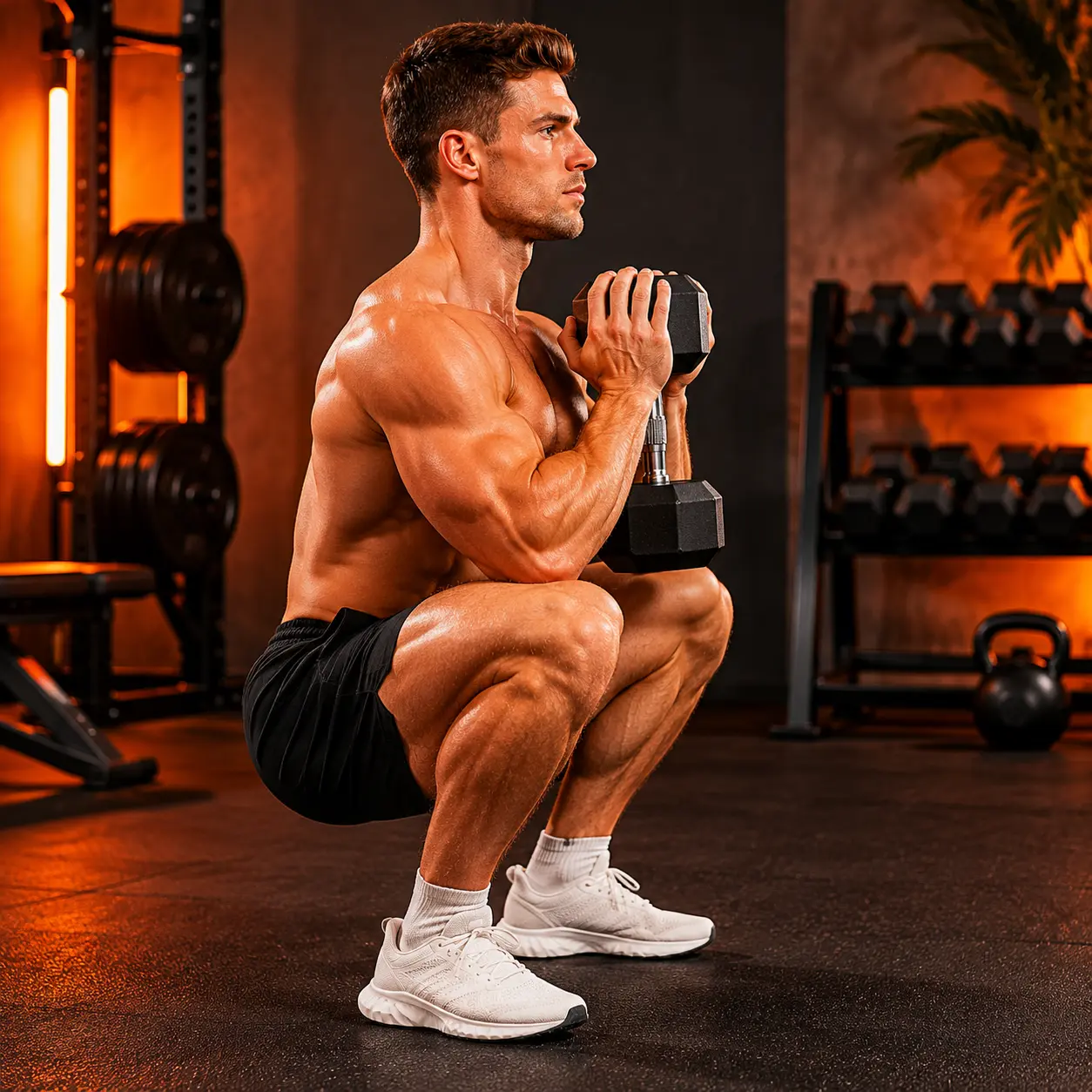
Dumbbell goblet squat bottom position with hips below parallel
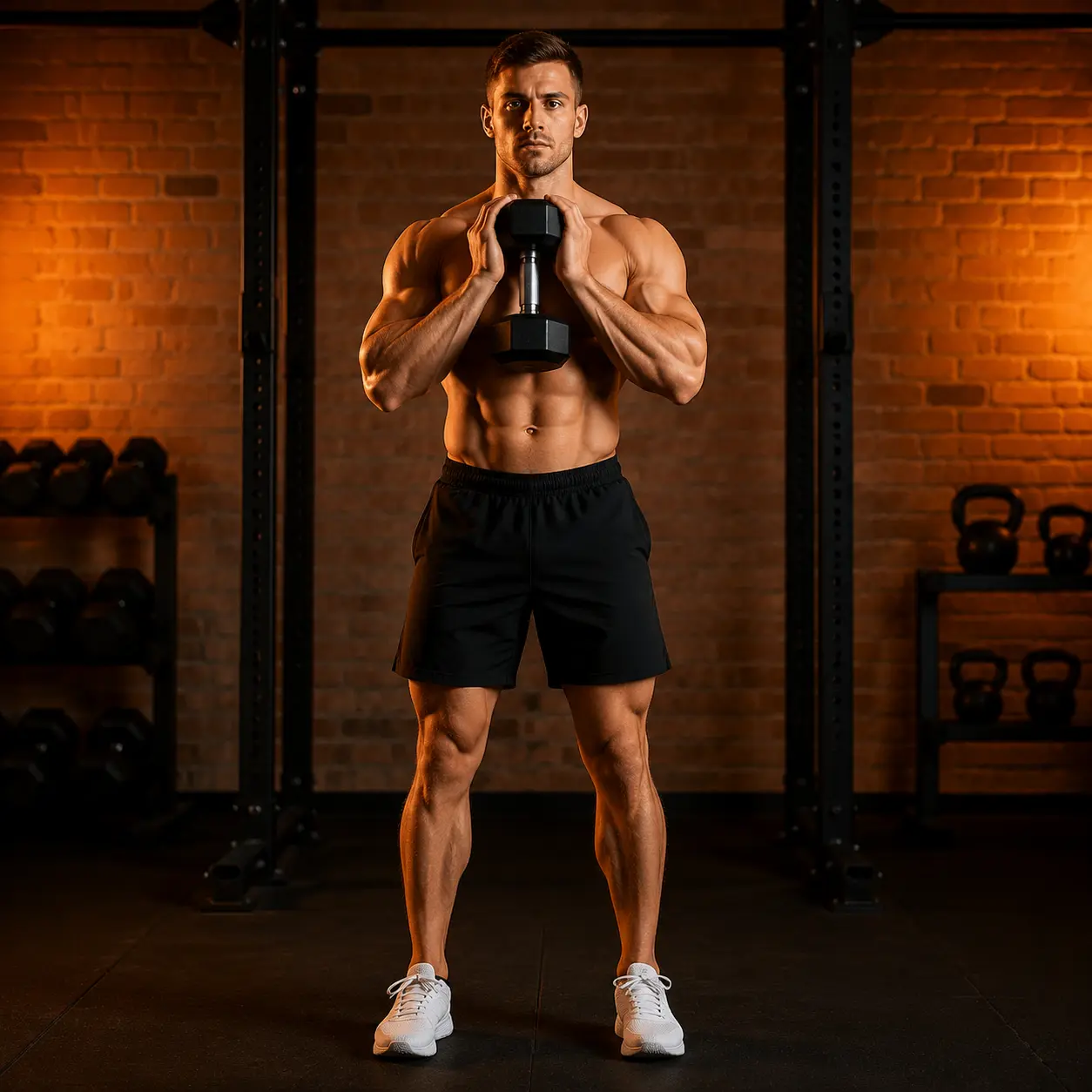
Dumbbell goblet squat top standing position with dumbbell at chest
How to Do the Dumbbell Romanian Deadlift with Proper Form
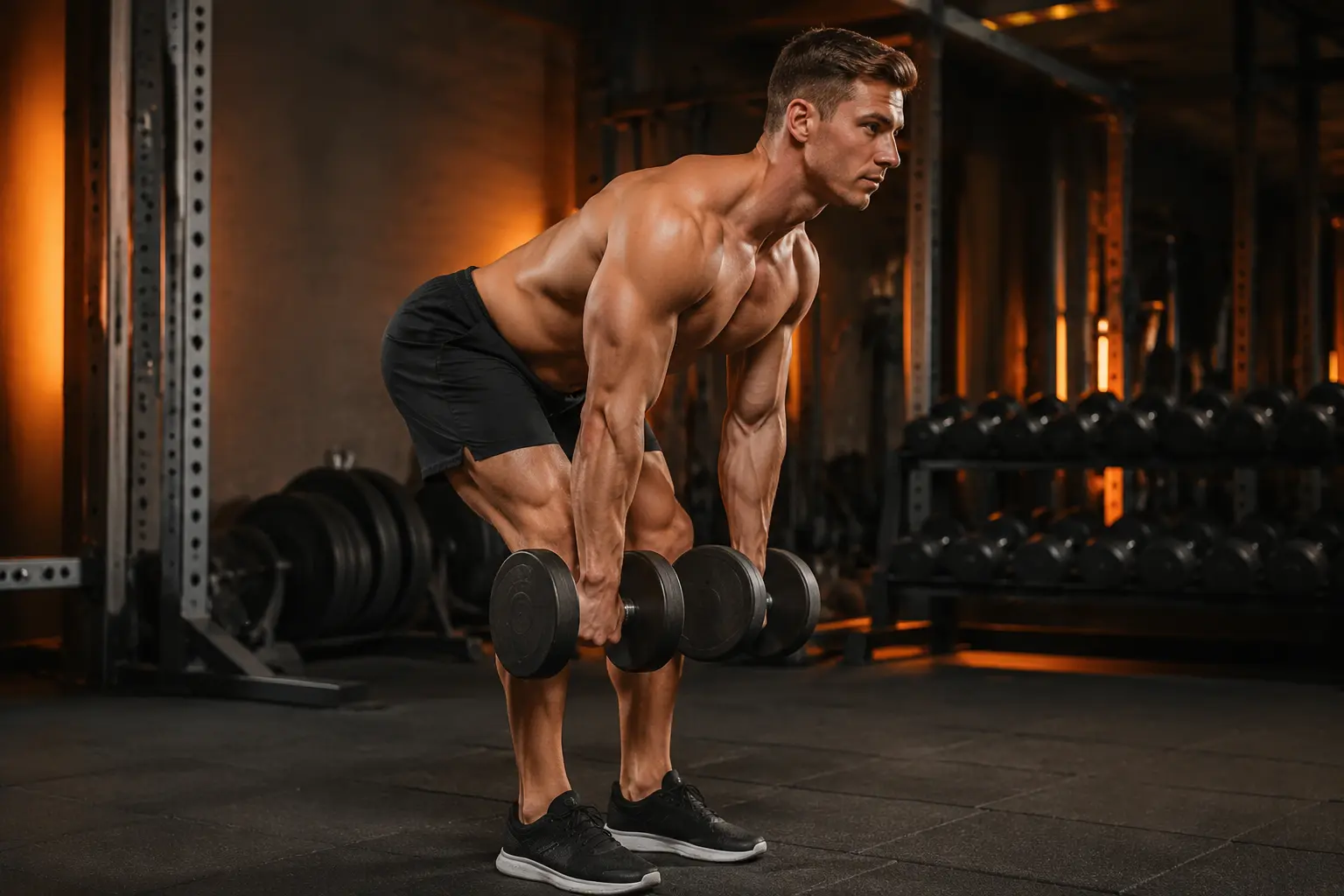
The dumbbell Romanian deadlift (RDL) is the most effective dumbbell exercise for the posterior chain — hamstrings, glutes, and lower back. Unlike a conventional deadlift, the RDL keeps constant tension on these muscles by never resting the weights on the floor.
Step 1 — Setup and Stance
Hold a dumbbell in each hand with a neutral grip (palms facing your thighs). Stand with feet hip-width apart, knees slightly bent — they stay at this angle throughout the movement. Your arms hang straight down, dumbbells in front of your thighs. Pull your shoulder blades back and down, brace your core, and maintain a slight arch in your lower back. This is your starting position.
Step 2 — Hip Hinge Descent
Push your hips backward as if trying to close a car door with your glutes. Your torso leans forward as your hips move back — the movement comes entirely from the hip joint, not the knees. The dumbbells should track straight down along the front of your legs. Keep the weights close to your body — if they drift forward, you lose hamstring tension and stress your lower back. Lower until you feel a strong stretch in your hamstrings, typically when the dumbbells reach mid-shin level.
Step 3 — Stretch and Return
At the bottom, you should feel an intense stretch in your hamstrings. Do not round your back to reach lower — the range of motion is determined by hamstring flexibility, not by how far the weights can go. Drive your hips forward forcefully to return to standing. Squeeze your glutes hard at the top. The hip drive is what makes this a posterior chain exercise — if you just stand up without actively pushing your hips forward, your lower back takes over.
Step 4 — Breathing and Control
Inhale at the top, brace your core, and exhale as you complete the hip drive back to standing. Control the eccentric over 2-3 seconds — the slow stretch phase is where the RDL builds the most hamstring flexibility and strength. Aim for 10-12 reps. The RDL responds better to controlled tempo and full range than to heavy weights with compromised form.
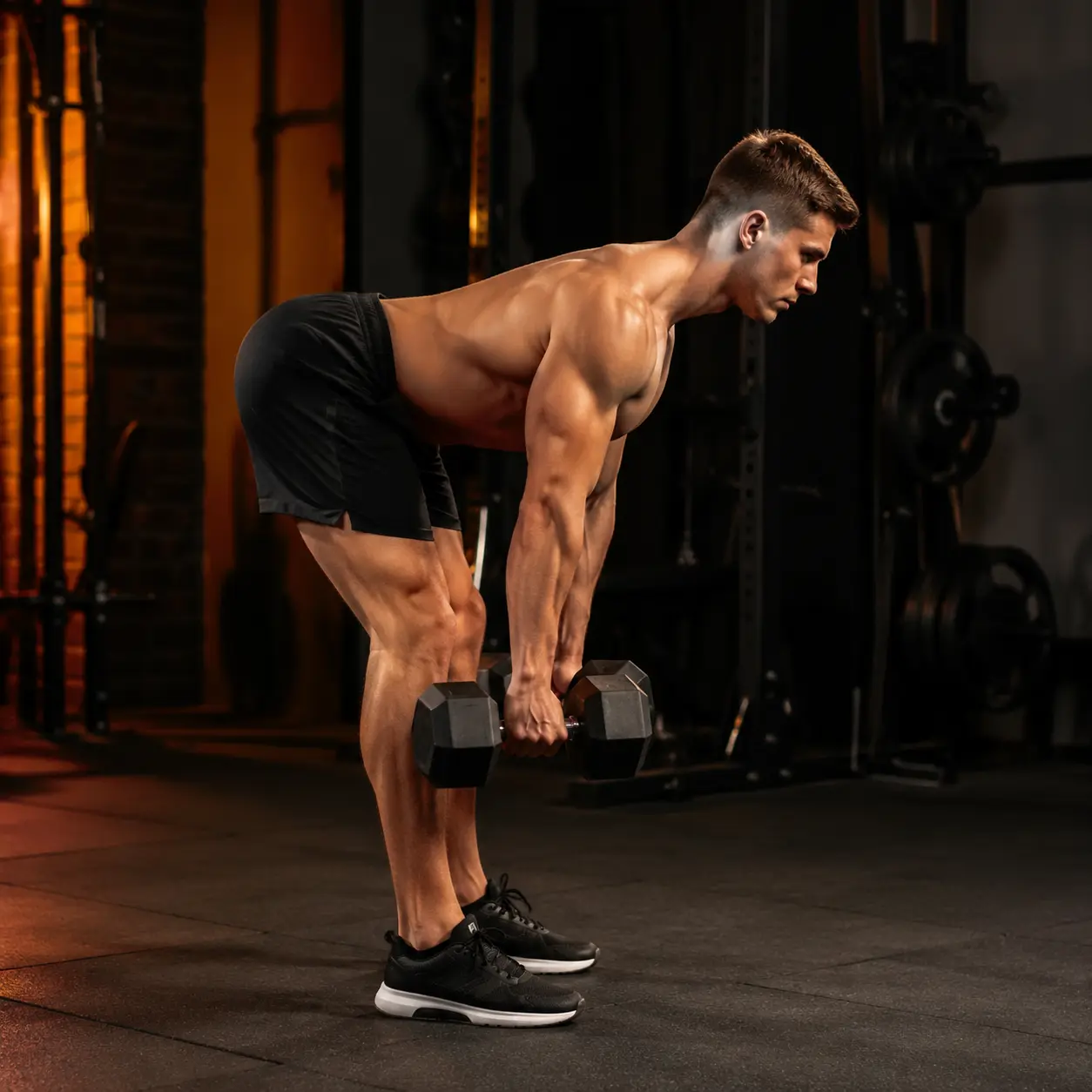
Dumbbell Romanian deadlift bottom position with hip hinge and stretched hamstrings
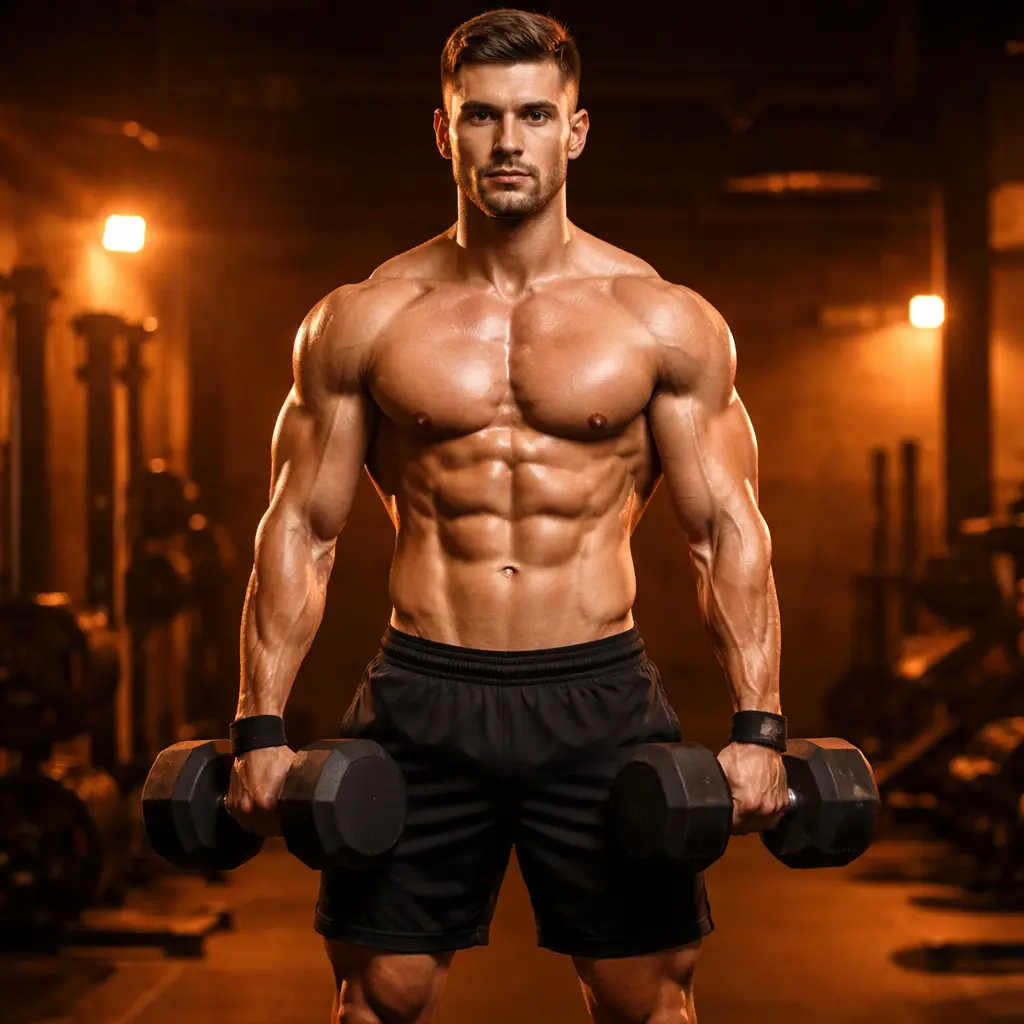
Dumbbell Romanian deadlift top standing position with glutes squeezed
How to Do the Dumbbell Lunges with Proper Form
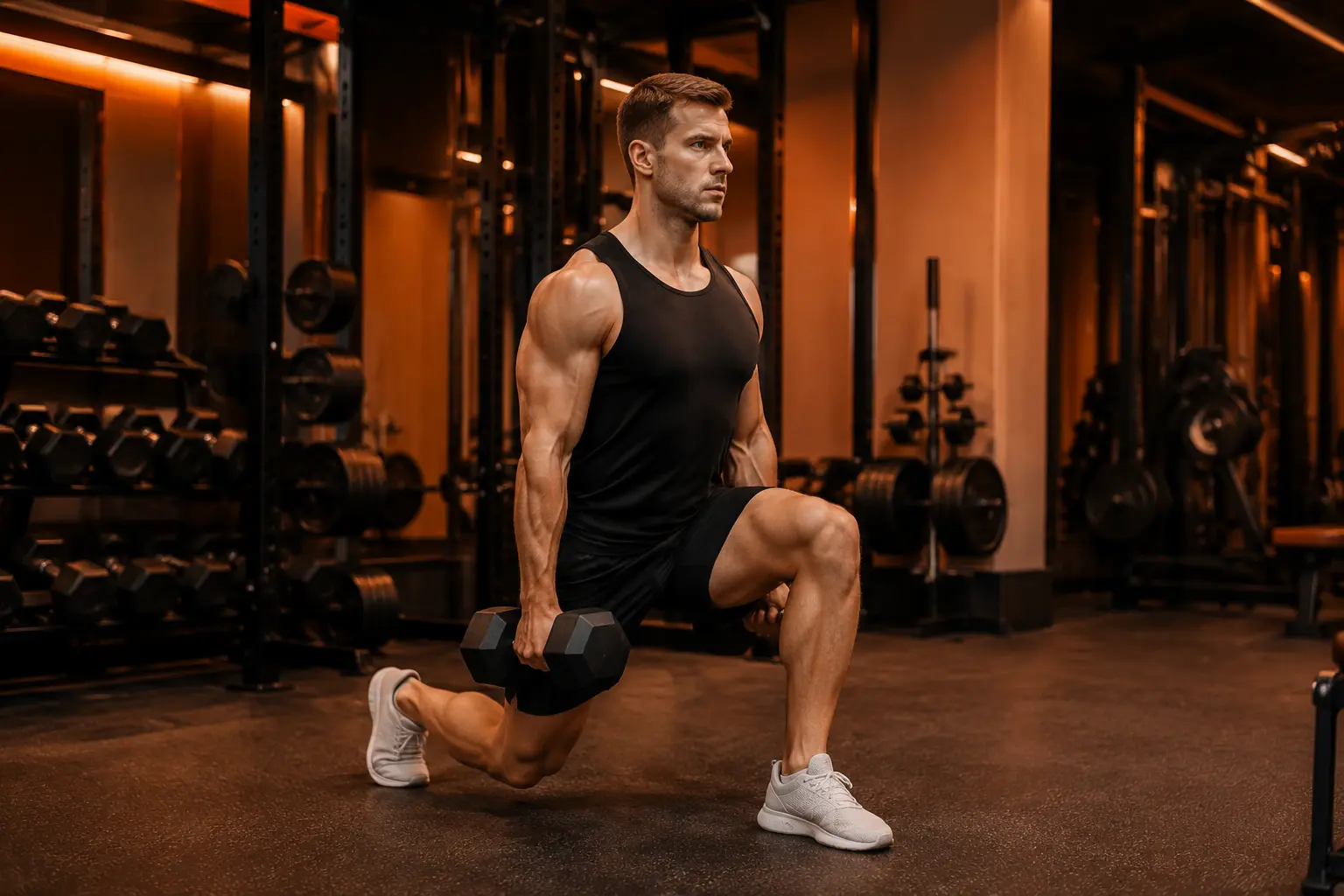
Dumbbell lunges are the best unilateral leg exercise — they build each leg independently, improve balance, and develop functional strength that transfers to running, climbing stairs, and sports. Forward lunges emphasize the quads, while reverse lunges shift more work to the glutes and hamstrings.
Step 1 — Setup and Stance
Hold a dumbbell in each hand at your sides with a neutral grip. Stand tall with feet together, shoulders back, core braced. Look straight ahead — not down at your feet. Your arms should hang naturally; do not shrug or tense your shoulders to grip the weights. If the dumbbells feel too heavy to hold comfortably at your sides, reduce the weight.
Step 2 — Step Forward and Lower
Take a large step forward with one leg — long enough that your front shin stays nearly vertical when you reach the bottom. Lower your back knee toward the floor until both knees form roughly 90° angles. Your front knee should be directly above your ankle, not pushed past your toes. Your torso stays upright — leaning forward shifts stress away from the quads and onto the lower back. The back knee should hover just above the floor without touching.
Step 3 — Drive Back to Start
Push through the front foot to drive back to the starting position. The push comes from your front quad and glute — do not rock backward or use momentum. Keep the movement controlled: 1 second down, 1 second pause, 1 second up. Complete all reps on one leg before switching to the other, rather than alternating, to maintain tension and fatigue the target muscle more effectively.
Step 4 — Reverse Lunge Variation
If forward lunges bother your knees, switch to reverse lunges — step backward instead of forward. Research from the Journal of Sports Sciences shows that reverse lunges produce less shear force on the front knee while generating similar glute and quad activation. The setup and movement are the same, but stepping backward naturally keeps your front shin vertical. Most lifters find reverse lunges easier on the knees and better for building glute strength.
What Are the Most Common Dumbbell Leg Training Mistakes
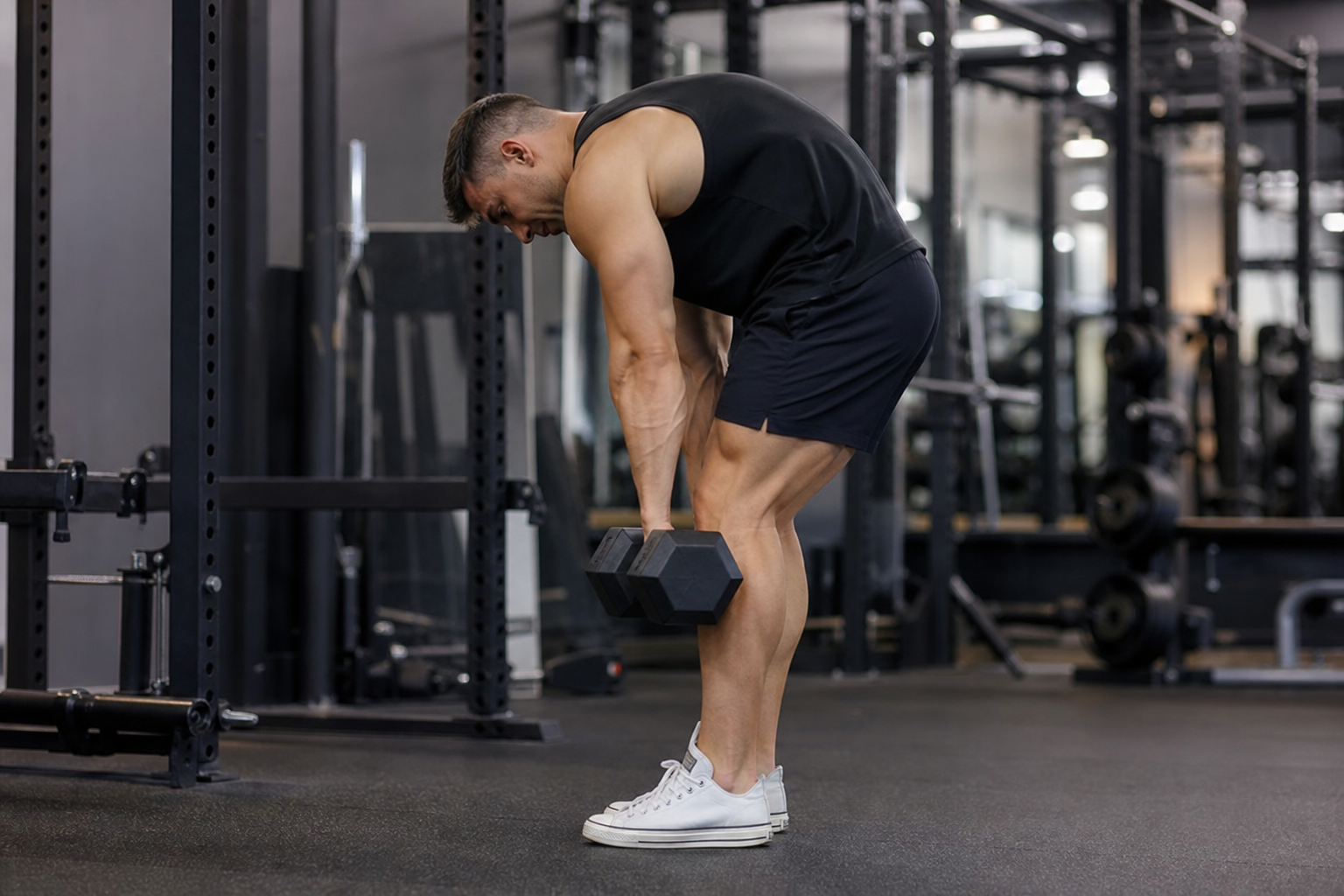
These errors reduce gains and increase injury risk. Fix them to get the most from your dumbbell leg workouts.
Rounding your back on RDLs: This is the single most dangerous mistake in dumbbell leg training. A rounded lower back under load can cause disc herniations. If you cannot reach mid-shin with a flat back, reduce your range of motion — stop wherever your hamstrings feel a deep stretch while your spine stays neutral. Stretching improves over time; a blown disc does not.
Knees caving inward on squats: When your knees collapse inward (valgus) at the bottom of a goblet squat, your glute medius is too weak to hold alignment. Actively push your knees outward over your toes — think about spreading the floor with your feet. If this is impossible, use a lighter weight and add banded lateral walks to strengthen your hip abductors.
Stepping too narrow on lunges: A short step places excessive shear force on the front knee and limits glute engagement. Take a longer step so your front shin stays vertical at the bottom. If you feel knee pain, your step is probably too short.
Using momentum instead of muscle: Swinging the dumbbells or bouncing out of the bottom of a squat or RDL removes tension from the target muscles. Every rep should be controlled: slow descent, pause, controlled ascent. If you cannot maintain tempo, the weight is too heavy.
Neglecting the posterior chain: Many lifters do five quad exercises and one hamstring exercise. This imbalance leads to knee pain, hamstring strains, and poor athletic performance. For every goblet squat set, do an RDL set. A 2:1 quad-to-hamstring ratio is the minimum; 1:1 is better.
What Are the Key Takeaways
| Point | Recommendation |
|---|---|
| Why dumbbells for legs | Unilateral training corrects imbalances; natural ROM for all body types |
| Goblet squat focus | Upright torso, elbows inside knees, full depth below parallel |
| RDL focus | Hip hinge only, keep dumbbells close, feel hamstring stretch |
| Lunge focus | Long step, front shin vertical, controlled tempo 1-1-1 |
| Knee-friendly option | Reverse lunges over forward lunges for less knee shear |
| Balance ratio | 1 RDL set for every goblet squat set — do not skip hamstrings |
Quick mistake checklist:
- Rounded back on RDLs — reduce range, keep spine neutral
- Knees caving on squats — push knees out, strengthen glute medius
- Short step on lunges — take a longer step to protect front knee
- Using momentum — slow down every rep, control the weight
- Skip hamstring work — do RDLs for every squat set
Recommended leg day combination: Barbell back squat 4×6 + Dumbbell goblet squat 3×10 + Dumbbell RDL 3×12 + Dumbbell lunges 3×10 per leg + Cable leg curls 3×15. Heavy bilateral loading + unilateral volume + posterior chain isolation = complete leg development.
Frequently Asked Questions
Can you build big legs with just dumbbells?
Yes. Dumbbells can build substantial leg mass when you use challenging weights, progressive overload, and proper volume. A 2022 study in the Journal of Strength and Conditioning Research found that training with dumbbells at equivalent relative loads produced similar hypertrophy to barbell training in the lower body. The key limitation is maximum load — at some point, you will outgrow the heaviest dumbbells in your gym for exercises like squats and deadlifts. Until then, dumbbells are fully capable of building impressive legs.
What muscles does the dumbbell Romanian deadlift work?
The dumbbell RDL primarily targets the hamstrings, glutes, and erector spinae (lower back). The hamstrings work eccentrically as you lower the weights and concentrically as you drive your hips forward. The glutes assist powerfully in the hip extension phase. Unlike the conventional deadlift, the RDL keeps tension on the posterior chain throughout by maintaining a slight knee bend and never resting the weights on the floor between reps.
Is the goblet squat as effective as the barbell squat?
The goblet squat is highly effective for building quad and glute mass, but it is not a direct replacement for the barbell back squat when maximum strength is the goal. The front-loaded position limits how much weight you can use — most lifters can goblet squat roughly 40-50% of their barbell back squat. However, the goblet squat enforces better depth and upright posture, making it superior for mobility and quad isolation. Use both: goblet squats for quality reps and depth, barbell squats for heavy loading.
How heavy should dumbbells be for leg exercises?
For goblet squats, most men can start with 30-50 lb (14-23 kg) and progress to 70-100 lb (32-45 kg). For RDLs, start with 25-40 lb per hand and work up to 50-80 lb per hand. For lunges, 20-35 lb per hand is a good starting range. The right weight is one that makes the last 2-3 reps of each set challenging but not impossible with good form. If you can easily do 15+ reps, increase the weight.
Are dumbbell lunges bad for your knees?
No — when performed correctly, lunges strengthen the muscles and connective tissue around the knee joint. The key is keeping your front shin nearly vertical (knee over ankle, not past toes) and controlling the descent. Knee pain during lunges usually comes from stepping too narrow, allowing the knee to cave inward, or dropping too fast. If you have existing knee issues, start with reverse lunges — they place less shear force on the front knee than forward lunges.