
How to Do Crunches: Form Guide, Muscles & Sit-Up Comparison
The crunch is an abdominal exercise that isolates the rectus abdominis. Lie on your back with knees bent and feet flat, place your hands lightly behind your head, exhale and lift only your shoulder blades off the floor by curling your spine, squeeze briefly, then lower slowly without pulling on your neck.
Why the Crunch Still Belongs in Your Core Routine
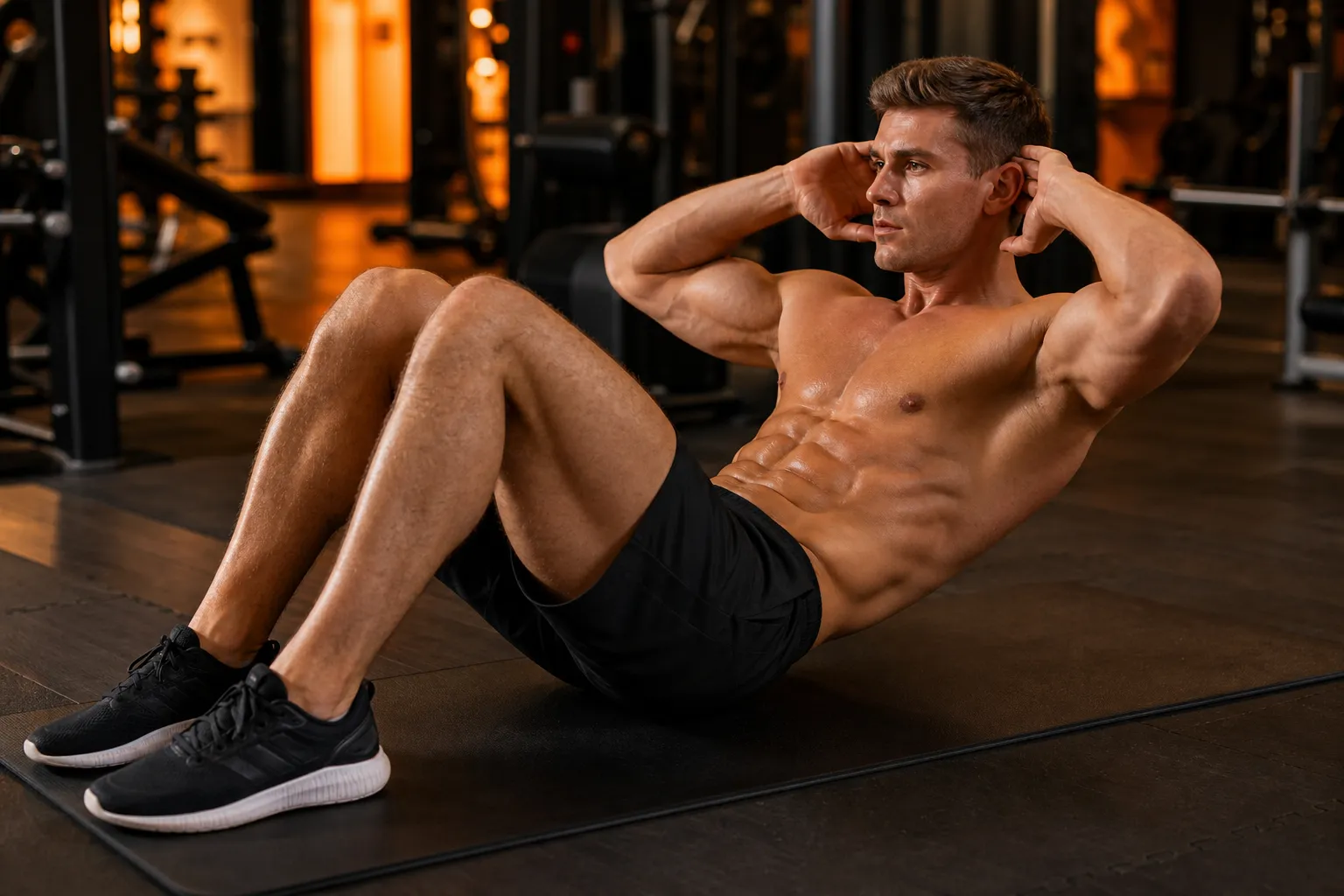
The crunch is the most direct way to train the rectus abdominis - the "six-pack" muscle. By lifting only the shoulder blades off the floor while keeping the lower back grounded, you isolate the abs through spinal flexion and remove the hip flexors from the movement. That single difference is why the crunch replaced the full sit-up in most modern programs.
Despite the recent trend of "crunches are useless," the research does not support throwing them out. A 2011 study by Vispute and colleagues in the Journal of Strength and Conditioning Research confirmed that abdominal exercises produce significant strength and endurance gains in the targeted muscles - they simply do not burn belly fat, which is a separate goal. Done correctly, the crunch is a safe, scalable isolation movement that belongs alongside anti-extension work like the plank and dynamic moves like mountain climbers.
This guide covers five things: perfect form, the muscles worked, how crunches compare to sit-ups, the mistakes that hurt your back, and how to program them. Master the form first - the rest follows.
How to Do the Crunch with Perfect Form
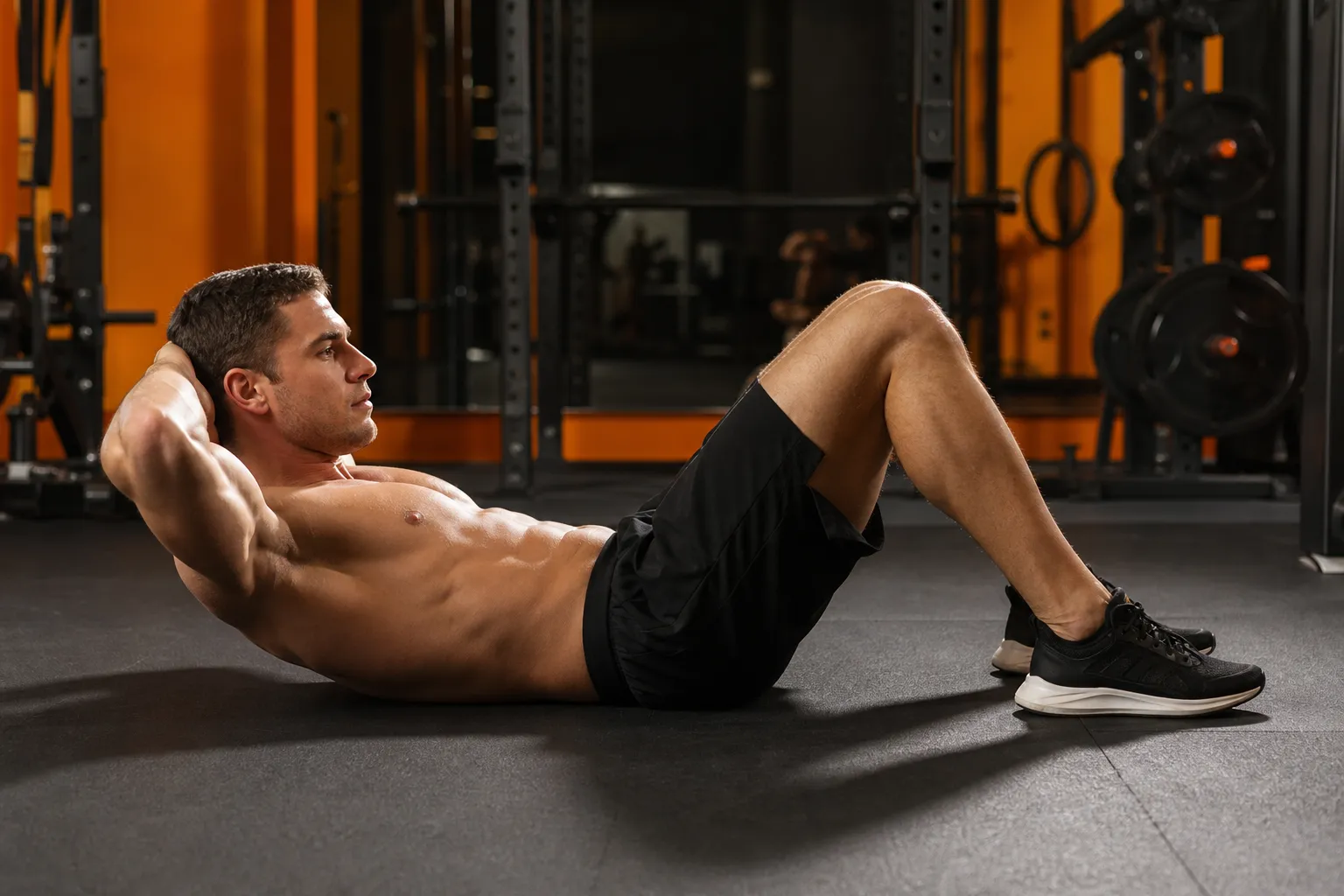
The crunch looks easy, which is exactly why most people do it badly. In my experience coaching clients who could "crank out 100 crunches," the majority were pulling on their neck and bouncing off the floor - their abs barely worked. Slow down and follow these four steps.
Step 1 - Setup: Lie on your back with knees bent at roughly 90 degrees and feet flat on the floor, hip-width apart. Place your hands lightly behind your head, fingertips just touching your temples - do not interlace your fingers. Tuck your chin slightly, as if holding a softball under it, and press your lower back flat into the floor.
Step 2 - Engage and lift: Exhale and draw your ribs down toward your hips. Think about curling your spine one vertebra at a time rather than hinging at the waist. Your shoulder blades should leave the floor; your lower back should not. The hands are there to support the weight of your head, never to pull it forward.
Step 3 - The crunch (top): Pause for a full second at the top with your abs fully contracted. There is no benefit to lifting higher - once the shoulder blades clear the floor, the rectus abdominis has done its job. If you keep rising, your hip flexors take over. Squeeze hard at the top; the contraction is the whole point.
Step 4 - Lower with control: Inhale and slowly uncurl back to the floor, taking 2-3 seconds on the way down. Do not let your head bang the floor or rest fully between reps - keep tension on the abs throughout the set. A controlled tempo is what turns 15 good reps into more ab work than 50 sloppy ones.
What Muscles Do Crunches Work?

The crunch is an isolation exercise for the anterior core. Because the pelvis stays fixed and only the thoracic spine flexes, the load falls almost entirely on the abdominal muscles.
Muscles Worked
- Primary mover: Rectus abdominis - the paired muscle running from the ribs to the pelvis. The crunch emphasizes its upper fibers, which flex the thoracic spine.
- Stabilizers: Internal and external obliques (resist rotation and help flex the trunk), transverse abdominis (braces inward to stabilize the spine and press the abs flat).
- Minimal involvement: Hip flexors (psoas, iliacus) - the whole point of a crunch versus a sit-up is to keep these quiet.
The "Upper Abs vs Lower Abs" Myth
The rectus abdominis is a single muscle divided by tendinous intersections - it is not anatomically split into "upper" and "lower" abs. EMG research shows you cannot isolate one half from the other with a single exercise. What you can do is shift emphasis: crunches bias the upper fibers because they flex the ribcage toward the pelvis, while reverse crunches (lifting the pelvis toward the ribcage) bias the lower fibers. Train both for complete development.
Crunches vs Sit-Ups: Which Is Better for You?
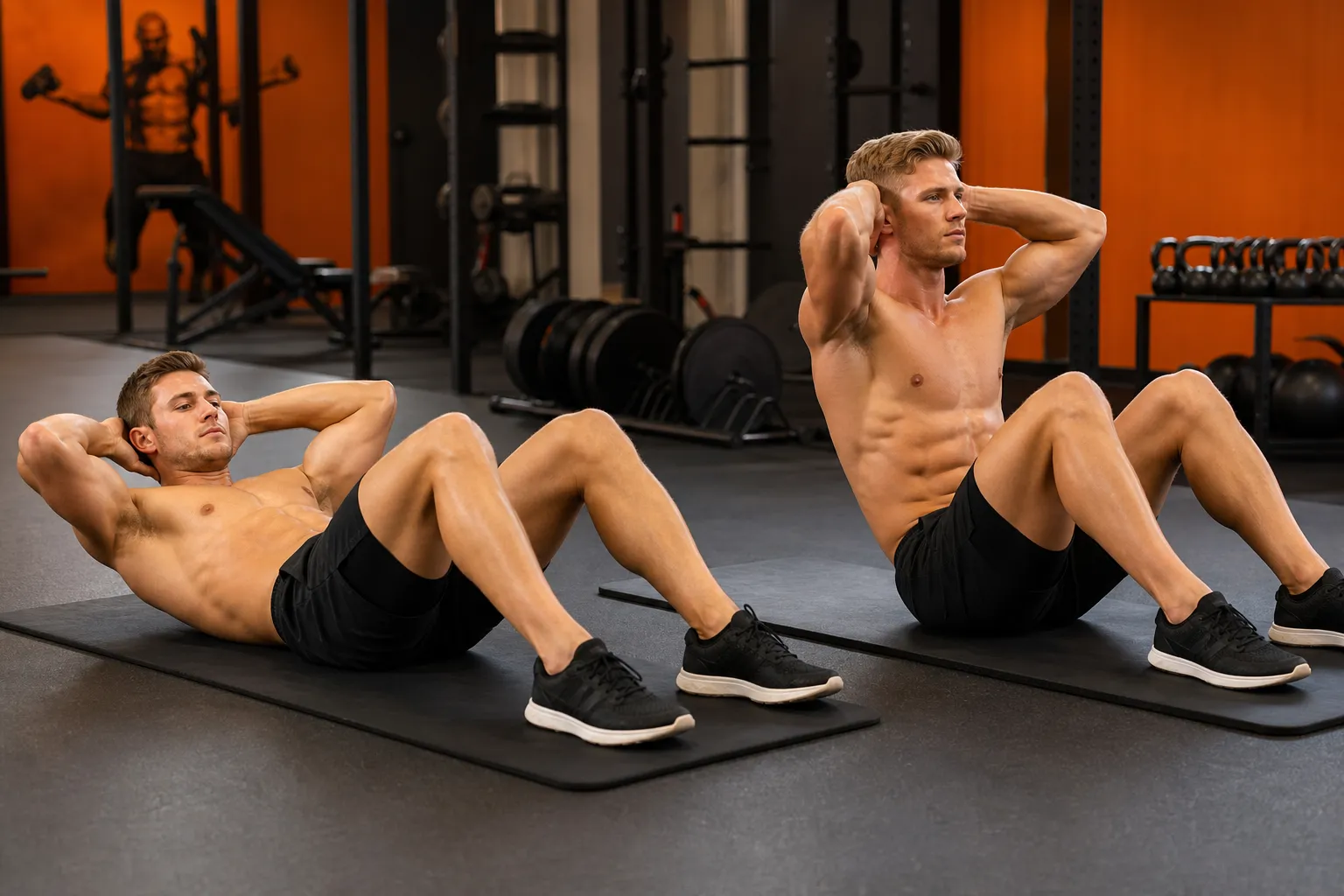
The sit-up and the crunch train the same primary muscle, but they are not the same exercise. The difference comes down to range of motion and what that range costs your spine.
| Factor | Crunch | Sit-Up |
|---|---|---|
| Range of motion | Shoulder blades lift off floor (~30° flexion) | Entire torso lifts to vertical (~90° flexion) |
| Primary mover | Rectus abdominis | Rectus abdominis + hip flexors (psoas) |
| Lower back | Stays pressed to floor (low stress) | Pulls against psoas, increases lumbar compression |
| Neck strain risk | Low (if hands support, not pull) | Moderate (longer lever) |
| Best for | Isolating the abs, general fitness | Athletes needing hip-flexor power |
Spine biomechanist Dr. Stuart McGill has spent decades showing that repeated full-spine flexion under load - the exact pattern of high-rep sit-ups - contributes to intervertebral disc damage over time. The psoas, which anchors to the lumbar spine, yanks the lower back forward during the top half of a sit-up. The crunch avoids this entirely by stopping the movement where the abs finish their job. For everyone except athletes who specifically need explosive hip-flexor strength (combat sports, sprinters, gymnasts), the crunch is the safer, more targeted choice.
The Most Common Crunch Mistakes (and How They Hurt Your Back)
Most crunch-related pain is not the exercise's fault - it is how people perform it. Fix these four errors and your neck and back will thank you.
1. Pulling on your neck: Interlacing your fingers behind your head and yanking forward is the fastest way to strain your cervical spine. Fix: Place your fingertips at your temples or cross your arms over your chest. If you cannot lift without pulling, your abs are too weak for the rep count you chose - reduce reps and build strength first.
2. Using momentum (bouncing): Bouncing off the floor turns an ab exercise into a hip-flexor toss. Fix: Pause at the bottom with tension maintained, and take 2-3 seconds on the lowering phase. If you cannot control the descent, slow down.
3. Lifting too high: Sitting all the way up turns a crunch into a sit-up and recruits the hip flexors, adding lumbar load for no extra ab benefit. Fix: Stop the moment your shoulder blades clear the floor. Higher is not better - it is just a different, riskier exercise.
4. Letting the lower back arch: If your lower back lifts off the floor, you have lost the brace that protects your spine. Fix: Tilt your pelvis posteriorly and press the lower back into the floor before every rep. If you feel your back arching, reset. Trainees with existing disc issues should favor anti-extension plank work over high-rep crunching.
What Are the Key Takeaways?
| Point | Recommendation |
|---|---|
| Primary muscle | Rectus abdominis (upper fibers emphasized) |
| Form cue | Lift shoulder blades only, lower back stays down |
| Tempo | 2 sec up, 1 sec squeeze, 2-3 sec down |
| Volume | 2-3 sets of 15-25 reps, 2-3x per week |
| Progression | Harder variations, not endless reps |
| Vs sit-up | Crunch = isolated abs, less back stress |
Quick checklist - fix these before your next set:
- Hands support the head, never pull it
- Lower back pressed flat into the floor the entire rep
- Shoulder blades clear the floor - then stop, do not sit up
- Slow eccentric, no bouncing off the floor
- Full exhale and hard squeeze at the top
Next steps: Once 3 sets of 25 clean crunches feel easy, progress to harder variations - bicycle crunches, weighted crunches, or cable crunches - rather than piling on reps. For complete core development, pair this dynamic flexion work with isometric stability: alternate crunch days with the plank and mountain climbers, and remember that visible abs are built in the kitchen - see how burpees and squats fit into a fat-loss plan that actually lowers body fat.
Frequently Asked Questions
What muscles do crunches work?
Crunches primarily target the rectus abdominis - the long, paired muscle that forms the visible "six-pack." Because the movement is spinal flexion with the lower back held against the floor, the upper fibers of the rectus abdominis do most of the work. The internal and external obliques (the muscles along your sides) act as stabilizers, and the transverse abdominis braces to press your abs flat. The hip flexors, which dominate in a full sit-up, are largely taken out of the movement.
How many crunches should I do a day?
Quality beats quantity. Instead of grinding out 100 fast reps, do 2-3 sets of 15-25 controlled crunches with a 2-second lift and 2-second lower, 2-3 times per week. Once you can complete 3 sets of 25 clean reps, the answer is not more reps - it is a harder variation, such as bicycle crunches, weighted crunches, or cable crunches. Endless daily crunches mainly train your hip flexors and neck, not your abs.
Crunches vs sit-ups - which is better?
For most people, crunches are the better choice. A sit-up lifts the entire torso off the floor, which recruits the hip flexors (psoas) and pulls on the lumbar spine, increasing compression and injury risk. A crunch keeps the lower back grounded and isolates the rectus abdominis through a shorter, safer range. Sit-ups have a place for athletes who need that full hip-flexor pattern, but for general core training the crunch delivers more ab work with less back stress.
Are crunches bad for your lower back?
No, when done with proper form. The risk comes from two habits: pulling on your neck (which strains the cervical spine) and doing high-rep sit-up-style movements that repeatedly flex the lumbar spine. Spine biomechanist Dr. Stuart McGill has shown that thousands of loaded flexion cycles contribute to disc damage over time. Keep your lower back pressed into the floor, support - do not yank - your head, and treat crunches as one tool in a core routine that also includes anti-extension work like the plank.
Do crunches burn belly fat?
No. A 2011 study by Vispute and colleagues in the Journal of Strength and Conditioning Research had subjects perform abdominal exercises five days a week for six weeks; it produced no reduction in belly fat, skinfold thickness, or body composition. Fat loss comes from a sustained caloric deficit, not from working the muscle underneath the fat. Crunches strengthen and build the abdominal muscles, but they will only become visible when overall body fat drops through diet and full-body training like burpees or squats.
References & Sources
TDEE Calculator (Daily Calories)
Calculate your Total Daily Energy Expenditure (TDEE) - the number of calories you burn each day. The calculator uses the Mifflin-St Jeor equation for your basal metabolic rate, multiplied by your activity level.
Protein Intake Calculator
Calculate how much protein you need each day based on your body weight and training goal. This calculator uses the research-backed range of 1.6 to 2.2 grams of protein per kilogram of body weight for building muscle.