
How to Do Jumping Jacks: Form Guide, Muscles & Calorie Burn
Jumping jacks are a full-body cardio exercise. Start standing with feet together and arms at your sides, jump to spread your feet wide while sweeping your arms overhead, then jump back to the starting position. Land softly with slightly bent knees, keep a steady rhythm of 2-3 reps per second, and breathe continuously throughout the set.
Why Jumping Jacks Still Deliver Real Fitness Benefits
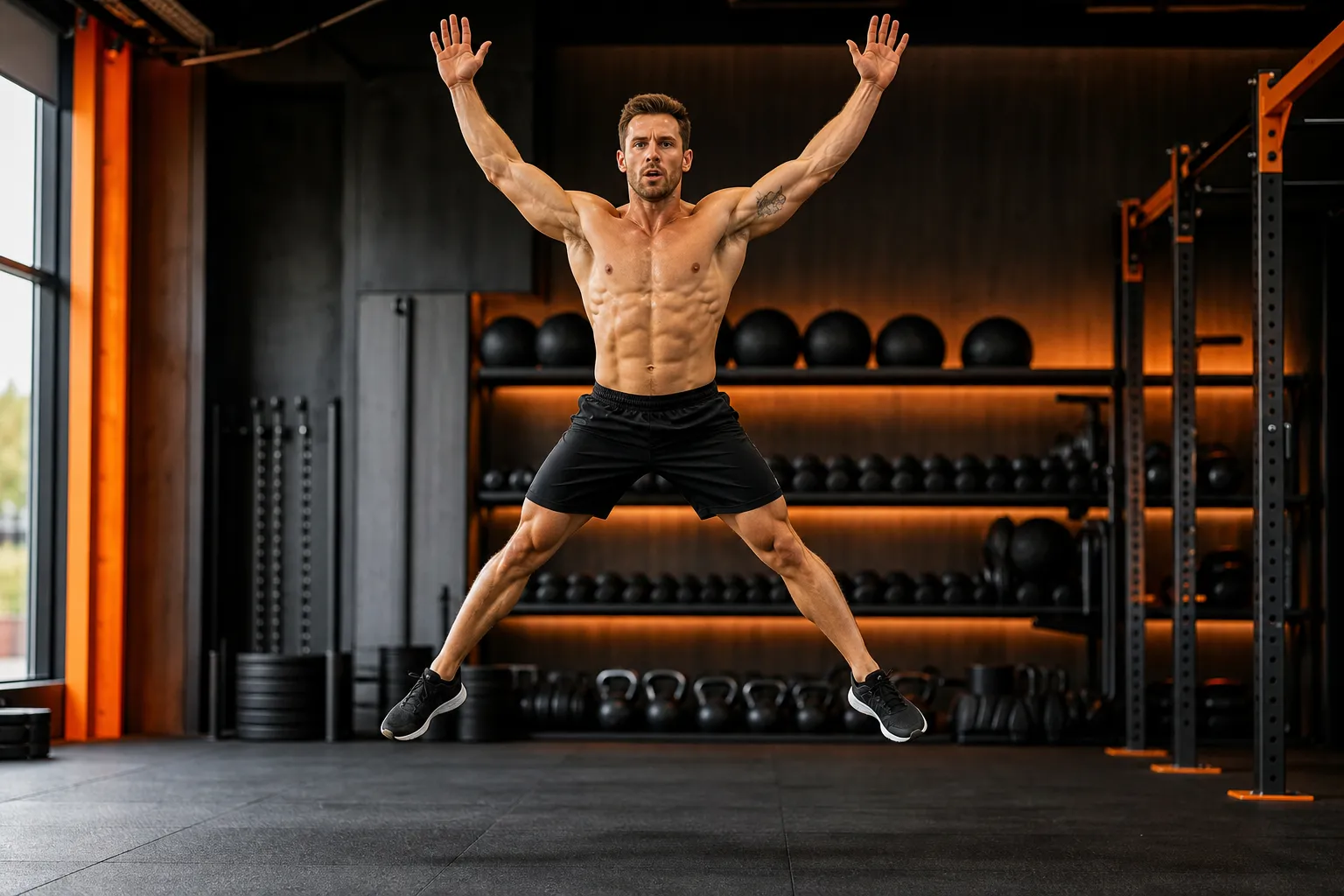
Jumping jacks have been around since Victorian-era military drills, and they are still everywhere in warm-ups, HIIT classes, and home workouts for one simple reason: they work the whole body with zero equipment and almost no learning curve. One rep trains your shoulders, legs, and core, and strings enough reps together and you have a genuine cardiovascular exercise.
The WHO guidelines on physical activity recommend 150-300 minutes of moderate aerobic activity per week for adults. A jump-jack circuit is one of the fastest ways to chip away at that target at home, in a hotel room, or between meetings. Research behind the Compendium of Physical Activities classifies jumping jacks at 8.0 METs - the same intensity zone as recreational swimming or casual mountain biking.
Three benefits stand out beyond simple calorie burn:
- Full-body warm-up: they raise your core temperature and take your shoulders and hips through a large range of motion in seconds - see our complete warm-up guide for how to slot them in.
- Bone loading: the repeated landings provide impact stimulus that helps maintain bone density, something cycling and swimming cannot offer.
- Scalable conditioning: from slow step-jacks to all-out power jacks, the same movement scales from beginner rehab to conditioning finisher.
This guide covers four things: perfect form, the muscles involved, the honest calorie math, and the mistakes that make your knees pay. Master the form first - everything else follows.
How to Do Jumping Jacks with Perfect Form
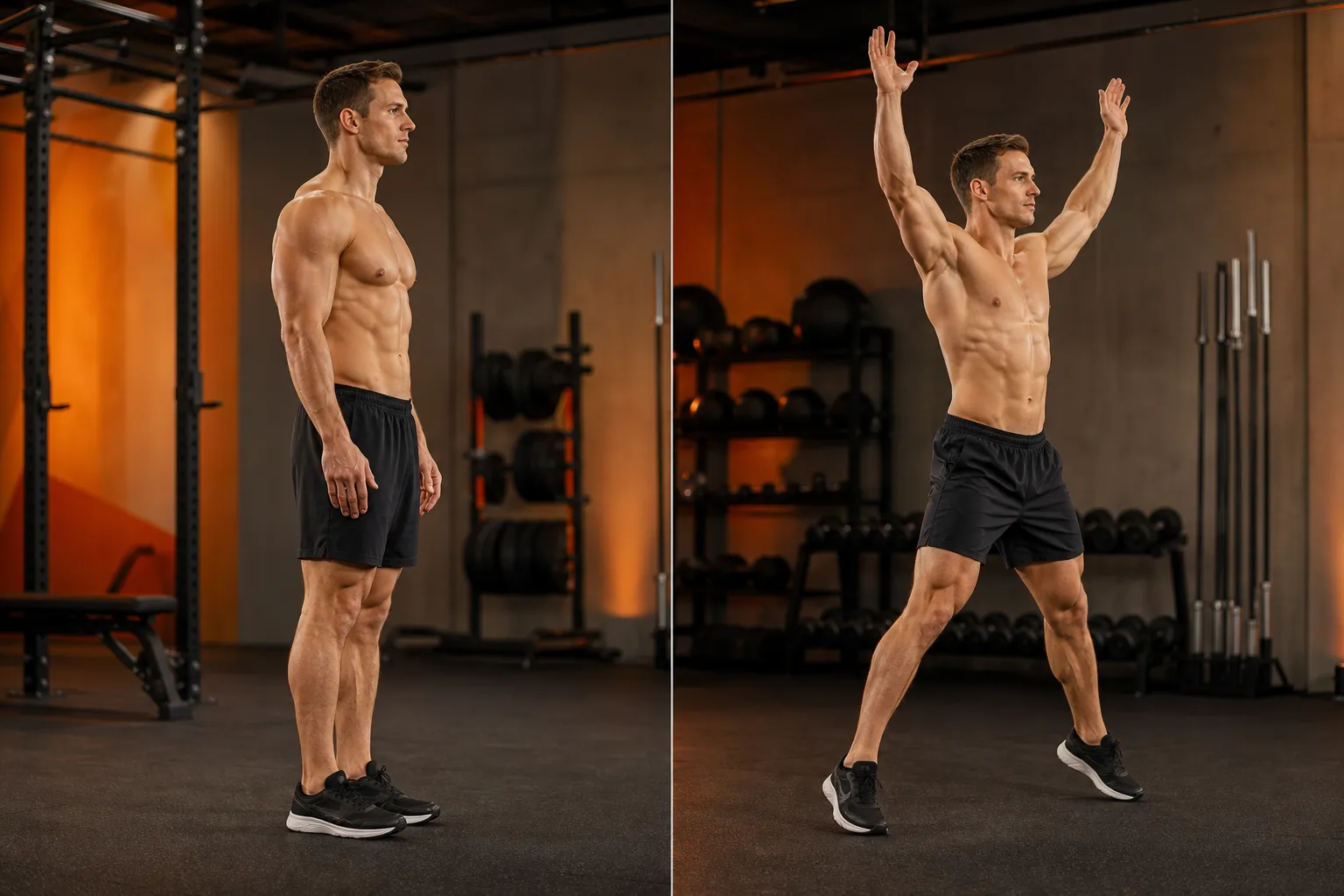
The jumping jack looks like the simplest exercise in the world, which is exactly why most people do it sloppily. Here is the breakdown, start to finish.
Step 1 - Setup: Stand with your feet together, knees soft, and arms relaxed at your sides. Brace your core as if expecting a light poke to the stomach. Your eyes should be forward, not down at your feet.
Step 2 - Jump out: Jump just high enough to clear the floor while spreading your feet to shoulder width or slightly wider. At the same time, sweep your arms out and up overhead until your hands nearly clap above your head. Land softly on the balls of your feet, letting your heels kiss the floor.
Step 3 - Jump back: Immediately push off the balls of your feet and jump your feet back together while lowering your arms to your sides. This is one rep. The arm and leg movements should be synchronized - if your arms finish after your feet land, you are rushing.
Step 4 - Rhythm and breathing: Find a steady pace of roughly 2-3 reps per second and breathe continuously - exhale on the jump out, inhale on the return. In my experience coaching beginners, the mistake is almost always pace: they sprint the first 20 seconds and die at 60. Treat it like a metronome, not a race.
A quick note on volume: one continuous minute of clean jacks is a better goal than 100 rushed ones. Once you can do 10 minutes straight, you are ready for burpees and other full-body finishers.
What Muscles Do Jumping Jacks Work?
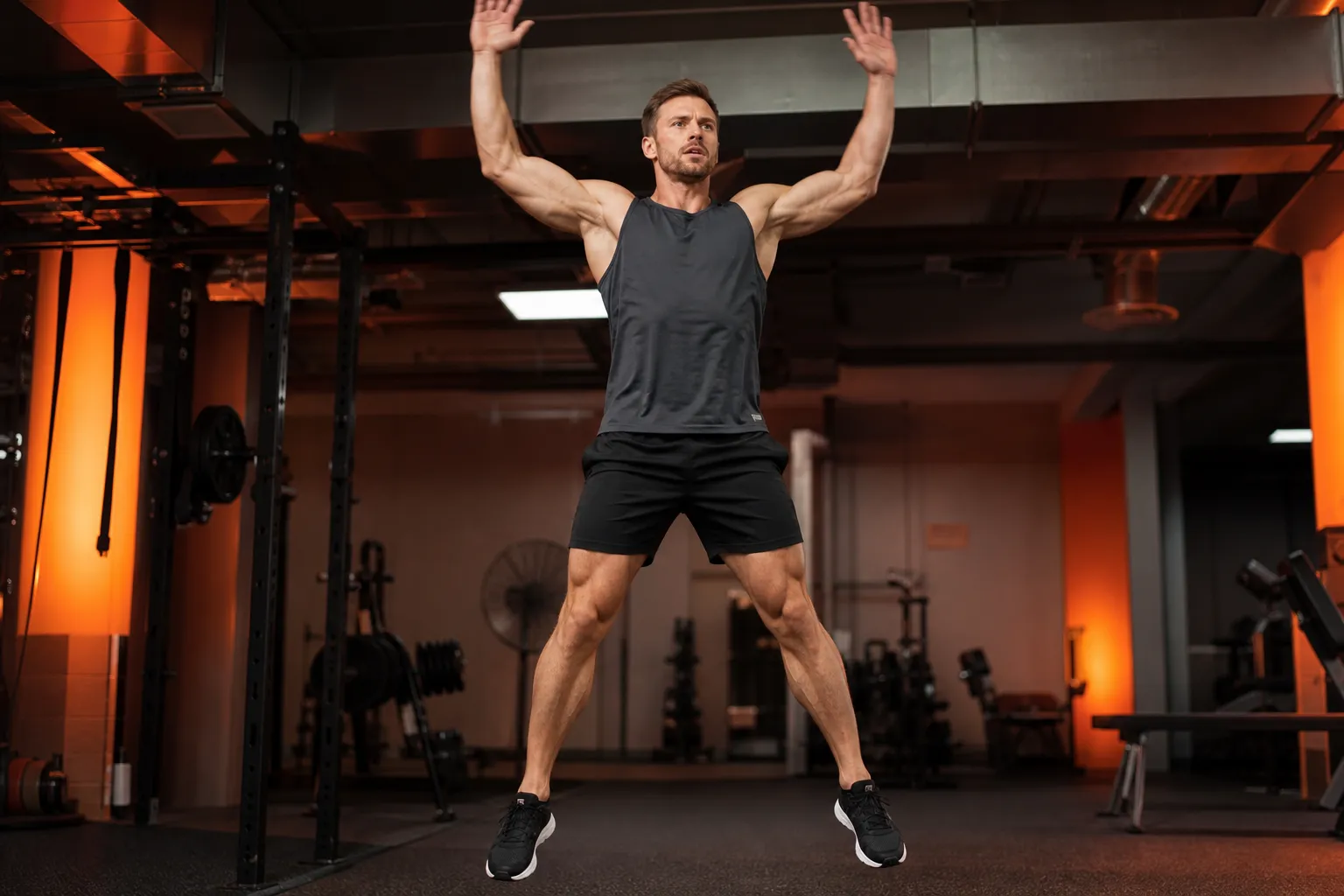
Jumping jacks are a whole-body rhythmic movement, but not every muscle works equally. Here is what is actually doing the job:
Muscles Worked
- Primary movers: Deltoids - your shoulders raise the arms overhead against gravity for every single rep, which is why they burn first. The hip abductors and adductors (outer and inner thigh) spread and close your legs against bodyweight resistance.
- Power muscles: Calves (gastrocnemius and soleus) drive every jump and absorb every landing. Glutes and quads extend the hips and knees each time you leave the floor.
- Stabilizers: Your rectus abdominis and obliques brace the trunk so your torso stays upright, while the hamstrings decelerate each landing.
Will Jumping Jacks Build Muscle?
Honestly - not much. The resistance is your own limbs moving at bodyweight speed, which is far below the threshold for meaningful hypertrophy. What they build is muscular endurance in the shoulders and calves, plus cardiovascular capacity. If muscle is the goal, pair jumping jacks as a conditioning finisher with strength work like planks and bodyweight squats, or use them as a warm-up before weighted training. For a core-and-cardio hybrid, mountain climbers complement them well.
How Many Calories Do Jumping Jacks Burn?
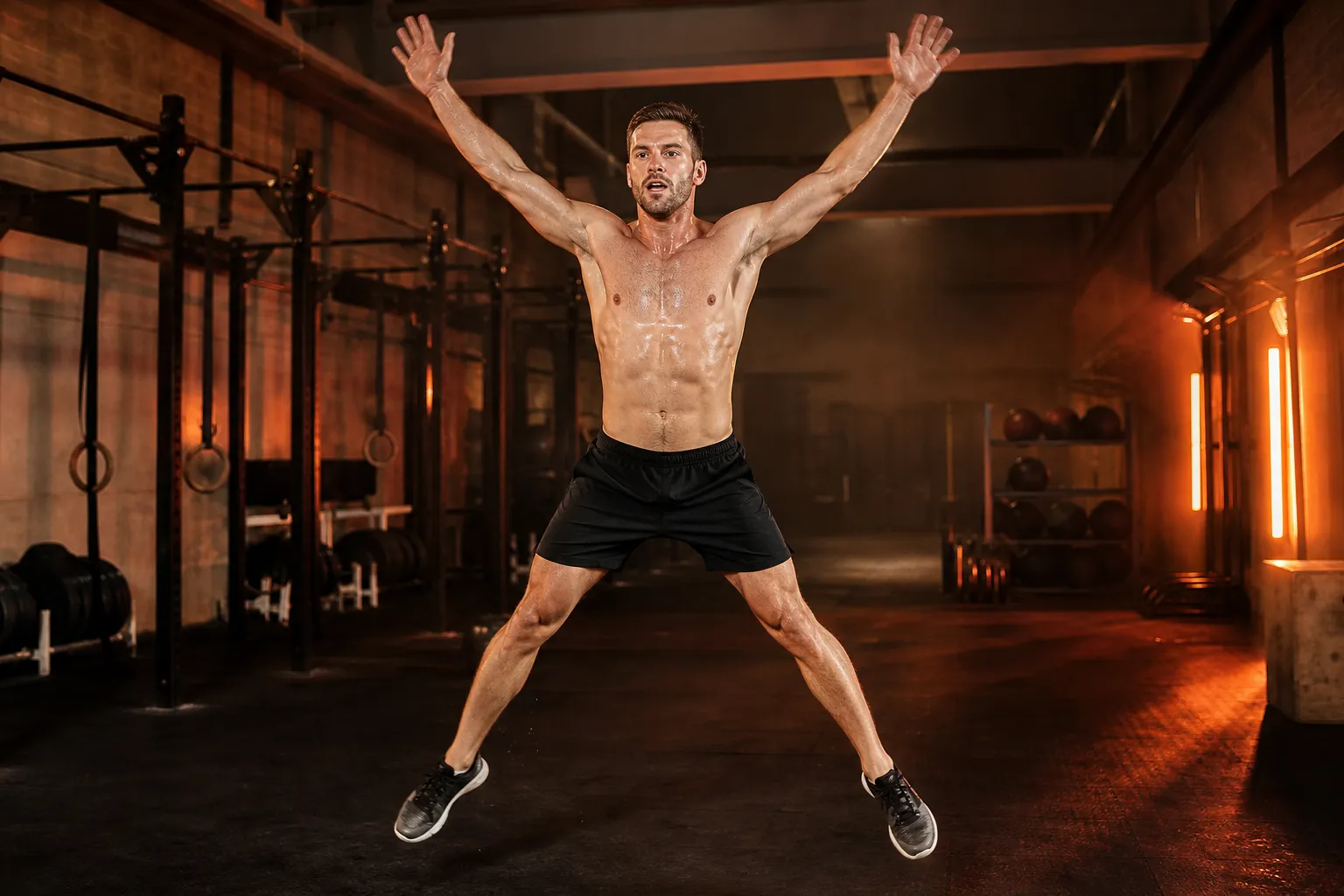
Here is the honest math, using the MET system that exercise scientists use. The 2011 Compendium of Physical Activities assigns jumping jacks a value of 8.0 METs. The formula:
Calories = MET value × body weight (kg) × time (hours)
In plain numbers:
| Body weight | 10 minutes | 20 minutes |
|---|---|---|
| 60 kg (132 lb) | ~80 kcal | ~160 kcal |
| 70 kg (154 lb) | ~93 kcal | ~187 kcal |
| 85 kg (187 lb) | ~113 kcal | ~227 kcal |
| 100 kg (220 lb) | ~133 kcal | ~267 kcal |
So how many calories do 100 jumping jacks burn? At a moderate pace, 100 reps takes about 2 minutes - roughly 15-25 calories depending on your weight. That is deliberately unglamorous, but the numbers improve dramatically with intensity: burpee-style intervals or continuous high-effort circuits push your heart rate into a zone where you keep burning extra calories for hours after you stop.
For comparison, jumping rope runs at 11-12 METs and burns roughly 40% more per minute, but requires a rope, coordination, and tolerance for tripping. Jumping jacks trade a little efficiency for zero equipment and zero skill floor - which is exactly why they anchor so many home programs.
Common Jumping Jack Mistakes (and Knee-Saving Fixes)
Jumping jacks have a low injury rate, but the problems people do run into - sore knees, cranky ankles, shoulder niggles - almost always trace back to the same four errors.
1. Landing stiff-legged: Absorbing impact through locked knees sends every landing straight up the leg to the knee joint and lower back. Fix: land on the balls of your feet with knees slightly bent, like a spring, not a plank of wood. If your neighbors can hear you land, you are landing wrong.
2. Knees caving inward: When your arches collapse, your knees track inward on every landing - hundreds of reps of that irritates the knee over time. Fix: keep your weight spread across the whole foot and think "knees over toes." Flat-footed lifters can benefit from a supported shoe or the step-jack variation.
3. Half-rep arms: Arms that only reach shoulder height turn a full-body movement into a leg exercise. Fix: finish every rep with hands overhead, biceps beside your ears. If your shoulders fatigue before your legs, that is the exercise working - do not cheat the range to escape it.
4. Sprinting the first 30 seconds: Going all-out from rep one floods your legs with burn and forces sloppy landings for the rest of the set. Fix: start at a pace you could hold for the entire planned duration, then speed up only in the final minute. Rhythm beats intensity until form is automatic.
Key Takeaways
| Point | Recommendation |
|---|---|
| Primary muscles | Deltoids, calves, hip abductors/adductors; core stabilizes |
| Calorie burn | 8.0 METs - ~9-10 kcal/min at 70 kg; 100 jacks ≈ 2 min ≈ 15-25 kcal |
| Pace | 2-3 reps/second, continuous breathing, arms fully overhead |
| Landing | Balls of the feet, knees soft and tracking over toes |
| Dosage | 50-100 as warm-up; 10-20 min or intervals for cardio |
- Land soft every rep - stiff landings are the root of nearly all jumping-jack knee pain
- Full range arms and legs, or you are doing half the exercise
- Scale with step-jacks (low impact), squat jacks, or power jacks as conditioning improves
Frequently Asked Questions
What muscles do jumping jacks work?
Jumping jacks primarily work your deltoids (shoulders), calves, and hip abductor and adductor muscles - the inner and outer thighs that spread and close your legs. Your glutes, quads, hamstrings, and core act as stabilizers throughout the movement. Because the resistance is only your bodyweight moving at speed, jumping jacks build muscular endurance and cardiovascular fitness rather than significant muscle size.
How many calories do 100 jumping jacks burn?
Roughly 15-25 calories. At a moderate pace, 100 jumping jacks takes about 2 minutes, and the Compendium of Physical Activities assigns jumping jacks a MET value of 8.0 - about 9-10 calories per minute for a 70 kg (154 lb) person. Heavier people burn more, lighter people burn less, and increasing your pace raises the burn slightly.
Are jumping jacks good for weight loss?
On their own, jumping jacks burn modest calories - the real value is as a zero-equipment conditioning tool you can do anywhere. A 70 kg person burns roughly 9-10 calories per minute, so a 20-minute session costs around 180-200 calories. They work best for fat loss when combined with strength training and a modest calorie deficit, or when used in interval circuits - 30 seconds of all-out jacks followed by 30 seconds of rest - which keeps your heart rate elevated for hours afterward.
Are jumping jacks bad for your knees?
No, if you land correctly. Knee problems from jumping jacks almost always come from stiff-legged landings, collapsed arches, or doing too much too soon. Land with slightly bent knees, keep your knees tracking over your toes, and stay on the balls of your feet to absorb impact. If you have existing knee pain or are significantly overweight, switch to the low-impact step-jack variation and build up gradually.
How many jumping jacks should I do a day?
There is no magic number - it depends on your goal. As a warm-up, 50-100 jacks (about 1-2 minutes) is enough to raise your core temperature. For general cardio, work up to 10-20 minutes of continuous jacks, or use interval sets like 10 rounds of 30 seconds on, 30 seconds off. Doing "100 a day" is a fine habit for beginners but becomes easy within a few weeks, at which point variations like squat jacks or power jacks keep the stimulus challenging.
References & Sources
TDEE Calculator (Daily Calories)
Calculate your Total Daily Energy Expenditure (TDEE) - the number of calories you burn each day. The calculator uses the Mifflin-St Jeor equation for your basal metabolic rate, multiplied by your activity level.
BMI Calculator
Calculate your body mass index (BMI) and see your WHO weight category instantly. BMI is a quick screening tool that compares your weight to your height - this calculator also shows the healthy weight range for your height so you know your target.