Body Fat Calculator
Estimate your body fat percentage with nothing but a tape measure. This calculator uses the US Navy circumference method, which predicts body fat from neck, waist, and hip measurements - one of the most accurate field methods validated against lab testing.
How This Calculator Works
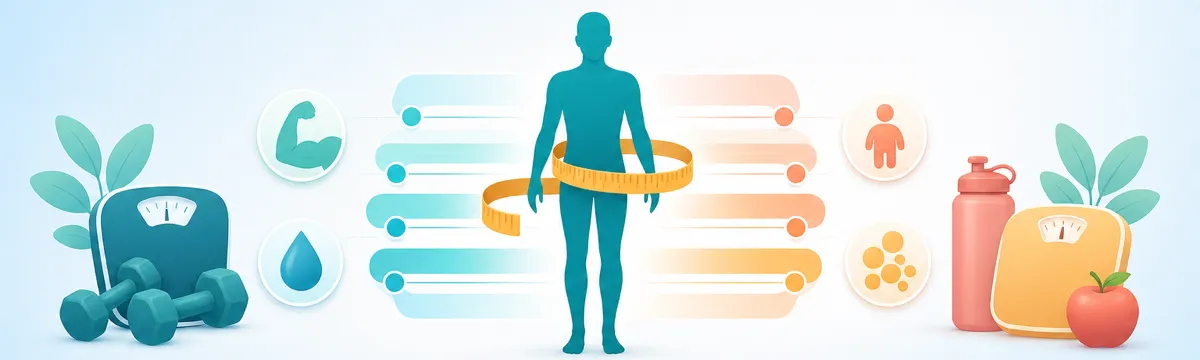
The US Navy method, developed by Hodgdon and Beckett at the Naval Health Research Center in 1984, estimates body fat from body circumferences. For men it uses neck and waist measurements; for women it adds the hip measurement, since women carry a larger share of fat around the hips and thighs.
For men: %fat = 495 / (1.0324 - 0.19077 x log(waist - neck) + 0.15456 x log(height)) - 450. For women: %fat = 495 / (1.29579 - 0.35004 x log(waist + hip - neck) + 0.22100 x log(height)) - 450. All measurements are in centimeters, and the logs are base-10.
Accuracy is typically within 3-4 percentage points of hydrostatic weighing, which is why militaries and gyms still use this method. Measure with a flexible tape: neck just below the larynx, waist at the navel (men) or narrowest point (women), hips at the widest point. Take each measurement twice and average.
References & Sources
Frequently Asked Questions
How accurate is the Navy body fat formula?
Studies comparing it to hydrostatic weighing find it accurate within about 3-4 percentage points for most people. It is slightly less accurate at very high or very low body fat, and assumes a typical fat distribution - it can underestimate fat in people who carry weight around the midsection but have slim limbs.
What is a healthy body fat percentage?
For men, 10-20% body fat is the healthy fitness range - 6-13% is athletic, and anything above 25% is considered obese. For women, 21-28% is healthy, 14-20% is athletic, and above 32% is obese. Women naturally carry more essential fat, so all ranges sit higher than men's.
How do I measure my neck and waist correctly?
Use a flexible tape and keep it level, without pulling tight. Neck: measure just below the Adam's apple, shoulders relaxed. Waist: men measure at the navel, women at the natural waistline (narrowest point). Hips: women measure at the widest point of the buttocks. Take each measurement after a normal exhale, and repeat twice - average the closest two.
Can I use this method if I am very muscular?
With caution. The formula cannot distinguish muscle from fat around the waist, so bodybuilders with thick midsections may get an overestimated reading. If you are visibly lean (visible abs for men) but the result seems high, use skinfold calipers or a DEXA scan for confirmation.
TDEE Calculator (Daily Calories)
Calculate your Total Daily Energy Expenditure (TDEE) - the number of calories you burn each day. The calculator uses the Mifflin-St Jeor equation for your basal metabolic rate, multiplied by your activity level.
Macro Calculator
Calculate your daily macronutrient targets - protein, carbs, and fat - based on your body stats and goal. This calculator estimates your calorie needs with the Mifflin-St Jeor equation, then splits them into macros using research-backed protein ranges.
Protein Intake Calculator
Calculate how much protein you need each day based on your body weight and training goal. This calculator uses the research-backed range of 1.6 to 2.2 grams of protein per kilogram of body weight for building muscle.